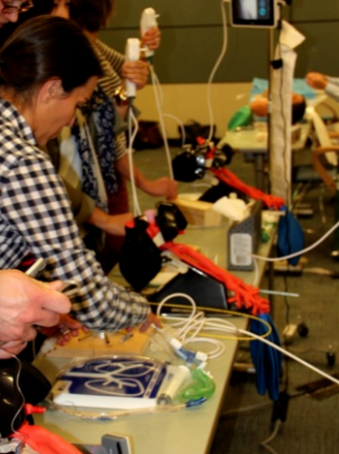
Airway emergencies demand calm thinking, sharp hands, and fast decisions. A delayed or failed airway can quickly become life-threatening. That is why practical training matters. A well-designed Difficult airway course helps healthcare professionals practice real techniques, improve judgment, and build confidence before facing urgent patient situations.
Hands-on learning allows clinicians to touch devices, repeat movements, and train in realistic scenarios. A quality Difficult airway workshop helps anesthesiologists, nurse anesthesiologists, emergency physicians, nurses, and first responders strengthen the exact skills they need when seconds matter.
1. Rapid Airway Assessment Skills
One of the first abilities developed in training is learning how to assess an airway quickly and correctly. Before any intervention begins, clinicians must identify whether an airway may be easy, challenging, or high risk.
Hands-on sessions often teach participants how to look for signs such as:
- Limited mouth opening
- Reduced neck movement
- Facial trauma
- Obesity or swelling
- History of difficult intubation
In a real emergency, there is no time for guesswork. A Difficult airway course trains providers to recognize warning signs early and prepare the safest plan.
2. Better Intubation Technique
Intubation is not only about placing a tube. It requires positioning, visualization, hand control, timing, and backup planning. Repetition with simulators and airway tools helps clinicians improve muscle memory.
During a Difficult airway workshop, participants often practice:
- Direct laryngoscopy
- Video laryngoscopy
- Bougie-assisted intubation
- Tube confirmation steps
- Safe patient positioning
This repeated practice builds smoother movements and fewer errors. It also helps providers become more comfortable using different devices instead of relying on only one method.
3. Stronger Bag Mask Ventilation Skills
Many people focus only on intubation, but ventilation can save a patient before a tube is ever placed. Poor mask seal, wrong hand placement, or weak technique can lead to low oxygen levels.
Hands-on airway training often improves:
- Mask seal technique
- Two-person ventilation methods
- Jaw thrust positioning
- Use of airway adjuncts
- Oxygenation during delays
These skills are critical in operating rooms, emergency departments, ambulances, and intensive care units.
4. Confidence With Rescue Airway Devices
Not every airway goes according to plan. That is why backup devices matter. A practical Difficult airway course teaches clinicians when and how to move to rescue options safely.
Participants may train with supraglottic airways, introducers, flexible scopes, and emergency pathways. Confidence grows when providers physically use the tools instead of only hearing about them in slides.
This matters because hesitation in a crisis can waste valuable time. Familiarity supports faster action.
5. Calm Decision Making Under Pressure
Technical skills alone are not enough. Airway emergencies create stress, noise, and urgency. Providers must think clearly while acting quickly.
Simulation-based training helps clinicians develop:
- Prioritization under pressure
- Recognition of failed attempts
- Knowing when to stop and change plan
- Calling for help early
- Protecting oxygenation first
A strong Difficult airway workshop places learners in realistic scenarios so they can practice staying composed when tension rises.
6. Team Communication Skills
Airway management is often a team effort. One person may intubate while others handle medications, monitoring, suction, or ventilation. Poor communication can lead to confusion and delay.
Hands-on group training improves closed-loop communication, role assignment, and clear verbal commands. Participants learn how to say what they need quickly and clearly.
Examples include:
- Requesting equipment early
- Confirming medication readiness
- Calling out oxygen levels
- Stating backup plans aloud
These habits can improve patient safety in high-stress moments.
7. Safer Awake Airway Management Awareness
Some patients should not be put to sleep before securing the airway. Knowing when awake techniques are safer is an advanced but valuable skill.
A quality Difficult airway course often introduces principles such as patient preparation, topical anesthesia, cooperation, and stepwise planning. Even when clinicians do not perform these cases daily, understanding when awake management is appropriate improves judgment and consultation decisions.
8. Adaptability With New Technology
Airway tools continue to evolve. Video devices, portable imaging, and newer adjuncts are becoming more common. Practical training helps clinicians stay current instead of depending on outdated habits.
Hands-on exposure allows providers to compare tools, understand limitations, and choose the right device for the right patient. This practical adaptability is valuable across hospitals, surgery centers, and emergency services.
9. Greater Confidence That Helps Patients
Confidence in medicine should come from preparation, not guesswork. When clinicians train repeatedly in realistic settings, they often perform with more control and less panic.
That confidence can lead to:
- Faster response times
- Better teamwork
- Fewer repeated attempts
- Safer oxygen management
- Better patient outcomes
A focused Difficult airway workshop does more than teach procedures. It helps professionals trust their training when patients need them most.
In Closing:
The best airway clinicians are not simply knowledgeable. They are practiced, adaptable, and calm under pressure. A hands-on Difficult airway course develops technical ability, smarter decision-making, and stronger communication skills that textbooks alone cannot provide.
For anesthesiologists, nurse anesthesiologists, emergency physicians, nurses, and first responders, practical airway education remains one of the smartest investments in patient safety and professional growth.