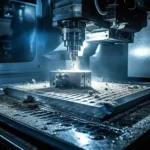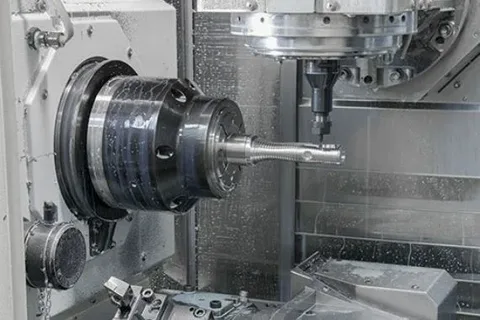
In modern healthcare, precision is not optional—it is essential. The growing demand for highly accurate and reliable medical implants has pushed manufacturers to adopt advanced production technologies. Among these, custom medical CNC machining has emerged as a leading solution for producing complex and patient-specific implant components with exceptional accuracy.
This technology enables manufacturers to create implants that perfectly match human anatomy, improving surgical outcomes and patient recovery. From orthopedic screws to dental implants and spinal devices, CNC machining plays a critical role in ensuring quality, consistency, and biocompatibility in medical manufacturing.
The Role of Custom Medical CNC Machining in Implant Production
Custom medical CNC machining is widely used to manufacture implants that require extremely tight tolerances and complex geometries. These implants must integrate seamlessly with the human body, which demands precision that traditional manufacturing methods often cannot achieve.
Through computer-controlled systems, manufacturers can produce components with microscopic accuracy. This ensures that each implant meets exact specifications, reducing the risk of surgical complications and improving long-term patient safety.
In addition, CNC machining allows for repeatability in production. Once a design is programmed, it can be replicated consistently, ensuring every implant meets the same high standard of quality.
The ability to maintain such precision makes CNC machining indispensable in the production of life-saving medical devices, particularly in fields like orthopedics, cardiology, and dentistry.
Material Selection and Biocompatibility in CNC Machining
One of the most important aspects of custom medical CNC machining is the selection of appropriate materials. Medical implants must be made from biocompatible materials such as titanium, stainless steel, cobalt-chrome alloys, and medical-grade polymers.
These materials are chosen for their strength, durability, and ability to integrate safely with human tissue. CNC machining ensures that these materials are shaped without compromising their structural integrity or biological safety.
The machining process also minimizes contamination risks. Since CNC systems operate in controlled environments with minimal human intervention, the risk of introducing impurities is significantly reduced.
This level of precision and cleanliness is critical in medical manufacturing, where even the smallest defect can affect patient health and implant performance.
Advantages of CNC Machining in Precision Implant Manufacturing
One of the key advantages of CNC machining is its unmatched accuracy. Medical implants often require tolerances within microns, and CNC systems are capable of consistently achieving this level of precision.
This accuracy ensures that implants fit perfectly within the human body, reducing discomfort and improving functionality. Whether it is a hip joint replacement or a dental implant, precision directly impacts patient outcomes.
Another major advantage is design flexibility. Engineers can create highly complex geometries that would be impossible using traditional manufacturing methods. CNC machines can follow intricate digital designs with ease.
This flexibility allows for innovation in implant design, enabling the development of more effective and patient-specific medical solutions.
Additionally, CNC machining improves production efficiency. Once a design is finalized, multiple identical units can be produced quickly without sacrificing quality.
This is especially important in the medical industry, where demand for implants is continuously growing due to aging populations and advancements in surgical procedures.
Customization and Patient-Specific Implant Solutions
One of the most significant benefits of custom medical CNC machining is its ability to support fully customized implant production. Every patient has unique anatomical requirements, and CNC technology allows manufacturers to design implants tailored to individual needs.
Using medical imaging data such as CT scans and MRIs, engineers can create digital models that precisely match a patient’s anatomy. These models are then translated into CNC machining instructions for production.
This customization improves implant fit, reduces recovery time, and enhances overall surgical success rates. Patients benefit from implants that feel more natural and function more effectively.
Furthermore, personalized implants reduce the risk of complications such as rejection or misalignment. This makes CNC machining a vital tool in advancing personalized medicine.
As healthcare continues to evolve, the demand for patient-specific solutions will only increase, making CNC machining even more important in the future of medical manufacturing.
Quality Control and Regulatory Standards in CNC Machining
In medical manufacturing, quality control is non-negotiable. Custom medical CNC machining processes are designed to meet strict regulatory standards such as ISO 13485 and FDA requirements.
Every stage of production is carefully monitored to ensure consistency, safety, and reliability. Advanced inspection systems are used to verify dimensions, surface finish, and structural integrity.
This ensures that each implant meets the highest standards before it reaches the patient. Even the smallest deviation can result in rejection during quality checks.
CNC machining also supports traceability. Each component can be tracked back to its production batch, allowing manufacturers to maintain full accountability.
This level of control is essential in the medical industry, where patient safety depends on flawless manufacturing processes.
Conclusion
Custom medical CNC machining has revolutionized the way precision implants are designed and manufactured. By combining advanced technology, biocompatible materials, and high-precision engineering, it ensures that medical implants meet the strictest standards of accuracy and safety.
From improving patient-specific customization to maintaining regulatory compliance, CNC machining plays a crucial role in modern healthcare innovation. As demand for advanced medical solutions continues to grow, this technology will remain at the forefront of precision implant manufacturing, shaping the future of medical treatment and patient care.