
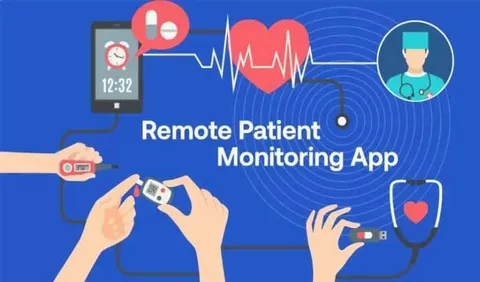
The heart rate suddenly shoots up to 2:17 AM. No rushing to a hospital, no emergency, no frenzied activity in the waiting rooms; an instant notification goes directly to the physician’s dashboard. The medical staff analyzes the readings, adjusts medication if necessary, and contacts the patient within minutes. What used to be the future of healthcare has become a reality, with mobile apps now playing a role.
It is not just that healthcare has shifted from offline to mobile; it is more than that. It is about a transformation that shifts the paradigm of healthcare from reactive intervention to preventive measures.
Shift from Hospital-Centric to Patient-Centric Care
The conventional healthcare delivery framework revolves around physical interactions. The patients visit the hospital, undergo tests, and receive reports. This system works efficiently; however, it cannot scale, particularly in addressing long-term illnesses like diabetes, hypertension, or heart disease.
This is where healthcare mobile app development becomes essential. In contrast to regular visits, RPM allows real-time tracking of patient health. The patients can remain in their homes as the information flows from their devices to the medical professionals.
This transition leads to the formation of a patient-oriented healthcare environment.
How Healthcare Mobile Apps Enable Remote Patient Monitoring?
Patient monitoring via remote means relies heavily on three closely related components: data gathering, data transfer, and data analysis. Mobile apps act as the main junction linking all three.
Real-Time Data Collection
Today, healthcare mobile applications can work in tandem with wearable devices, such as fitness trackers, smartwatches, glucometers, and blood pressure gauges. Wearable devices gather physiological information and transmit it to healthcare apps. It’s all because of healthcare mobile application development; this integration is flawless. Healthcare apps can receive:
- Heart rate variability
- Blood oxygen levels (SpO2)
- Blood pressure readings
- Blood glucose levels
- Sleep patterns
- Physical activity levels
This constant flow of data ensures that healthcare providers are never working with outdated information.
Instant Data Transmission
After collecting data, the mobile application securely sends it to the cloud platform, where physicians and other healthcare professionals can access it at any time.
Unlike traditional reporting methods, which can take several days or even weeks to deliver information, the RPM system guarantees immediate updates, which is important when dealing with patients at higher risk. A healthcare mobile app enables encrypted data transfer in compliance with HIPAA.
Continuous Monitoring Dashboards
There is no need for healthcare practitioners to analyze raw data on their own. All patient data that comes in through mobile apps is organized into well-designed dashboards complete with visual alerts and graphs. This makes it easy for healthcare practitioners to analyze healthcare app trends and take action immediately.
These dashboards highlight:
- Abnormal readings
- Trend changes over time
- Risk indicators
- Medication adherence patterns
This helps doctors make faster, more accurate decisions without requiring in-person consultations.
Early Detection and Prevention of Health Complications
Early detection is one of the most potent benefits of RPM. The signs of deterioration in the patient’s condition can be detected beforehand, without waiting for them to worsen, through continuous data monitoring. This would help reduce complications and improve the condition.
For example:
- A gradual increase in blood pressure can signal cardiovascular risk
- Irregular glucose patterns can indicate worsening diabetes
- Oxygen level drops can detect respiratory issues early
With a healthcare mobile app, these patterns are automatically flagged. Alerts are generated in real time, enabling immediate medical response.
Improving Chronic Disease Management
The treatment of chronic conditions is ongoing, not a one-off, because constant patient monitoring is required. Patients with asthma, diabetes, and heart disease benefit greatly from continuous monitoring, as it enables healthcare practitioners to track their condition, detect abnormalities, adjust treatments, and improve their health.
Healthcare mobile apps make it easier for patients to:
- Track daily health metrics
- Receive medication reminders
- Log symptoms and lifestyle changes
- Share updates with doctors instantly
Doctors gain a complete view of the patient’s condition over time, rather than fragmented snapshots from occasional visits.
Improving Patient Engagement and Accountability
The process of remote patient monitoring goes beyond gathering information and also concerns ensuring that patients remain engaged in their healthcare. The use of mobile applications ensures that reminders are available and that insights are provided, encouraging patient engagement and enabling better decision-making.
Mobile apps improve engagement through:
- Push notifications for medication schedules
- Daily health tracking reminders
- Progress reports and summaries
- Direct messaging with healthcare providers
When patients actively monitor their health, adherence to treatment improves significantly.
Reducing Hospital Workload and Healthcare Costs
The problem of overcrowding is common in hospitals because many patients require only monitoring that can be easily done through virtual consultations. The use of RPM will allow doctors to provide remote consultations and monitor a person’s health status from anywhere, without additional hospital visits.
By shifting routine checkups to mobile platforms, hospitals can:
- Free up physical resources
- Focus on critical cases
- Reduce operational pressure
- Lower healthcare delivery costs
Patients also benefit financially by avoiding frequent travel and hospital fees.
Strengthening Doctor-Patient Communication
Another problem typical of conventional medical care systems is a communication gap, in which patients forget their symptoms or provide inaccurate information. With digital technology, it is easier to collect patient information on the spot, improving communication and enabling faster diagnostics and treatments.
Mobile apps eliminate this problem by enabling:
- Continuous messaging channels
- Video consultations
- Automated health reports
- Emergency alerts
Doctors receive structured, real-time data rather than relying solely on patient recall.
Data Security and Compliance
Given the nature of the information handled by the RPM system, security is a top priority for this technology. The current state-of-the-art approach to healthcare mobile application development takes this into account by using end-to-end encryption, multifactor authentication, cloud-based security measures, role-based access control, and adherence to healthcare law requirements.
- End-to-end encryption
- Multi-factor authentication
- Secure cloud storage
- Role-based data access
- Compliance with healthcare regulations
These security layers ensure that patient data remains confidential while still being accessible to authorized medical professionals.
The Future of Remote Patient Monitoring
With the integration of artificial intelligence and predictive analytics, the concept of remote patient monitoring has been completely revolutionized, shifting from reactive to proactive. This is done by recording not only patients’ health information but also analyzing data to predict future problems, enabling timely intervention and better decision-making. With advances in mobile healthcare applications, RPM systems are becoming increasingly intelligent and automated.
- Predict potential heart attacks using real-time health data patterns.
- Forecast diabetic spikes based on glucose trends and behavior.
- Recommend preventive actions customized to each patient’s profile.
- Trigger automated alerts for doctors during critical health changes.
- Enable continuous, AI-driven health monitoring and decision support.
Conclusion
Healthcare mobile app development for remote patient monitoring is revolutionizing the industry by shifting the focus from treatment to care. Through mobile app development for healthcare, RPM enables healthcare practitioners to monitor their patients in real time, detect risks, and communicate effectively with one another. In doing so, this technology helps reduce strain on hospitals and improves service delivery. With the continuous growth of digital health, collaboration with a healthcare mobile app development company is key.