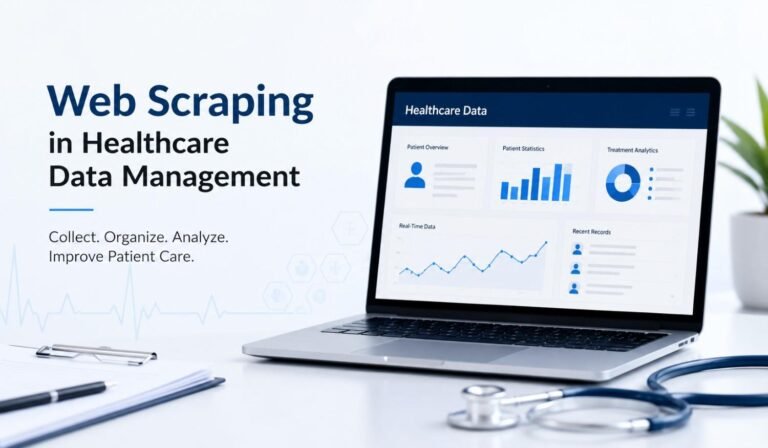
Healthcare organizations generate enormous amounts of data every single day — patient records, insurance updates, treatment histories, pharmaceutical pricing, and clinical research reports. Managing all this information manually feels a bit like asking a nurse to organize an entire hospital using sticky notes and crossed fingers. That is where web scraping becomes valuable. Automated data extraction helps healthcare providers collect, organize, and analyze information efficiently. Businesses today rely on real-time healthcare insights to improve patient care, streamline operations, and make smarter decisions without drowning in endless spreadsheets and outdated databases.
What Is Web Scraping in Healthcare?
Web scraping in healthcare refers to the automated process of collecting publicly available healthcare-related information from websites, portals, and digital platforms. Instead of manually copying data from hundreds of sources, automated tools gather information quickly and organize it into structured formats. Healthcare providers often use this technology to monitor drug prices, collect patient reviews, analyze insurance policies, and track medical research updates. In many ways, web scraping acts like a highly caffeinated research assistant that never complains about repetitive tasks — and thankfully, never asks for coffee breaks during busy hospital hours.
Understanding Automated Data Extraction
Automated data extraction helps healthcare organizations save time by eliminating repetitive manual work. Large hospitals and medical institutions often deal with thousands of records spread across multiple platforms. Extracting this information manually increases the chances of human error and delays important decisions. Web scraping tools simplify this process by collecting data in real time and converting it into organized databases for easy analysis. As healthcare systems continue expanding, automation has become less of a luxury and more of a survival strategy. After all, healthcare professionals should focus on patients — not endlessly wrestling with spreadsheets at midnight.
Types of Healthcare Data Commonly Collected
Healthcare businesses collect a wide variety of data to improve operations and patient outcomes. Common examples include pharmaceutical pricing information, doctor reviews, hospital ratings, insurance details, disease statistics, and clinical trial reports. Public healthcare databases also provide valuable insights for researchers and analysts. Collecting this information manually would take an enormous amount of time, especially when updates happen constantly. Automated systems make the process far more manageable by gathering accurate information from multiple sources simultaneously. In a world where healthcare changes daily, relying on outdated information is about as useful as using a pager in 2026.
Why Healthcare Organizations Need Better Data Management
Healthcare organizations depend heavily on accurate and accessible information. Unfortunately, many hospitals still operate with disconnected systems storing fragmented records across departments. This creates delays, duplicate entries, and operational confusion that nobody enjoys — especially exhausted administrators juggling ten systems before lunch. Better data management allows healthcare providers to centralize information, improve collaboration, and reduce inefficiencies. With patient expectations rising and regulations becoming stricter, organized data is no longer optional. Modern healthcare systems require real-time insights that support faster decision-making, improved patient care, and smoother workflows across every level of the organization.
The Problem With Fragmented Healthcare Data
Fragmented healthcare data creates major operational challenges for hospitals and medical organizations. Patient records may exist across separate platforms, while insurance details, billing information, and treatment histories remain disconnected. This lack of integration often leads to delays, duplicate work, and frustrating administrative bottlenecks. Medical professionals already have enough pressure without hunting for missing data like detectives in a crime drama nobody asked for. Centralized data management supported by automated extraction tools helps healthcare providers reduce errors and improve efficiency. Better organization ultimately supports faster treatments, improved communication, and more accurate healthcare reporting.
Real-Time Data Has Become Essential
Real-time data plays a critical role in modern healthcare management. Hospitals and healthcare providers need immediate access to updated information for patient care, disease monitoring, and operational planning. Delayed information can create serious inefficiencies and affect decision-making processes. Web scraping helps organizations gather live updates from healthcare portals, pharmaceutical databases, and public health sources quickly and accurately. This allows healthcare systems to respond faster to market changes and emerging medical trends. In healthcare, outdated information ages about as gracefully as forgotten yogurt sitting in the office refrigerator — nobody wants to deal with it later.
How Web Scraping Improves Healthcare Data Management
Web scraping improves healthcare data management by automating data collection, reducing manual errors, and increasing operational efficiency. Healthcare providers can gather large amounts of structured information from multiple sources without spending countless hours on repetitive tasks. Automated systems also help standardize information for easier analysis and reporting. This creates smoother workflows for administrators, researchers, and medical professionals alike. A reliable web scraping can build scalable solutions that support healthcare organizations handling massive datasets daily. Efficient data management ultimately leads to better patient experiences, smarter decisions, and fewer moments of panic caused by outdated reports.
Faster Collection of Medical Information
Healthcare organizations process enormous amounts of information every day, and manual collection methods simply cannot keep pace anymore. Web scraping automates the process by gathering medical data from multiple online sources in real time. Hospitals, clinics, and research teams can access updated records, pharmaceutical pricing, and healthcare statistics much faster than traditional methods allow. This not only saves time but also improves operational efficiency across departments. Modern healthcare already moves at an exhausting speed, so relying on manual copy-and-paste routines feels a bit like trying to run an emergency room using a fax machine from 1997.
Improved Accuracy and Consistency
Accurate healthcare data is essential for making informed medical and operational decisions. Manual data entry often introduces inconsistencies, duplicate records, and human errors that create unnecessary complications later. Web scraping helps standardize information by collecting structured data automatically from reliable sources. Healthcare organizations can maintain cleaner databases, improve reporting accuracy, and reduce administrative mistakes significantly. Consistent information also supports better analytics and forecasting for long-term planning. Frankly, healthcare teams already deal with enough surprises during the day — discovering mismatched spreadsheets during a critical meeting should not be one of them.
Centralized Data Accessibility
Healthcare data often exists across multiple systems, departments, and external platforms, making accessibility a major challenge for organizations. Web scraping helps centralize this information into a single organized database that authorized teams can access easily. Doctors, administrators, researchers, and analysts benefit from faster access to relevant information without constantly switching between disconnected systems. Better accessibility also improves collaboration across departments and reduces delays in decision-making. When healthcare teams spend less time hunting for missing records, they can focus more energy on patient care instead of participating in an accidental daily scavenger hunt.
Key Use Cases of Web Scraping in Healthcare
Healthcare organizations use web scraping for a wide range of practical applications that improve efficiency and decision-making. Automated extraction tools help monitor pharmaceutical prices, collect patient feedback, analyze insurance information, and track healthcare market trends. Research institutions also rely on automated systems to gather clinical trial updates and medical publications quickly. These use cases support smarter planning and more accurate reporting across the healthcare sector. As healthcare continues evolving rapidly, organizations need systems capable of adapting just as quickly — preferably without requiring twenty spreadsheets, three interns, and a miracle every Monday morning.
Monitoring Drug Prices and Availability
Pharmaceutical pricing changes frequently, and tracking these fluctuations manually can become extremely time-consuming for healthcare organizations. Web scraping helps hospitals and healthcare providers monitor drug prices, supplier availability, and inventory updates automatically. Real-time access to this information supports smarter purchasing decisions and helps organizations respond quickly to shortages or sudden market changes. Patients also benefit when providers can identify cost-effective medication options more efficiently. Considering how unpredictable pharmaceutical markets can be, relying on outdated pricing data feels about as risky as bringing a paper map to navigate modern city traffic during rush hour.
Clinical Research and Trial Monitoring
Medical research evolves constantly, with new studies, clinical trials, and treatment discoveries appearing every day. Web scraping allows healthcare researchers to collect updated information automatically from journals, research portals, and clinical databases. Faster access to reliable data helps researchers identify trends, compare findings, and accelerate innovation within the healthcare industry. Automated monitoring also reduces the burden of manually reviewing countless websites for updates. Research teams already spend enough time analyzing complex medical information, so removing repetitive administrative work feels less like a convenience and more like an overdue necessity for modern healthcare operations.
Healthcare Market Research
Healthcare providers and medical businesses constantly need updated market insights to stay competitive and improve patient services. Web scraping helps organizations collect patient reviews, hospital ratings, treatment trends, and competitor information from multiple online platforms quickly. These insights support smarter business strategies and help healthcare providers understand changing patient expectations. Automated data collection also allows organizations to identify emerging healthcare trends before competitors react. In many ways, healthcare market research resembles trying to hit a moving target during a windstorm — except the target keeps changing policies, technologies, and patient expectations every other week.
Insurance and Claims Analysis
Insurance processing generates massive amounts of data that healthcare organizations must analyze accurately and efficiently. Web scraping helps collect policy details, claims information, reimbursement updates, and fraud indicators from various sources automatically. Faster access to structured information improves claims verification and reduces administrative delays for both providers and patients. Automated analysis also helps organizations identify unusual patterns that may indicate fraudulent activities or billing inconsistencies. Considering how complicated insurance paperwork already feels, reducing manual processing is often greeted with the same enthusiasm people reserve for unexpectedly short waiting room lines.
The Role of a Web Scraping Company in Healthcare
Healthcare organizations often require customized systems capable of handling complex and large-scale data extraction needs. A professional web scraping company helps build automated solutions that collect, organize, and manage healthcare information securely and efficiently. These systems support hospitals, clinics, research institutions, and healthcare businesses dealing with constantly changing data sources. Scalable infrastructure also ensures organizations can process growing volumes of information without sacrificing accuracy or speed. Modern healthcare operations already involve enough complexity, so dependable automation tools become essential rather than optional additions hiding somewhere on the annual technology wish list.
Building Scalable Data Pipelines
Healthcare organizations generate enormous datasets daily, making scalability one of the most important factors in data management. Web scraping systems help create automated pipelines that continuously collect and organize information from multiple sources in real time. Scalable infrastructure allows hospitals and healthcare providers to process growing amounts of data without slowing operations or compromising reliability. These systems also support smoother integration with analytics platforms and internal databases. Expanding healthcare systems without scalable automation is somewhat like adding more patients to a waiting room without adding chairs — eventually, chaos arrives right on schedule.
Custom Data Extraction Solutions
Every healthcare organization operates differently, which means standardized solutions rarely address every operational requirement effectively. Custom web scraping systems allow hospitals, clinics, and healthcare businesses to collect specific information based on their unique goals and workflows. These tailored solutions integrate with existing ERP and CRM platforms to improve accessibility and reporting accuracy. Automated extraction also reduces manual workloads for administrative teams handling large volumes of healthcare information daily. Customization matters because healthcare technology should adapt to organizational needs — not force exhausted teams to adapt their entire workflow around awkward software limitations.
Compliance and Ethical Considerations
Healthcare data management requires strict attention to privacy regulations, security standards, and ethical data collection practices. Web scraping systems must collect only publicly available information while maintaining compliance with healthcare regulations and data protection policies. Organizations also need secure storage systems to prevent unauthorized access and protect sensitive information. Responsible automation ensures healthcare providers can benefit from data-driven insights without compromising trust or security. In healthcare, compliance is not merely a checkbox buried inside a forgotten policy document — it is a critical responsibility that affects both operations and patient confidence every single day.
Benefits of Web Scraping for Healthcare Providers
Healthcare providers benefit significantly from automated data collection because it improves efficiency, accuracy, and decision-making across operations. Web scraping reduces the burden of repetitive administrative work while helping organizations access updated information quickly. Hospitals and clinics can manage resources more effectively, improve patient communication, and respond faster to healthcare trends. Organized data also supports stronger reporting and long-term planning strategies. Healthcare professionals already balance demanding schedules and constant responsibilities, so technology that removes unnecessary manual work often feels less like innovation and more like finally finding an empty parking spot near the hospital entrance.
Better Patient Experiences
Patients expect faster services, accurate information, and smoother healthcare interactions than ever before. Web scraping helps healthcare providers improve scheduling systems, monitor patient feedback, and organize healthcare information more efficiently. Faster access to updated data supports quicker response times and better communication between patients and medical staff. Healthcare organizations can also analyze patient reviews to identify areas needing improvement. Positive patient experiences increasingly influence healthcare reputation, which means ignoring service quality today is about as effective as ignoring warning lights on complicated medical equipment and hoping everything somehow works itself out naturally.
Enhanced Operational Efficiency
Operational efficiency remains one of the biggest priorities for healthcare organizations managing growing workloads and rising patient expectations. Web scraping automates repetitive data collection tasks, allowing staff to focus on more valuable responsibilities instead of manual administrative work. Organized data also improves reporting accuracy, resource allocation, and internal communication across departments. Healthcare providers can respond faster to operational challenges because information becomes easier to access and analyze. Considering how busy healthcare environments already are, reducing unnecessary manual processes often feels like removing several traffic jams from an already overcrowded highway during peak hours.
Smarter Business Decisions
Healthcare organizations rely heavily on accurate data when making financial, operational, and strategic decisions. Web scraping provides real-time insights that help administrators monitor industry trends, analyze patient behavior, and evaluate market conditions more effectively. Better access to reliable information supports predictive planning and improves long-term decision-making across the organization. Data-driven strategies also help healthcare providers remain competitive in a rapidly evolving industry. Making major healthcare decisions without updated insights resembles trying to predict tomorrow’s weather using last month’s forecast — technically possible, but probably not the wisest strategy available.
Challenges in Healthcare Web Scraping
Although web scraping offers significant advantages, healthcare organizations still face several important challenges when implementing automated data extraction systems. Privacy regulations, website changes, and data quality issues can create operational complications if systems are not maintained properly. Healthcare providers must also ensure collected information remains secure and compliant with industry standards. Successful implementation requires technical expertise, ongoing monitoring, and responsible data management practices. Healthcare technology already changes rapidly enough, so ignoring these challenges usually leads to confusion, inefficiencies, and the occasional emergency meeting nobody wanted added to the weekly calendar.
Data Privacy Concerns
Data privacy remains one of the most important concerns in healthcare data management. Healthcare organizations must follow strict regulations when handling sensitive information and ensure automated systems collect only authorized public data. Secure storage, restricted access, and proper encryption methods all play critical roles in protecting healthcare records and maintaining compliance standards. Failure to manage privacy responsibly can damage both operations and patient trust significantly. Considering how valuable healthcare information has become, treating data security casually would be about as wise as leaving confidential patient files unattended in a crowded waiting room during visiting hours.
Website Structure Changes
Websites frequently update their layouts, databases, and security systems, which can disrupt automated scraping tools unexpectedly. Healthcare organizations relying on web scraping must continuously monitor and maintain their systems to ensure consistent data collection. Dynamic websites, changing page structures, and anti-bot protections often require technical adjustments to keep extraction processes functioning properly. Ongoing maintenance becomes essential for long-term reliability and accuracy. Technology evolves quickly enough already, and healthcare teams certainly do not need additional surprises arriving Monday morning because a website suddenly decided to redesign everything over the weekend without warning anyone.
Data Quality Management
Collecting large amounts of healthcare information is only useful when the data remains accurate, organized, and reliable. Web scraping systems must filter duplicate records, remove outdated information, and validate collected data regularly to maintain quality standards. Poor-quality datasets can lead to reporting errors, operational confusion, and unreliable analysis that affects decision-making across healthcare organizations. Consistent monitoring and data cleansing help maintain trustworthy databases for long-term use. Healthcare professionals already face enough uncertainty during daily operations, so inaccurate reports appearing during critical planning discussions rarely improve anyone’s confidence or blood pressure levels.
Future Trends in Healthcare Data Extraction
Healthcare data extraction continues evolving rapidly as organizations demand faster, smarter, and more scalable information systems. Automation, artificial intelligence, and predictive analytics are transforming how healthcare providers collect and manage data. Modern healthcare organizations increasingly rely on real-time insights to improve patient care, optimize operations, and identify emerging industry trends quickly. As digital healthcare ecosystems continue expanding, automated extraction technologies will become even more important for handling growing information volumes efficiently. The healthcare industry has officially entered the era where spreadsheets alone can no longer pretend to solve every operational problem hiding behind monthly reports.
AI-Powered Data Automation
Artificial intelligence is reshaping healthcare data management by making automated extraction systems smarter and more efficient. AI-powered data tools can categorize information, identify patterns, and analyze massive datasets faster than traditional systems. Healthcare providers use these technologies to improve reporting accuracy, detect operational trends, and support predictive healthcare planning. Intelligent automation also reduces repetitive administrative tasks, allowing staff to focus more on patient-centered responsibilities. Technology may never replace experienced healthcare professionals, but removing endless manual data entry from their workload certainly feels like a step humanity can collectively appreciate without much debate.
Predictive Healthcare Intelligence
Predictive analytics is becoming increasingly important in modern healthcare management because organizations need to anticipate trends before problems escalate. Web scraping combined with AI-driven analytics helps healthcare providers forecast patient demands, monitor disease patterns, and improve resource planning more effectively. Access to predictive insights also supports earlier interventions and smarter operational strategies across hospitals and medical institutions. Better forecasting allows healthcare systems to prepare for challenges instead of constantly reacting under pressure. After all, healthcare teams already spend enough time handling emergencies — reducing preventable surprises tends to improve everybody’s week considerably.
Growing Demand for Real-Time Healthcare Insights
Healthcare organizations now depend heavily on real-time information to improve efficiency and patient outcomes. Web scraping helps providers monitor healthcare trends, pharmaceutical availability, patient feedback, and operational performance continuously. Immediate access to updated insights allows faster responses to market changes and healthcare challenges. As connected healthcare systems continue expanding, the demand for reliable real-time analytics will only increase further. Modern healthcare moves far too quickly for outdated monthly reports to remain useful, especially when important decisions often need to happen before the coffee machine finishes brewing the first cup of the morning.
Conclusion
Healthcare data management has become far more complex as organizations handle growing volumes of medical, operational, and research information every day. Web scraping helps simplify this challenge by automating data collection, improving accuracy, and supporting faster decision-making across healthcare systems. From monitoring drug prices to analyzing patient trends, automated extraction tools provide valuable insights that improve both operational efficiency and patient experiences. As healthcare technology continues evolving, organizations that embrace intelligent automation will remain better prepared for future demands. At this point, even the most loyal spreadsheet enthusiasts may finally admit the healthcare industry deserves smarter tools.
FAQs
What is web scraping in healthcare?
Web scraping in healthcare refers to the automated collection of publicly available medical and healthcare-related information from websites, research portals, and online databases.
How does web scraping help healthcare providers?
Web scraping helps healthcare providers collect real-time information, improve operational efficiency, monitor trends, and reduce manual administrative work.
Is web scraping legal in healthcare?
Web scraping can be legal when organizations collect publicly available data responsibly and follow healthcare privacy regulations and compliance standards.
Can web scraping improve patient experiences?
Yes, automated data collection helps healthcare providers improve communication, scheduling, reporting accuracy, and overall service quality for patients.
Why do healthcare organizations use automated data extraction?
Healthcare organizations use automation to save time, reduce errors, centralize information, and support better decision-making with real-time insights.