The global medical gas equipment market reflects the massive scale of modern healthcare infrastructure. Market data shows this sector will reach an estimated $3.39 billion in 2026. This extensive network delivers life-sustaining oxygen, nitrous oxide, medical air, and surgical vacuums directly to critical care areas. Hospitals require absolute precision when managing these piped distribution lines. A sudden drop in oxygen pressure during surgery threatens a patient’s life within seconds. Regulatory bodies like the National Fire Protection Association enforce strict monitoring mandates through the NFPA 99 Health Care Facilities Code. This code requires real-time pressure tracking and immediate alarm notification across multiple continuously staffed building zones.
Historically, facilities managed these systems using isolated hardware installations. Local alarm panels used basic serial wiring to display gas levels inside specific nursing sectors. Modern healthcare operations require unified, facility-wide tracking systems. Building management platforms must ingest this medical gas data alongside electrical and climate metrics. An industrial RS485 to Ethernet Converter serves as the vital link to bring legacy medical gas hardware into the modern network environment.
The Technical Architecture of Medical Gas Infrastructure
Medical gas distribution requires a multi-tiered pipeline network. The system originates at a centralized source location, such as a bulk cryogenic liquid oxygen tank or a duplex medical air compressor plant.
1. The Role of Area Alarm Panels
Hospitals position area alarm panels outside operating rooms, intensive care units, and emergency departments. These localized panels monitor the pressure within specific pipeline zones. NFPA 99 mandates an alarm activation if line pressure changes by 20% from the standard operating baseline. For example, a standard 50-pound-per-square-inch oxygen line must trigger a visual and audible alarm if pressure drops to 40 pounds per square inch or rises to 60 pounds per square inch.
2. Physical Signaling Constraints
The pressure sensors connect directly to local digital alarm boards. These boards utilize the RS485 serial communication standard to move data between panels and local master displays. The RS485 physical layer uses a differential voltage signal over a twisted pair of copper wires. This configuration offers distinct advantages in clinical settings:
- High Noise Immunity: The differential signal resists electromagnetic interference from nearby X-ray machines or surgical lasers.
- Long Distance Transmission: Serial lines can travel up to 1,200 meters without requiring signal repeaters.
- Bus Topology: A single wire pair can connect multiple alarm panels in a simple daisy chain.
Despite these benefits, raw serial networks cannot interface directly with enterprise IT software. They remain isolated from the hospital’s central computing core.
Why Legacy Medical Gas Monitoring Leaves Safety Gaps
Relying purely on localized audible and visual alarms introduces operational risks. While a nursing station alarm alerts local staff, it does not inform the facility engineering team automatically.
1. Human Error and Delayed Response Times
In a busy hospital ward, nurses balance intense patient care responsibilities. An audible beep on a wall panel might be mistaken for a standard IV pump alert. If the local staff fails to report a pressure drop to the maintenance department immediately, the engineering team loses valuable minutes. Technicians must receive infrastructure warnings the exact second a threshold breach occurs.
2. Lack of Centralized Data Logging
Legacy serial panels do not include significant internal storage capacities. They display current pressure readings but do not log historical fluctuations. Without automated logging, tracking slow gas leaks or identifying intermittent compressor glitches remains impossible. Regulatory compliance audits also require documented proof of system testing and continuous pressure stability. Hand-written logs can contain errors and fail to satisfy modern safety investigators.
The Function of the RS485 to Ethernet Converter
An RS485 to Ethernet Converter bridges the physical gap between legacy serial infrastructure and standard network routing. It acts as a bidirectional protocol translator that operates continuously without human intervention.
1. Protocol Conversion Mechanics
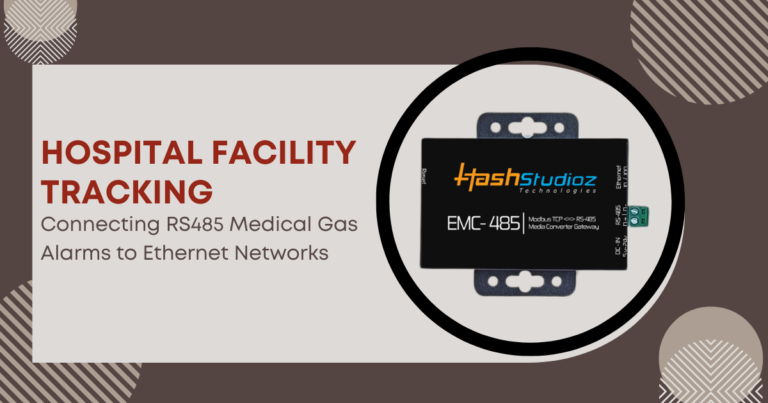
The physical converter contains terminal screw blocks to secure the RS485 copper pairs. It also features a standard RJ45 network port to accept a Category 6 Ethernet cable. The internal processor executes a real-time software translation:
- The device receives serial Modbus RTU data packets from the daisy-chained power units.
- The internal processor unpacks the raw serial bits.
- The processor encapsulates the serial data inside a standard TCP/IP Ethernet packet.
- The device transmits the new network packet across the local area network using Modbus TCP.
This conversion process happens in single-digit milliseconds, which preserves the real-time nature of critical life-safety data.
2. Addressing and Network Routing
In technical hardware documentation, engineers often call this device an RS485 to Lan Converter. The device acts as a network node by holding a unique, static Internet Protocol address on the hospital’s infrastructure subnet. This configuration allows central building management servers to send query commands to a specific room or floor from across the campus. The converter routes the command down to the exact serial panel required, which eliminates the need to run kilometers of new network cabling.
Designing a Resilient Hospital Network Topography
Deploying a network converter inside a healthcare facility requires careful attention to safety redundancy. Hospital IT architectures must treat medical gas data as a mission-critical traffic stream.
1. Implementing Virtual Local Area Networks
Network administrators should not mix medical gas alarm traffic with standard guest wireless networks or administrative billing systems. High network congestion could delay critical alarm packets. Engineers configure a dedicated, isolated Virtual Local Area Network for facility tracking hardware. This logical separation protects the gas alarms from external network traffic and prevents unauthorized access to building automation nodes.
2. Power Over Ethernet Integration
Remote alarm locations may lack accessible 120-Volt electrical outlets inside the equipment cabinet. Selecting an RS485 to Ethernet Converter that supports Power over Ethernet solves this installation barrier. The converter draws its operational electrical power directly from the network switch via the Ethernet cable. If the hospital experiences a power failure, the core network switches run on central Uninterruptible Power Supply systems, which keeps the gas monitoring network fully operational.
Technical Advantages of Industrial-Grade Converters
Hospitals might seem like clean, gentle environments, but utility shafts, ceiling plenums, and mechanical rooms present difficult operating conditions. Commercial office networking gear will fail prematurely in these zones.
1. Galvanic Port Isolation
Medical vacuum systems and air compressors utilize large, high-voltage electric motors. When these motors activate, they create electromagnetic transients that travel along nearby conduits. An industrial-grade RS485 to Lan Converter includes built-in galvanic isolation up to 2 Kilovolts on the serial inputs. This optical boundary stops high-voltage surges from jumping into the data paths, which protects the hospital’s core network switches from electrical destruction.
2. Hardware Watchdog Timers
A software lockup on a commercial router might require a manual power reset to restore function. In a medical facility, a frozen converter means losing visibility of life-safety gas pipelines. Industrial conversion hardware utilizes a physical circuit called a hardware watchdog timer. This timer requires continuous software pulses from the internal processor. If the software freezes for a split second, the pulse stops, and the hardware timer triggers an immediate automatic reset to restore data flow.
Real-World Use Cases in Modern Healthcare Centers
Real-world deployment examples demonstrate the practical impact of integrating serial converters into hospital management platforms.
1. Emergency Department Upgrades
A major medical center in Chicago completed a large renovation of its emergency treatment pavilion. The existing zone valve boxes and area alarms used reliable serial boards, but the center needed to link them to a new central control room. Rather than tearing down drywall to install expensive new network cables to every single room, the engineering team placed an RS485 to Ethernet Converter inside each local zone cabinet. The converters consolidated data from 12 distinct gas panels onto the existing hospital network backbone. The centralized software now displays real-time oxygen line pressures for the entire pavilion on a single dashboard screen, which reduced the project’s infrastructure installation costs by 60%.
2. Automated Compliance and Leak Detection
A children’s hospital in Texas uses an automated tracking system to monitor surgical gas pipelines. The facility routed all medical air and nitrous oxide serial metrics through an RS485 to Lan Converter network to an analytical software engine. During a weekend shift, the software detected a slow, continuous pressure drop of 0.1 pounds per square inch per hour in a secondary nitrous oxide line. The automated system alerted the on-duty engineer via a text message before the line reached a dangerous threshold. Technicians located a loose pipeline fitting behind a wall valve panel box, which saved the hospital thousands of dollars in wasted gas and prevented an emergency surgical shutdown.
3. Multi-Building Campus Integration
A regional healthcare network consolidated its operations across three separate buildings on a single campus. The older buildings utilized analog master panels for the surgical vacuum systems, while the newest wing featured digital Ethernet-based telemetry. By retrofitting the legacy structures with industrial RS485 to Ethernet Converter hardware, the central maintenance facility unified the entire campus gas grid into one interface. Technicians can now view vacuum pump duty cycles across all three facilities simultaneously, allowing the team to schedule balanced maintenance rotations and eliminate unexpected pump failures during high-demand surgical shifts.
Key Hardware Selection Criteria
Engineering teams must look closely at technical certifications and physical features when selecting conversion hardware for medical facilities:
- Electrostatic Discharge Protection: Ensure the serial ports carry at least 15 Kilovolt protection against static shocks from maintenance staff.
- Compact Form Factor: The device must fit inside tight, crowded medical gas zone valve cabinets alongside physical copper pipes.
- Simultaneous Connections: The internal software must allow multiple socket connections so the engineering team and security office can read the data concurrently.
- Regulatory Compliance: Verify the device meets CE and FCC part 15 emissions standards to ensure it does not create radio interference with sensitive patient telemetry monitors.
Conclusion
The safety of modern healthcare facilities depends on the continuous, accurate flow of operational data. Medical gas systems provide the literal lifeline for patients inside operating rooms and intensive care units worldwide. While legacy RS485 serial alarm panels offer excellent local reliability, their lack of native network connectivity creates dangerous information silos.
Deploying an industrial RS485 to Lan Converter bridges this critical infrastructure gap. This simple hardware modification allows hospitals to maintain code compliance, automate regulatory data logging, and provide facility engineers with instant visibility of pipeline pressure anomalies. By investing in ruggedized serial-to-ethernet translation tools, healthcare networks maximize patient safety margins and optimize facility tracking across the entire campus.