
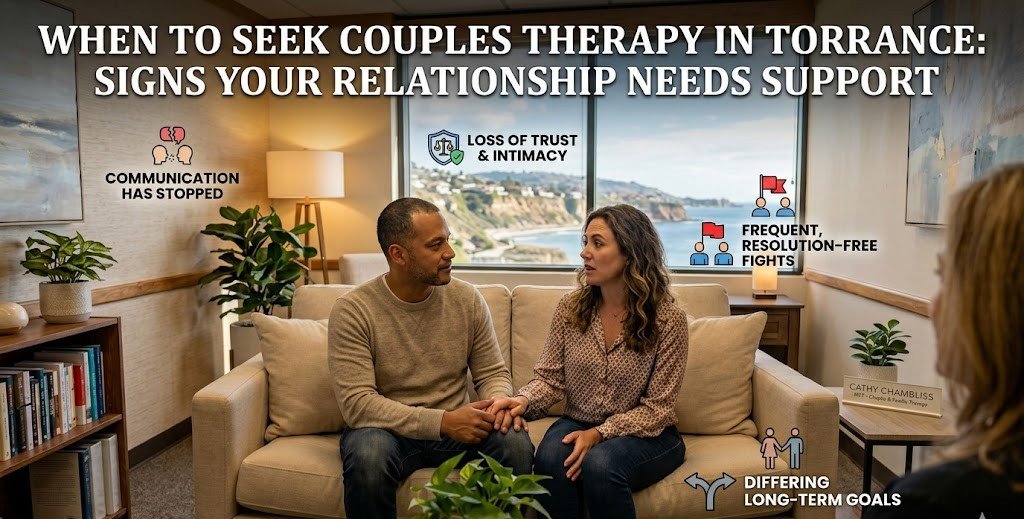
Every relationship experiences ups and downs. Disagreements, stress, and emotional shifts are natural parts of long-term partnerships. However, when challenges begin to feel overwhelming, repetitive, or emotionally draining, it may be time to seek professional support. Recognizing the early warning signs can prevent deeper disconnection and long-term resentment.
If you and your partner are wondering whether therapy is necessary, this guide will help you understand when Couples Therapy Torrance can provide meaningful support. With professional guidance from Cathy Chambliss, couples can rebuild communication, restore emotional closeness, and strengthen their long-term relationship foundation.
Why Couples Delay Seeking Help
Many couples wait too long before reaching out for therapy. Some common reasons include:
- Believing problems will resolve on their own
- Feeling embarrassed or ashamed
- Thinking therapy is only for relationships in crisis
- Fear of being blamed
- Concerns about time or cost
In reality, seeking help early often leads to quicker, more effective results. Couples Therapy Torrance is not just for relationships on the brink of separation—it is for couples who want to grow, heal, and protect their partnership.
1. You’re Having the Same Argument Over and Over
One of the clearest signs that your relationship needs support is repeated unresolved conflict. If you find yourselves arguing about the same topics—finances, parenting, household responsibilities, intimacy—but never reaching resolution, you may be stuck in a negative cycle.
Therapy helps couples:
- Identify the root cause of recurring arguments
- Understand emotional triggers
- Break destructive communication patterns
- Replace criticism and defensiveness with understanding
When repetitive conflict becomes exhausting, it’s time to consider professional guidance.
2. Communication Feels Strained or Ineffective
Healthy communication is the backbone of a strong relationship. If conversations often escalate into arguments or end in silence, your connection may be suffering.
Warning signs include:
- Interrupting each other frequently
- Feeling unheard or dismissed
- Avoiding difficult topics
- Escalating small disagreements into major fights
- Using sarcasm or passive-aggressive language
Couples Therapy Torrance teaches practical communication tools such as active listening, emotional validation, and respectful expression of needs. These skills can dramatically improve how partners interact daily.
3. Emotional or Physical Intimacy Has Declined
Over time, busy schedules and life stress can reduce intimacy. However, when emotional or physical closeness disappears entirely, it may signal deeper issues.
Signs of intimacy challenges:
- Feeling like roommates rather than partners
- Lack of affection
- Avoiding meaningful conversations
- Reduced physical connection
- Feeling emotionally distant
Therapy creates a safe space to explore unmet needs and rebuild emotional safety—an essential foundation for restoring intimacy.
4. Trust Has Been Broken
Infidelity, secrecy, dishonesty, or broken promises can deeply damage a relationship. Rebuilding trust without structured support can feel nearly impossible.
If trust has been compromised, therapy can help by:
- Facilitating honest communication
- Encouraging accountability
- Establishing transparency
- Creating a path toward forgiveness and healing
With professional guidance, many couples successfully rebuild trust and emerge stronger than before.
5. You Feel More Like Opponents Than Teammates
A healthy partnership feels collaborative. If you and your partner often feel like you are competing, criticizing, or “keeping score,” resentment may be building.
Signs include:
- Frequent blame
- Dismissing each other’s efforts
- Lack of appreciation
- Feeling unsupported
- Viewing disagreements as battles to win
Couples Therapy Torrance helps partners shift from opposition to collaboration, strengthening teamwork and shared goals.
6. Major Life Changes Are Creating Stress
Life transitions can significantly impact relationships. Even positive changes can cause strain.
Common transitions include:
- Having a baby
- Career shifts or job loss
- Relocation
- Health challenges
- Caring for aging parents
- Becoming empty nesters
During times of change, therapy provides tools for managing stress together rather than drifting apart.
7. You’re Considering Separation or Divorce
If thoughts of separation have entered the conversation, seeking therapy immediately is crucial. Even if you are unsure whether the relationship can be repaired, therapy provides clarity.
Professional support can help you:
- Explore whether reconciliation is possible
- Understand unresolved pain
- Make informed, thoughtful decisions
- Improve communication regardless of outcome
Therapy is not about forcing couples to stay together—it is about helping them make empowered decisions with clarity and respect.
8. One or Both of You Feel Unheard or Unappreciated
Feeling emotionally unseen can slowly erode connection. If one or both partners feel neglected, dismissed, or undervalued, resentment may grow.
Common experiences include:
- “You never listen to me.”
- “I don’t feel important to you anymore.”
- “Nothing I do is enough.”
Therapy focuses on rebuilding empathy and emotional validation—two key ingredients for long-term satisfaction.
9. Stress Outside the Relationship Is Impacting Your Bond
Work pressure, financial strain, parenting responsibilities, and personal mental health challenges can spill into a relationship.
When stress becomes chronic, couples may:
- Withdraw emotionally
- Argue more frequently
- Feel overwhelmed
- Experience reduced patience
Couples Therapy Torrance provides coping strategies and emotional regulation tools so partners can support each other instead of turning against one another during stressful periods.
10. You Want to Strengthen an Already Healthy Relationship
Not all couples seek therapy because of crisis. Many pursue therapy proactively to enhance communication, intimacy, and long-term resilience.
Preventative therapy can:
- Deepen emotional connection
- Improve conflict resolution skills
- Reinforce shared values
- Enhance long-term satisfaction
Investing in your relationship before major problems arise is one of the healthiest decisions you can make.
What Happens in Couples Therapy?
Working with Cathy Chambliss, LMFT, couples can expect:
- A safe and non-judgmental environment
- Equal space for both partners to share
- Identification of negative cycles
- Development of practical communication tools
- Structured guidance for rebuilding trust
- Ongoing support and accountability
Therapy sessions are collaborative and tailored to each couple’s unique needs.
The Long-Term Benefits of Seeking Support Early
Waiting too long to seek help often allows resentment and emotional distance to deepen. Early intervention offers significant benefits:
- Faster conflict resolution
- Greater emotional awareness
- Improved intimacy
- Reduced stress
- Stronger commitment
- Increased relationship satisfaction
Couples Therapy Torrance equips couples with lifelong skills that extend far beyond the therapy room.
How to Start the Process
Taking the first step may feel intimidating, but it demonstrates strength and commitment. If you recognize any of the signs listed above, professional support can provide clarity and direction.
Visit Cathy Chambliss, LMFT’s website to learn more about her approach and schedule an appointment. Beginning therapy is not an admission of failure—it is a decision to invest in growth and healing.
Final Thoughts
All relationships encounter challenges. The difference between couples who grow stronger and those who drift apart often lies in their willingness to seek support when needed.
If communication feels strained, trust has been damaged, or emotional closeness has faded, Couples Therapy Torrance offers a structured path toward reconnection. With compassionate guidance from Cathy Chambliss, LMFT, couples can rebuild trust, restore intimacy, and strengthen their long-term bond.
Recognizing the signs early and taking action can transform your relationship’s future. Seeking support is not a weakness—it is one of the strongest commitments you can make to your partnership.
