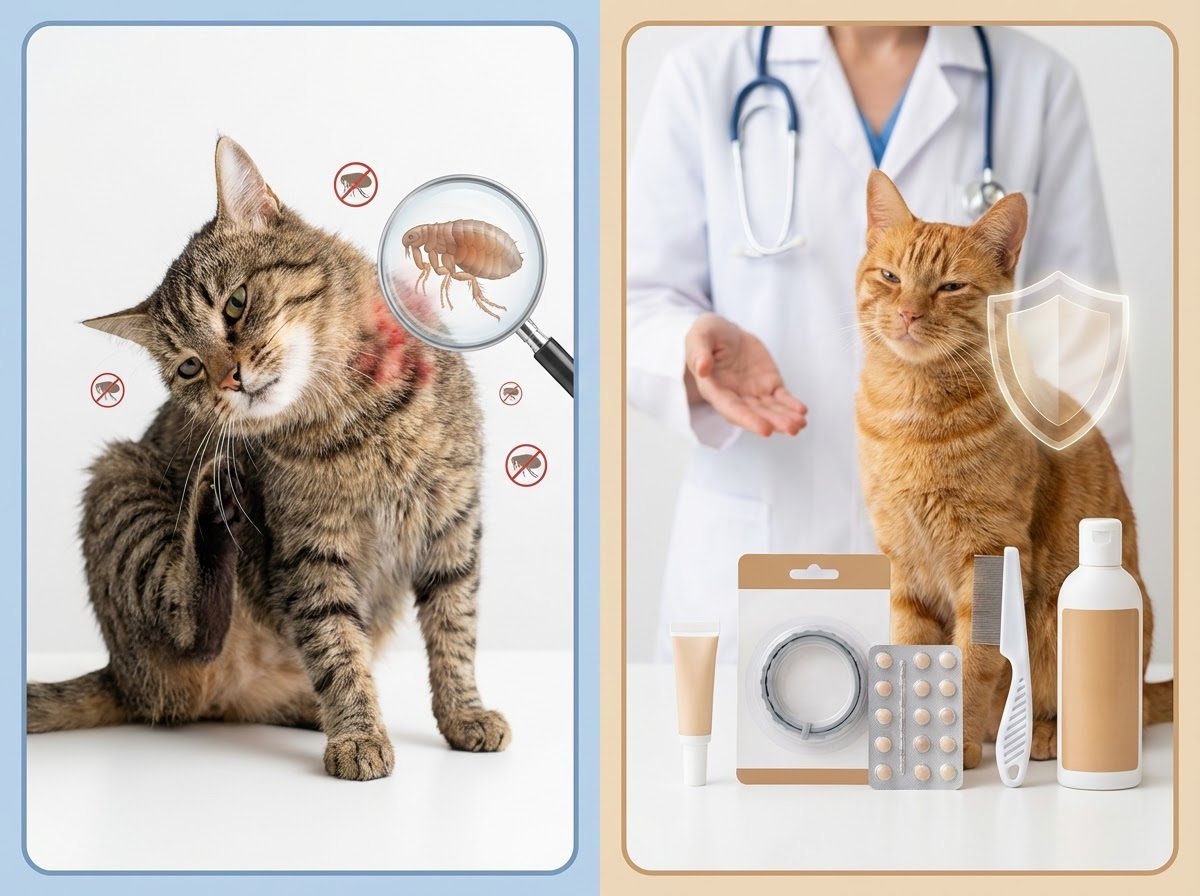
This complete guide explains how fleas affect cats, how to identify them, the safest treatment options, and how to choose the best flea treatment for cats based on your pet’s lifestyle and age.
Why Fleas Are More Than Just an Itch
Fleas aren’t just annoying—they can harm your cat’s health in several ways.
Health risks caused by fleas include:
- Skin irritation leading to redness, scabs, or hair loss
- Allergic reactions, especially in cats with flea allergy dermatitis
- Anemia, caused by excessive blood loss in kittens or small cats
- Tapeworm infections, since fleas can transmit tapeworm eggs
- Behavioral changes, such as restlessness or scratching fits
Quick action and consistent prevention help keep your cat safe, comfortable, and flea-free year-round.
How to Know if Your Cat Has Fleas
Common symptoms of flea infestation
- Constant scratching or biting at the skin
- Tiny black specks (called flea dirt) on the fur or bedding
- Small, fast-moving brown insects visible on the coat
- Scabs around the neck, lower back, or tail
- Over-grooming or bald patches
If you’re unsure, place your cat on a white towel and comb through their fur. If black specks fall and turn reddish-brown when wet, that’s flea dirt.
Types of Cat Flea Treatment
Today’s flea treatments come in multiple forms, making it easy to find something your cat tolerates well.
Topical Treatments (Spot-On)
These are applied to the back of the neck, where your cat can’t lick.
Benefits:
- Easy to use
- Long-lasting protection (usually 30 days)
- Kills fleas, eggs, and larvae
Great for cats who dislike oral medications.
Oral Flea Medication
Given as a chew or tablet, these work internally.
Benefits:
- Fast-acting
- Ideal for cats sensitive to topical solutions
- Some formulas also kill ticks
Always ensure the product is approved for cats—not dogs.
Flea Collars
Modern flea collars are safer and more effective than older versions.
Benefits:
- Long-term protection (up to 8 months)
- Helps repel and kill fleas
- Water-resistant options available
These work best for cats who spend time outdoors.
Flea Shampoos
While not used daily, these are helpful for immediate relief.
Benefits:
- Washes fleas off instantly
- Soothes irritated skin
- Ideal for kittens over 12 weeks
Should be used along with long-term protection.
Flea Combs
Great for mild infestations or regular checking.
Benefits:
- Chemical-free
- Helps remove flea dirt and live fleas
- Safe for kittens and senior cats
Pair this with stronger treatments for best results.
How to Choose the Best Flea Treatment for Cats
The best flea treatment for cats depends on your pet’s age, health, and environment. Here’s how to make the right choice:
1. Consider Your Cat’s Age
- Kittens (8–12 weeks): Use kitten-safe topicals or flea combs
- Adults: Most topical and oral options are safe
- Senior Cats: Choose gentle formulas recommended by vets
2. Check for Skin Sensitivities
If your cat has allergies, a mild topical or oral medication may be safer than a collar.
3. Evaluate Your Cat’s Environment
- Indoor cats: A basic topical treatment is usually enough
- Outdoor or multi-pet homes: Stronger formulas provide better protection
4. Look for Broad-Spectrum Protection
The best products protect against:
- Adult fleas
- Flea eggs
- Larvae
- Ticks
- Mites (optional)
What Ingredients to Look For (and Avoid)
Effective and safe flea-fighting ingredients
- Fipronil
- Imidacloprid
- Selamectin
- Spinosad
- Fluralaner
- Sarolaner
These ingredients are found in many trusted vet-approved brands.
Ingredients to avoid
One of the most common and dangerous questions pet parents ask is can you use dog flea treatment on cats, and the answer is no, as dog flea products often contain ingredients that are toxic to cats and can cause serious health issues.
- Essential oils (unsafe for cats)
- Pyrethrin/pyrethroids (toxic when overdosed)
- Dog-specific formulas
Always check labels carefully before buying anything new.
How to Apply Cat Flea Treatment the Right Way
Topical Treatment Tips
- Part your cat’s fur at the neck
- Apply directly on the skin, not the hair
- Allow it to dry completely
- Avoid touching the area for 24 hours
Oral Treatment Tips
- Hide the tablet in a treat
- Monitor for swallowing
- Give water afterward
- Never double-dose
General Safety Tips
- Never mix products
- Always choose cat-specific treatments
- Wash hands after application
- Keep children away until the area dries
Home & Environment Tips to Prevent Fleas
Even the strongest treatment won’t work if your home stays infested.
Clean your home regularly:
- Wash bedding weekly
- Vacuum carpets and furniture
- Clean cat trees and scratching posts
- Treat rugs with safe flea sprays (if needed)
Outdoor prevention
- Trim bushes and grass
- Avoid letting your cat roam during warm seasons
- Keep wildlife away from your yard
Real-Life Example: What Most Cat Parents Do
Many cat owners combine:
- Monthly topical flea medication
- Weekly flea combing
- Regular bedding wash
- Vacuuming high-traffic areas
This simple routine keeps fleas away for good.
Common Mistakes to Avoid
- Using dog flea products on cats
- Overusing home remedies like vinegar or oils
- Not treating the home environment
- Skipping monthly doses
- Stopping treatment after fleas seem gone
Fleas can live up to 90 days, so consistency is key.
When to See a Veterinarian
Consult a vet if your cat shows:
- Hair loss
- Open wounds
- Pale gums
- Extreme itchiness
- Lethargy
- Skin infections
A vet can recommend the safest cat flea treatment tailored to your cat’s needs.
Final Thoughts
Fleas may be tiny, but they can make a huge impact on your cat’s well-being. With proper prevention, consistent cleaning habits, and the right product, you can enjoy a flea-free home and a much happier cat.
Whether you prefer shampoos, topicals, collars, or oral treatments, choosing the best flea treatment for cats ensures long-lasting protection and peace of mind.
Read more: The Complete Guide to Cat Feeders: Essential Items for Your New Cat Checklist