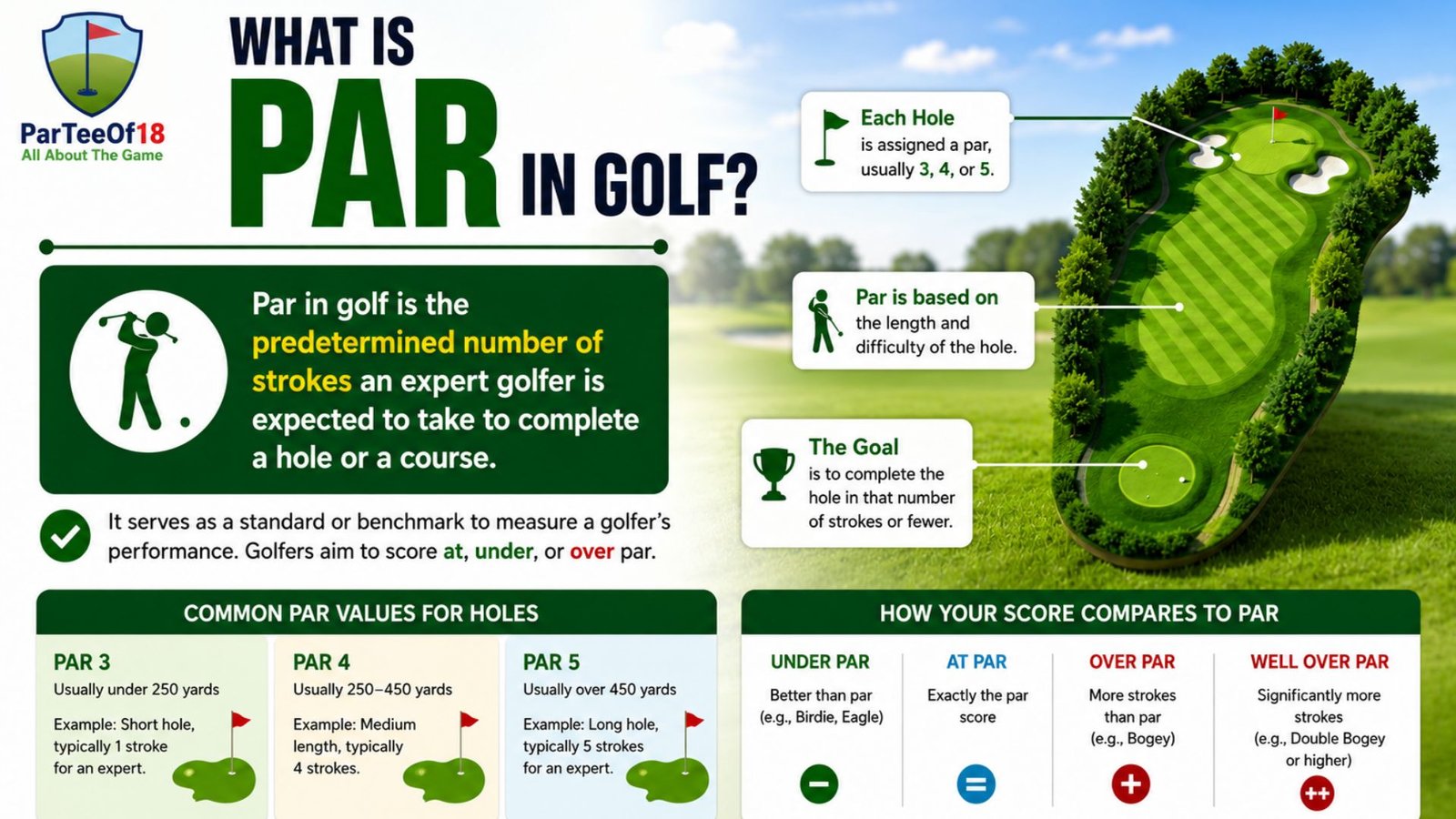
Golf is often described as a game played between the ears. While physical skills such as driving distance, iron accuracy, and putting technique are important, mental strength frequently separates consistent golfers from those who struggle under pressure. Understanding the mental side of scoring can dramatically improve performance and enjoyment on the course.
For many players, learning What Is Par in Golfis one of the first steps toward understanding the game. However, achieving par consistently requires much more than knowing the scoring system. It demands focus, patience, emotional control, and smart decision-making.
In this guide, we’ll explore the psychology behind playing for par, how golfers can develop a stronger mindset, and why mental discipline is often the key to lower scores.
Understanding the Importance of Par
Par serves as the benchmark for evaluating performance on every golf course. Whether you’re playing a local municipal course or a championship venue, par provides a clear scoring target.
Many golfers become obsessed with making birdies, but experienced players understand that consistent pars are often the foundation of great rounds. Professional golfers frequently build successful rounds by avoiding mistakes rather than chasing risky shots.
When players focus on making smart decisions and protecting par, they often discover that lower scores naturally follow.
Why Golf Is a Mental Challenge?
Unlike many sports, golf provides plenty of time to think between shots. While this can help players plan strategically, it can also lead to overthinking.
Common mental challenges include:
- Fear of making mistakes
- Pressure on important shots
- Frustration after bad holes
- Lack of confidence
- Difficulty staying focused
Every golfer experiences these challenges at some point. The difference lies in how they respond.
Successful golfers understand that mental resilience is a skill that can be developed through practice and experience.
Setting Realistic Expectations
One of the biggest mental mistakes golfers make is expecting perfection.
Even the world’s best players miss fairways, greens, and short putts. Trying to play flawless golf creates unnecessary pressure that often leads to poor decisions.
Instead of aiming for perfection, focus on realistic goals:
Accept Imperfection
Bad shots are part of golf. Accepting this reality reduces frustration and helps maintain confidence.
Focus on Process
Concentrate on making good swings and smart decisions rather than obsessing over results.
Play Within Your Ability
Choosing shots that match your skill level improves consistency and reduces costly mistakes.
Golf rewards patience more than aggression.
Building Confidence Through Preparation
Confidence doesn’t magically appear on the first tee. It develops through preparation.
Practice With Purpose
Random practice sessions often provide limited results. Focus on drills that simulate real-course situations.
Work on:
- Short-game control
- Distance management
- Pressure putts
- Recovery shots
Develop a Reliable Routine
A consistent pre-shot routine helps calm nerves and create familiarity under pressure.
Many professional golfers follow nearly identical routines before every shot regardless of the situation.
This consistency allows them to stay mentally balanced throughout a round.
Managing Pressure When Playing for Par
Pressure increases whenever golfers believe a score matters.
The challenge becomes even greater when standing over a putt to save par or preserve a good round.
Stay Present
Thinking about future holes or final scores often creates anxiety.
Instead, focus entirely on the current shot.
Ask yourself:
- What’s the target?
- What’s the safest play?
- What’s the best club choice?
Simple questions help keep attention where it belongs.
Control Breathing
Deep breathing can reduce tension and improve concentration.
Many golfers unknowingly rush their swings when nervous. Controlled breathing slows the mind and body.
Trust Your Decision
Indecision often leads to poor execution.
Once you’ve chosen a shot, commit fully and trust the process.
The Role of Emotional Control
Emotions can either help or hurt performance.
After a poor shot, many golfers allow frustration to affect subsequent holes. This creates a chain reaction that can ruin an otherwise solid round.
Avoid the Snowball Effect
One mistake should only cost one stroke.
Unfortunately, golfers often turn a single bad shot into multiple mistakes because they become angry or impatient.
Learn to Reset
Create a routine for moving on after mistakes.
Examples include:
- Taking a deep breath
- Focusing on the next target
- Repeating a positive phrase
- Reviewing the situation objectively
The best golfers recover quickly because they refuse to dwell on errors.
Smart Course Management for Better Scores
Mental discipline often shows itself through course management.
Players who consistently score well understand that every shot doesn’t need to be heroic.
Choose Conservative Targets
Aiming for the center of greens rather than attacking difficult pin positions can significantly reduce mistakes.
Know When to Play Safe
Sometimes the smartest play is not the most aggressive one.
For example:
- Laying up instead of attempting a risky carry
- Punching out from trouble
- Accepting a bogey rather than risking a double bogey
These decisions protect scores over the long term.
Think Like a Strategist
Golf is often compared to chess because every shot influences the next one.
Planning ahead creates more opportunities to save or make par.
Using Data to Improve Mental Performance
Modern golfers have access to tools that previous generations never had.
A quality golf scoring app can provide valuable insights into performance patterns.
By tracking statistics, players can identify:
- Common mistakes
- Scoring trends
- Strengths and weaknesses
- Performance under pressure
A golf scoring app also helps golfers focus on facts rather than emotions. Instead of guessing why scores fluctuate, players can review actual data and make informed adjustments.
This analytical approach often improves confidence and decision-making.
Developing a Par-Focused Mindset
Many golfers improve dramatically when they stop chasing birdies and start protecting par.
A par-focused mindset emphasizes:
Consistency
Reliable play usually beats occasional brilliance.
Patience
Golf rewards players who remain calm and wait for opportunities.
Discipline
Avoiding unnecessary risks keeps big numbers off the scorecard.
Long-Term Thinking
Every round includes ups and downs. Successful golfers judge performance over 18 holes rather than a single shot.
When players adopt this mindset, scoring becomes more predictable and less stressful.
Understanding the Psychology of Recovery
Every golfer faces adversity during a round.
The true test is not avoiding mistakes but responding effectively after they occur.
Strong mental players:
- Accept mistakes quickly
- Focus on solutions
- Stay positive
- Maintain confidence
Many great rounds include several poor shots. What separates successful golfers is their ability to recover mentally before the next swing.
This resilience often determines whether a player saves par or watches a good round slip away.
Final Thoughts
The mental side of golf is just as important as physical skill. While understanding What Is Par in Golf provides a foundation for scoring, consistently achieving par requires focus, patience, emotional control, and smart decision-making.
Golfers who develop strong mental habits often discover that scores improve without major swing changes. By staying present, managing emotions, making strategic decisions, and learning from each round, players can build the confidence needed to perform under pressure.
In the end, playing for par is not simply about mechanics—it’s about mastering the mindset that allows great golf to happen.
FAQs
1. Why is golf considered a mental game?
Golf requires concentration, emotional control, decision-making, and confidence on every shot, making mental strength crucial for success.
2. How can I stay calm when trying to save par?
Focus on your routine, control your breathing, and concentrate only on the current shot rather than the outcome.
3. What is the biggest mental mistake golfers make?
Many golfers dwell on bad shots, allowing frustration to affect future holes and increase mistakes.
4. Can tracking scores improve mental performance?
Yes. Reviewing performance data helps golfers identify trends and make objective improvements rather than relying on emotions.