
Strong beer in India outsells regular lager by a significant margin India is one of the few markets globally where high-ABV beer dominates mainstream consumption. Strong beer India drinkers are not just chasing higher alcohol content. They want a fuller body, a bolder taste, and a brew that actually delivers character. In this post, you will learn exactly how strong beer differs from regular lager in brewing, alcohol content, flavour, and why it has carved out a loyal following in the Indian market.
What Makes Strong Beer Different from Regular Lager?
Strong beer differs from regular lager primarily in alcohol content, malt volume, and fermentation duration. A standard lager sits between 4–5% ABV. A strong beer typically starts at 6% ABV and can go up to 8% or higher. That gap changes everything the grain bill, the fermentation process, and the final taste profile.
Higher Malt Content Changes the Base
Strong beer uses more malt per batch than regular lager. More malt means more fermentable sugars, which yeast converts into alcohol. The result is a thicker, more flavourful base. Regular lager uses a leaner grain bill, which produces a lighter, crisper finish with less complexity.
Fermentation Time and Yeast Behaviour
Strong beer requires longer fermentation to fully process the higher sugar content. This extended process allows more flavour compounds to develop. Regular lager ferments faster at lower temperatures using bottom-fermenting yeast, which strips out many of those flavour notes. The clean, neutral taste of a lager is a direct result of this cold, efficient process.
ABV and Its Role in Taste Perception
Higher ABV contributes a mild warming sensation and a slightly fuller mouthfeel. At 8% ABV like the American-style strong beer detailed on this craft beer product page the body of the beer feels noticeably different from a 4.5% lager. Alcohol itself carries flavour molecules and intensifies hop and malt perception.
What Is the Alcohol Content of Strong Beer in India?
Most strong beers in India range from 6% to 8% ABV. Some brands exceed 8%, though the 7–8% range dominates the mass and craft market. Regular lagers in India typically sit at 4.5–5% ABV.
Why Indian Drinkers Prefer Higher ABV
India’s beer market is value-driven. Consumers look for higher returns per unit more alcohol per rupee spent. This cultural preference has pushed strong beer to over 80% of total beer sales volumes in India (Source: Euromonitor International, 2023). That is a consumption pattern almost unique to India compared to Western markets where low-ABV session beers dominate.
How ABV Affects the Drinking Experience
At higher ABV levels, beer delivers a more immediate warmth and fuller sensation per sip. This affects how fast you drink, how much you drink, and what food pairs well alongside it. Strong beer suits spicy Indian food far better than a light lager the bold flavour holds up against intense spices.
Is Strong Beer More Bitter Than Regular Lager?
Not necessarily. Bitterness in beer comes from hops, not alcohol. Strong beer can be bitter, malty, or even sweet depending on the hop-to-malt ratio used in brewing. Many Indian strong beers are actually less bitter than imported lagers because they lean into malt-forward profiles to complement the higher ABV.
IBU: The Bitterness Scale
International Bitterness Units (IBU) measure hop bitterness. A standard Indian lager sits around 10–18 IBU. A strong beer can range from 15 to 35 IBU depending on the recipe. American-style strong beers tend to sit in the moderate bitterness range, prioritising a smooth finish over a sharp hop bite.
Flavour Depth Beyond Bitterness
Strong beer often shows more caramel, toast, and grain notes than a regular lager. These come from specialty malts added during the brewing process. A regular lager is engineered for neutrality and refreshment. A strong beer is engineered for character you taste the grain, the fermentation, and the alcohol working together.
How Is Strong Beer Brewed Differently?
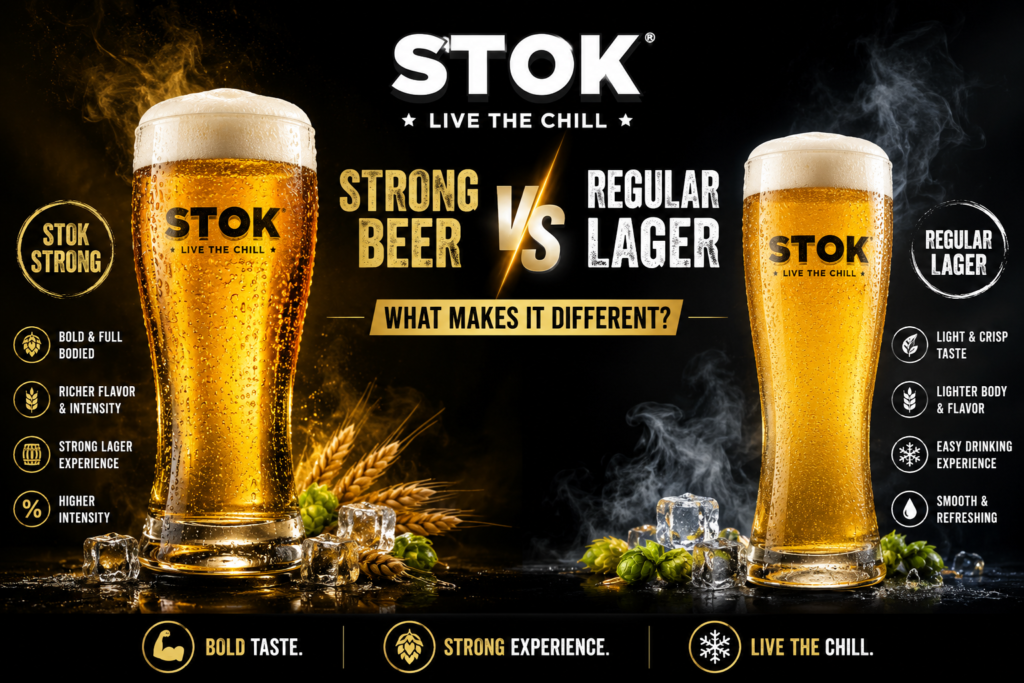
The brewing process for strong beer diverges from regular lager at almost every stage. The grain bill is heavier, the mash temperature is higher, the fermentation runs longer, and the conditioning period extends to allow the higher alcohol content to mellow properly.
The Role of Adjuncts in Indian Strong Beer
Many Indian strong beers use adjuncts rice, corn, or sugar alongside barley malt to hit higher ABV targets while managing costs. This is standard practice in the Indian brewing industry and does not inherently reduce quality. The adjunct ratio and the quality of base malt determine the final result (Source: Brewers Association, 2021).
Conditioning and Finishing
Strong beer spends more time in conditioning tanks than regular lager. This rest period allows harsh alcohol notes to soften and the flavour profile to round out. Skipping or shortening this stage is what produces the rough, harsh finish that some poorly made strong beers carry.
Conclusion
Strong beer and regular lager are built on fundamentally different brewing philosophies. Strong beer in India prioritises ABV, body, and flavour depth. Regular lager prioritises crispness, lightness, and refreshment. Neither is objectively better they serve different occasions and different preferences. As the Indian craft beer segment grows, the line between strong beer and artisan brewing continues to blur. The question worth asking: as drinkers become more educated about what is actually in their glass, will flavour finally start competing with ABV as the primary purchase driver?
We strictly follow all applicable government regulations, legal drinking age policies, and responsible alcohol advertising guidelines in India.
