Introduction
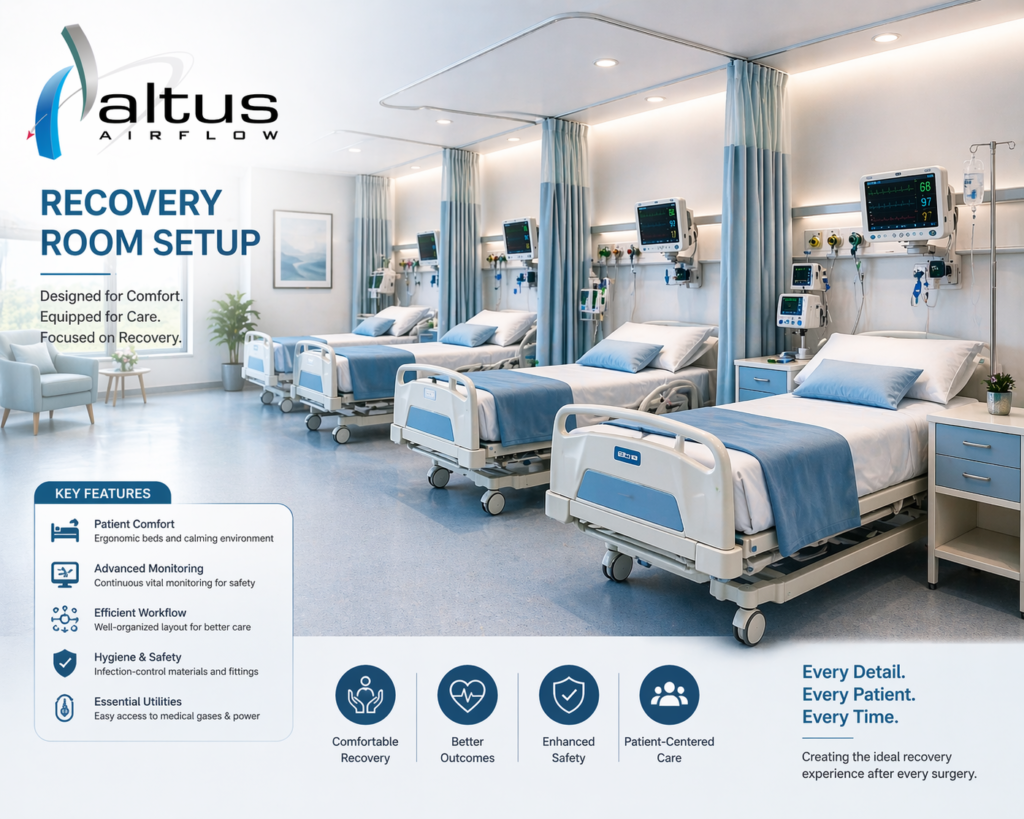
Recovery rooms are critical hospital areas where patients receive close observation immediately after surgery or medical procedures. These spaces must support efficient monitoring, emergency response, infection control, and patient comfort. Since hospitals vary in size, patient volume, and operational requirements, modern healthcare infrastructure increasingly demands flexible and adaptable solutions. In this context, Recovery Room Setup planning focuses on creating customized environments that match the unique needs of each hospital while maintaining safety and clinical efficiency.
Customization of Recovery Room Setups for Hospitals
Yes, recovery room setups can be fully customized according to hospital infrastructure, patient requirements, and operational workflow. Customization is one of the most important aspects of modern healthcare design because every hospital has different space limitations, surgical capacity, and clinical priorities.
The customization process usually begins with a detailed site assessment. Healthcare planners and engineers evaluate available space, proximity to operation theatres, patient transfer routes, and staff workflow patterns. This helps create a layout that maximizes efficiency and safety.
One of the key areas of customization is bed capacity planning. Hospitals can design recovery rooms with different numbers of beds depending on surgical volume and patient load. Compact hospitals may require smaller setups, while large multi-specialty facilities often need high-capacity recovery areas.
Modular infrastructure systems are widely used in customized recovery room setups. Prefabricated wall panels, ceiling systems, and integrated medical service units allow hospitals to modify or expand the recovery room without major reconstruction work.
Medical gas pipeline systems are also customized according to patient care needs. Oxygen outlets, vacuum systems, and compressed air supply points are positioned strategically near each patient bed for easy access during emergencies.
Monitoring systems can be customized as well. Hospitals may choose centralized monitoring stations, bedside monitoring systems, or advanced smart monitoring technologies depending on operational requirements and budget.
Infection control requirements also influence customization. HVAC systems with HEPA filtration, airflow management, and antimicrobial materials are selected based on room size, patient density, and hospital safety standards.
Ergonomic planning is another major factor. Nurse stations, work areas, and equipment placement are designed to improve visibility, reduce response time, and support efficient patient care.
Lighting and environmental controls can also be customized to improve patient comfort. Adjustable lighting, temperature regulation, and noise reduction systems help create a more supportive healing environment.
Scalability is one of the biggest advantages of customized recovery room setups. Hospitals can begin with a smaller setup and later expand capacity as patient demand increases without disrupting overall operations.
Within this flexible framework, Recovery Room Setup solutions are designed to provide hospitals with efficient, safe, and scalable post-operative care environments tailored to their specific needs.
Conclusion
Recovery room setups can be fully customized to suit different hospital requirements, including space availability, patient volume, workflow, and technology integration. Through modular design, advanced planning, and flexible infrastructure systems, hospitals can create highly efficient post-operative care areas. A well-planned Recovery Room Setup ensures better patient monitoring, improved safety, and optimized healthcare operations.
FAQs
1. Can recovery room setups be customized for hospitals?
Yes, Recovery Room Setup solutions can be customized based on hospital space, patient capacity, workflow, and clinical requirements.
2. What factors are considered during customization?
Factors include bed capacity, equipment placement, infection control systems, staff workflow, and available hospital infrastructure.
3. What is a modular recovery room setup?
It is a flexible system using prefabricated components that can be expanded or modified easily according to hospital needs.
4. Can small hospitals have customized recovery rooms?
Yes, compact and efficient recovery room setups can be designed specifically for smaller healthcare facilities.
5. Why is customization important in recovery rooms?
Customization improves workflow efficiency, patient safety, comfort, and space utilization while supporting hospital-specific operational needs.
Read Our Previous Blog———–>How is infection control maintained in recovery rooms?