

Abstract
Buccal ties have recently gained attention in pediatric oral health research due to their potential impact on infant feeding and oral function. A survey-based study led by Dr. Richard Baxter evaluated diagnostic and treatment trends among 466 healthcare professionals. The research explored how clinicians identify buccal frenum restrictions and when intervention may be recommended. Findings indicate that multiple diagnostic techniques are used in clinical practice, and treatment decisions often depend on functional symptoms rather than anatomical appearance alone. The study highlights the need for standardized evaluation protocols and further research in professional pediatrics, especially regarding oral restrictions that may require procedures such as tongue tie surgery.
Introduction
Oral restrictions, including tongue ties, lip ties, and buccal ties, have gained increasing attention in modern pediatric dental care. Tongue tie, medically referred to as Ankyloglossia, is widely recognized for its potential impact on feeding, speech, and oral development. Buccal ties, however, remain a relatively under-researched area within pediatric dentistry and professional pediatrics.
A buccal tie occurs when the buccal frenum—a band of connective tissue connecting the cheek to the gums—creates a restriction that may limit cheek mobility. In certain infants, this restriction may contribute to feeding challenges or oral tension.
To better understand how clinicians approach this condition, Dr. Baxter and colleagues conducted a survey examining diagnostic trends and treatment considerations among healthcare professionals who regularly evaluate oral restrictions.
Study Methodology
The research involved a cross-sectional survey of 466 healthcare professionals who routinely diagnose and manage oral restrictions in infants and children. Participants represented multiple clinical disciplines, including:
- Pediatric dentists
- Speech-language pathologists
- Lactation consultants
- Dental hygienists
- Orofacial myofunctional therapists
The purpose of the survey was to analyze how clinicians diagnose buccal ties, what symptoms they observe in patients, and when treatment—including procedures such as tongue tie surgery—may be considered appropriate in pediatric care.
Diagnostic Methods Used by Healthcare Professionals
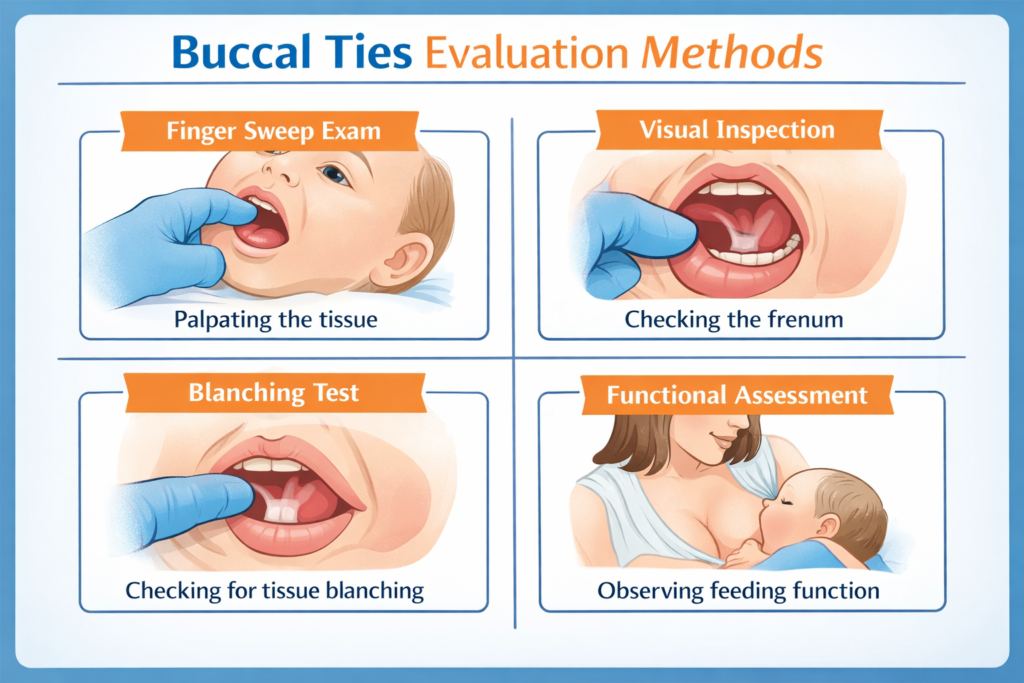
Survey results revealed that healthcare providers typically rely on a combination of structural examination and functional assessment when evaluating buccal restrictions.
Common diagnostic techniques included:
- Finger sweep examination to assess tissue restriction
- Visual inspection of the buccal frenum attachment
- Blanching test, used to evaluate tissue tension
- Functional assessment, particularly during infant feeding
These diagnostic approaches emphasize the importance of evaluating oral function rather than anatomical appearance alone. Clinics specializing in pediatric oral restrictions, such as Alabama Tongue-Tie Center, often combine these methods to provide comprehensive assessments for infants and children.
Clinical Symptoms Associated with Buccal Ties
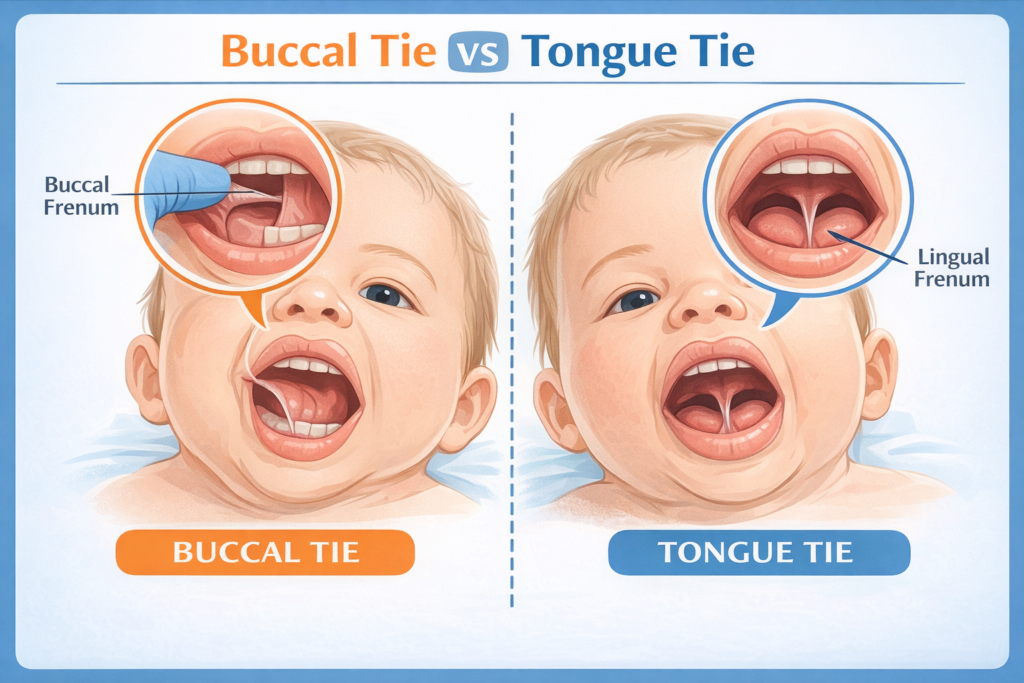
Although not all buccal frena cause functional issues, healthcare professionals reported several symptoms that may indicate a restrictive buccal tie.
Commonly observed concerns include:
- Difficulty maintaining a proper latch during breastfeeding
- Feeding inefficiency or prolonged feeding sessions
- Increased air intake during feeding
- Oral tension or fatigue
In many cases, buccal restrictions may occur alongside other oral conditions such as tongue ties, which sometimes require evaluation for tongue tie surgery if significant functional limitations are present.
Prevalence and Clinical Observations
According to the survey findings, buccal restrictions may affect approximately 5–10% of infants, although researchers emphasize that additional clinical studies are needed to determine accurate prevalence rates.
As awareness grows within professional pediatrics and pediatric dentistry, clinicians continue to refine diagnostic criteria and evaluation techniques to better identify infants who may benefit from treatment.
Treatment Considerations
Treatment decisions for buccal ties depend on both the anatomical restriction and the functional symptoms observed in the patient.
Conservative Management
Healthcare professionals often recommend supportive care as the first step in treatment. These approaches may include:
- Lactation consultation
- Feeding therapy
- Orofacial myofunctional therapy
These non-surgical interventions can sometimes improve oral coordination and feeding performance without the need for surgical procedures.
Surgical Intervention
When a restrictive oral frenum significantly affects feeding or oral function, clinicians may consider a minor surgical release procedure. In some cases, a Tongue Tie Surgery Specialist may perform procedures such as tongue tie surgery or related oral tissue releases to restore normal mobility.
Modern treatment methods often involve dental laser technology, which provides several clinical advantages:
- Precise tissue release
- Minimal bleeding
- Reduced discomfort
- Faster healing
Specialists trained in professional pediatrics and pediatric dentistry evaluate each case carefully to determine whether surgical intervention is appropriate.
Discussion
One of the key conclusions of the study conducted by Dr. Baxter and colleagues is the lack of standardized diagnostic criteria for buccal ties. Although many clinicians report improvements in oral function following treatment, more research is needed to develop clear clinical guidelines.
Future studies may help establish:
- Standard classification systems for buccal ties
- Evidence-based diagnostic protocols
- Long-term outcomes of oral restriction treatments
Such research is important for advancing clinical practices in professional pediatrics, particularly for conditions that may require procedures like tongue tie surgery to improve oral function.
Conclusion
The survey of 466 healthcare professionals provides valuable insights into current clinical perspectives on buccal ties. While awareness of buccal restrictions continues to grow, the condition remains an evolving area of research within pediatric oral healthcare.
The study led by Dr. Richard Baxter highlights the importance of combining anatomical examination with functional assessment when diagnosing buccal ties. As research continues to advance, healthcare providers will be better equipped to identify appropriate treatment options and support optimal feeding, speech development, and oral function in infants and children.
For more detailed insights, read the original research study by Dr. Richard Baxter to learn more about current trends in diagnosing and treating buccal ties in pediatric care.