Author

maraal

Browsing

Fashion rarely stands still, and some of the most interesting pieces emerge when two contrasting ideas merge. The Puffer Trench Coat is a clear example of this evolution. By combining the structured elegance of a trench coat with the insulating comfort of a puffer jacket, this hybrid design redefines what outerwear can achieve in both form and function.

Why This Hybrid Design Works

At first glance, the pairing of a trench silhouette with padded construction might seem unusual. Traditional trench coats are known for their tailored lines and lightweight materials, while puffer jackets prioritize warmth and volume. The puffer trench coat bridges this gap by retaining the elongated shape of a trench while incorporating quilted insulation.

This fusion allows wearers to enjoy the sophistication of a classic coat without sacrificing protection against colder temperatures. It’s not simply a blend of two garments—it’s a thoughtful redesign that responds to changing climate needs and evolving style preferences.

A Shift Away from Seasonal Limitations

One of the most notable advantages of the puffer trench coat is its ability to extend beyond typical seasonal boundaries. Standard trench coats are often associated with mild or rainy weather, while puffer jackets are reserved for winter. This hybrid piece challenges that separation.

With its added insulation, the coat becomes suitable for colder environments, reducing the need to switch between multiple outerwear options. For individuals who prefer a streamlined wardrobe, this versatility offers both convenience and efficiency.

Balancing Structure and Comfort

The defining strength of a puffer trench coat lies in its balance. The structured design maintains a polished appearance, making it appropriate for both casual and semi-formal settings. At the same time, the padded construction ensures comfort and warmth.

Designers often pay close attention to details such as waist belts, button placements, and stitching patterns to preserve the trench coat’s identity. Meanwhile, the quilted sections are engineered to distribute insulation evenly, preventing bulkiness from overwhelming the silhouette.

Styling Beyond the Expected

Unlike traditional outerwear, the puffer trench coat opens the door to more creative styling. It can be worn over tailored outfits to add warmth without losing refinement, or paired with relaxed clothing for a more contemporary look.

Neutral tones tend to highlight its versatility, while bold colors or finishes can turn it into a statement piece. The length of the coat also plays a role, with longer versions offering a dramatic effect and shorter adaptations providing a more casual feel.

Practical Considerations When Choosing One

Selecting the right puffer trench coat involves more than aesthetic appeal. Material quality is essential, as it influences both durability and insulation performance. Lightweight yet effective padding ensures comfort without excessive weight.

Fit is another critical factor. The coat should allow for layering while maintaining a clean silhouette. Adjustable features such as belts or cuffs can enhance both comfort and overall appearance. Attention to these details ensures that the coat remains functional as well as stylish.

Reflecting Modern Fashion Priorities

The growing popularity of the puffer trench coat reflects broader changes in how people approach clothing. Today’s consumers often prioritize versatility, longevity, and adaptability. Instead of owning multiple specialized items, many prefer pieces that can serve multiple purposes.

This shift encourages designers to experiment with hybrid concepts that challenge traditional categories. The puffer trench coat is one such innovation, demonstrating how fashion can respond to practical needs without losing its creative edge.

Conclusion

The Puffer Trench Coat represents more than just a trend—it highlights a new direction in outerwear design. By merging two distinct styles into a cohesive garment, it offers a solution that is both functional and visually compelling. For those seeking a balance between warmth, structure, and adaptability, this modern hybrid provides a unique and forward-thinking option.

When Clothing Was Engineered for Extreme Reality

The B-3 Bomber  did not start as a fashion item. It was created in an environment where clothing had to solve a survival problem, not a style preference. In freezing, high-altitude conditions, design choices were not optional—they were functional requirements.

That origin changes how the jacket should be understood. It is not simply “inspired by aviation.” It is a direct response to it. Every seam, lining, and closure was designed around one question: how does a person stay functional in extreme cold for extended periods?

This is why the B-3 Bomber still feels different from modern outerwear—it carries that original logic within its structure.


Sheepskin Isn’t Decoration, It’s Engineering

One of the defining elements of the B-3 Bomber is its heavy sheepskin lining. In modern fashion, shearling is often treated as a luxury detail. In this case, it is pure engineering.

Sheepskin has a natural structure that traps heat while still allowing breathability. That balance is critical in environments where temperatures can drop suddenly but physical activity still generates body heat.

Unlike synthetic insulation, which is layered artificially, sheepskin works as a continuous system. The warmth is not added—it is built into the material itself.

This is one of the reasons the jacket still feels unusually substantial when worn. It was never designed to be light—it was designed to be reliable.


Why the Silhouette Feels So Heavy

The B-3 Bomber is visually and physically weighty. That heaviness is not accidental. It reflects the priorities of its original design era, where protection mattered more than mobility aesthetics.

The thick leather exterior acts as a wind barrier, while the internal shearling lining adds structure and insulation. Combined, they create a garment that resists environmental pressure rather than adapting to fashion trends.

This is why it does not behave like modern lightweight jackets. It does not “flex” with trends—it holds its own form.


Function Before Fashion, Then Function Becomes Identity

The transition of the B-3 Bomber from military gear to cultural clothing is not unusual, but it is important to understand what actually changed.

The jacket itself did not evolve dramatically. Instead, its context changed. What was once strictly functional began appearing in civilian environments, where its appearance carried meaning beyond utility.

Over time, people began associating it with resilience, ruggedness, and authenticity. These associations turned into style cues, even though the original design intent never included fashion expression.

This is how utility clothing becomes symbolic without being redesigned.


Why It Still Feels Relevant Today

Modern outerwear is often focused on minimal weight, synthetic insulation, and modular layering. The B-3 Bomber stands in contrast to that approach. It is heavy, structured, and uncompromising.

Yet that is exactly why it remains relevant.

In a market filled with highly engineered but visually similar jackets, the B-3 stands out because it is unapologetically specific. It does not try to solve every weather condition. It focuses on one extreme: cold.

That clarity gives it a kind of permanence that trend-based designs rarely achieve.


The Relationship Between Ageing and Material

One of the most distinctive qualities of the B-3 Bomber is how it changes over time. Leather does not remain static. It develops creases, softens in movement areas, and adjusts to the wearer’s body.

Shearling also compresses slightly with use, creating a more personalized interior shape. This means the jacket gradually becomes less “manufactured” in appearance and more “lived-in.”

Instead of wearing out in a traditional sense, it records usage. Each mark is a trace of interaction rather than damage.


A Jacket That Doesn’t Compromise Its Identity

Many modern reinterpretations of the B-3 Bomber attempt to reduce its weight or streamline its profile. But doing so often changes its fundamental character.

The original design is not minimal. It is intentionally dense. That density is part of what defines it. Removing too much of it can make it visually similar to other shearling jackets but strips away its functional heritage.

In this case, authenticity is tied directly to structure, not just appearance.


Why It Still Attracts Attention Without Trying

The B-3 Bomber does not rely on visual exaggeration or seasonal reinvention. Its presence comes from proportion, material honesty, and historical context.

People notice it because it feels grounded. In a world where many garments are designed to be lightweight, flexible, and interchangeable, it remains fixed in its original logic.

That resistance to change is what makes it stand out, even without trying to.


Conclusion: A Design That Refuses to Lose Its Purpose

The B-3 Bomber  is not a jacket that adapted to fashion. Fashion adapted around it.

Its identity is still tied to function, even when worn in completely different environments than those it was designed for. That consistency is what gives it longevity.

It is not defined by trend cycles or seasonal relevance. It is defined by the fact that its original problem—surviving extreme cold—has never changed.

The idea of combining traditional artistry with modern automotive accessories may seem unconventional at first, yet Persian Rug Car Mats are quickly gaining attention among drivers who want more than standard interiors. These mats transform a purely functional component of a vehicle into a statement of taste, culture, and individuality.

Inspired by Centuries of Craftsmanship

Persian rugs are known worldwide for their intricate patterns, symbolic motifs, and exceptional craftsmanship. Translating these elements into car mats brings a sense of history into an otherwise utilitarian space. Each design is often influenced by classic rug styles, featuring geometric precision, floral arrangements, and rich color palettes that reflect a legacy spanning generations.

Rather than simply mimicking traditional rugs, modern interpretations adapt these patterns for automotive use. The result is a fusion of heritage and practicality, where artistry is preserved without compromising usability.

Redefining Car Interior Aesthetics

Standard car mats are typically designed with durability in mind, often overlooking visual appeal. Persian rug car mats challenge that norm by introducing texture and character into the vehicle’s interior. They create a focal point that contrasts with the uniform surfaces commonly found in cars.

This shift is particularly appealing to drivers who view their vehicles as an extension of their personal style. Instead of settling for generic accessories, they seek elements that reflect individuality. A carefully chosen set of patterned mats can subtly elevate the overall atmosphere of the cabin.

Materials Designed for Everyday Use

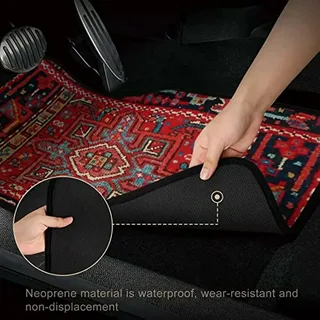
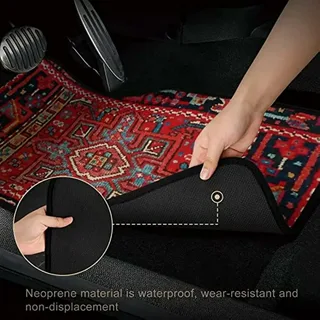
While the inspiration comes from delicate textiles, Persian rug car mats are engineered for durability. High-quality synthetic fibers or treated fabrics are often used to replicate the look of traditional rugs while ensuring resistance to dirt, moisture, and wear.

The backing is typically designed to prevent slipping, maintaining safety during driving. This balance between aesthetics and functionality ensures that the mats are not merely decorative but also practical for daily use.

A Unique Blend of Tradition and Modern Lifestyle

One of the most compelling aspects of Persian rug car mats is their ability to bridge different worlds. They bring a sense of cultural richness into a fast-paced, modern environment. This combination resonates with individuals who appreciate both heritage and innovation.

In a way, these mats represent a shift in how people approach design. Instead of separating tradition from contemporary living, they integrate the two, creating products that feel both meaningful and relevant.

Choosing the Right Design for Your Vehicle

Selecting the right Persian rug car mats involves more than picking an attractive pattern. Color coordination with the car’s interior plays a significant role in achieving a cohesive look. Subtle tones may complement a minimalist cabin, while bold patterns can create a striking contrast.

Size and fit are equally important. Mats should align precisely with the vehicle’s floor dimensions to ensure comfort and safety. Custom-fit options often provide the best results, combining visual appeal with practicality.

Maintenance Without Compromise

Despite their intricate appearance, maintaining Persian rug car mats is relatively straightforward. Regular vacuuming helps remove dust and debris, while occasional spot cleaning keeps the colors vibrant. Many modern versions are designed to withstand frequent use without losing their visual charm.

Proper care not only preserves their appearance but also extends their lifespan, making them a worthwhile addition to any vehicle.

The Growing Appeal of Artistic Car Accessories

The rise of Persian rug car mats reflects a broader trend in consumer preferences. People are increasingly drawn to products that tell a story and offer more than basic functionality. In the automotive world, this means moving beyond standard accessories and embracing items that add character and depth.

As drivers continue to seek personalization, items like these are likely to become more prominent. They demonstrate that even the smallest details can have a significant impact on the overall driving experience.

Conclusion

Persian Rug Car Mats offer a fresh perspective on car interior design by blending artistic tradition with modern practicality. They go beyond the conventional role of floor protection, introducing elegance and individuality into everyday driving. For those looking to redefine their vehicle’s interior, these mats provide a distinctive and meaningful option that stands apart from the ordinary.

Moving Beyond the Idea of “Just Floor Protection”

At first glance, Persian Car Mats  might seem like a decorative variation of standard vehicle mats. But that interpretation is too narrow. They sit at the intersection of function and visual identity, transforming a purely utilitarian surface into something that contributes to the character of a car interior.

Most car accessories are invisible by design. They are meant to blend in, disappear, and do their job quietly. Persian-style mats do the opposite—they introduce visual presence into a space that is usually neutral and industrial.

This shift changes how people perceive the interior of a vehicle.


Why Persian Design Still Feels Relevant Today

The patterns associated with Persian design have a long history rooted in symmetry, repetition, and symbolic geometry. These designs were never created for mass-produced environments. They were meant to be experienced slowly, often in static spaces like homes or cultural settings.

When translated into Persian Car Mats, that same design language enters a completely different context: movement.

Cars are dynamic spaces. Light changes constantly, angles shift, and the viewer’s perspective is never fixed. In that environment, intricate patterns behave differently. They don’t remain static decorations—they create a sense of motion even when the vehicle is still.

That contrast is part of what makes them visually distinctive.


The Functional Side That Often Gets Overlooked

It’s easy to focus only on aesthetics, but Persian Car Mats still serve a practical purpose. At their core, they are designed to protect the vehicle’s floor from dirt, dust, moisture, and daily wear.

What sets them apart is how that protection is layered into design rather than hidden beneath it. Instead of plain rubber or simple fabric, the protective surface carries visual complexity.

Modern versions are typically engineered using durable materials that can handle repeated pressure from foot traffic while maintaining pattern clarity. This combination of strength and design is what allows them to function in real-world driving conditions.


Interior Identity: Why Small Details Matter

Car interiors often look similar across brands. Even premium vehicles tend to share neutral tones, predictable materials, and minimal variation. This creates a space that is efficient—but visually repetitive.

Persian Car Mats introduce one of the simplest ways to break that uniformity without modifying the vehicle itself. They change the visual tone of the floor area, which is more important than it seems.

Why? Because the floor is one of the largest continuous surfaces in a car interior. Even subtle changes there influence the overall atmosphere.

Instead of a purely functional cabin, the space starts to feel curated.


The Contrast Between Modern Vehicles and Traditional Patterns

One of the most interesting aspects of Persian Car Mats is contrast. Modern vehicles are built around clean lines, metallic finishes, and synthetic materials. Persian patterns are detailed, organic, and historically rooted.

When these two design languages meet, neither dominates. Instead, they highlight each other.

The precision of a modern car makes the complexity of the pattern stand out more clearly. At the same time, the decorative richness of the mats softens the mechanical feel of the interior.

This balance is what gives them visual impact without requiring structural modification.


Practical Considerations in Real Use

While aesthetics are important, real-world usability determines whether Persian Car Mats are effective long-term. Several practical factors come into play:

  • They must stay fixed during driving to avoid shifting
  • They need to withstand repeated friction from footwear
  • They should be easy to clean without damaging the design
  • They must resist fading from sunlight exposure inside the vehicle

Because of these requirements, modern versions often rely on layered construction techniques rather than traditional textile methods alone.

This ensures that visual detail does not come at the cost of durability.


Personal Expression in a Limited Space

Unlike homes or offices, cars offer very limited space for personalization. You cannot easily change structure, layout, or permanent fixtures. That makes small design choices more meaningful.

Persian Car Mats function as one of those subtle personalization tools. They allow drivers to express taste without altering the vehicle permanently.

Some people choose them for cultural appreciation, others for aesthetic preference, and some simply for visual variety in an otherwise uniform interior.

In all cases, they act as a low-commitment form of customization with high visual impact.


Why They Stand Out Without Trying to Dominate

Not every car accessory needs to be bold to be noticeable. The appeal of Persian Car Mats comes from detail rather than scale.

They don’t overpower the interior. Instead, they occupy a space that is usually ignored—the floor—and make it visually engaging. This kind of subtle transformation is often more effective than large modifications because it integrates into daily use naturally.

You don’t need to “notice” them constantly for them to affect the feel of the space.


Conclusion: Design That Lives Underfoot

Persian Car Mats  represent a small but meaningful shift in how car interiors are perceived. They take a functional necessity and turn it into a visual element without removing its practical purpose.

Their value lies not in replacing standard mats, but in reinterpreting what a car interior surface can contribute to the overall experience.

In a space defined by movement, repetition, and utility, they introduce detail, identity, and quiet visual depth—without ever demanding attention.

A Garment That Started With Risk, Not Style

The Leather Biker Jacket  didn’t begin in fashion studios or runway collections. It originated from a need for protection in a high-risk environment—riding motorcycles at speed, exposed to wind, friction, and impact.

That origin matters because it defines everything about its structure. The jacket was not designed to “look cool” first. It was designed to reduce harm, resist abrasion, and provide a controlled layer between the body and unpredictable road conditions.

Over time, what began as protective equipment slowly moved into everyday clothing. But the foundation never changed—it still carries the logic of protection built into its seams.


Why Leather Was Never Just a Style Choice

The material itself is not decorative. In a Leather Biker Jacket, leather acts as a functional barrier. It resists tearing, handles friction, and adapts over time rather than breaking down immediately.

Unlike synthetic fabrics that prioritize lightness, leather prioritizes endurance. It reacts to use rather than resisting it. This is why older jackets often look better with age instead of worse—they evolve through wear instead of degrading.

This transformation is not accidental. It is part of how the material behaves under real-world conditions.


Structure Built Around Movement

One of the most overlooked aspects of a Leather Biker Jacket is how carefully it is shaped for motion. Every element serves a purpose:

  • Sleeves are shaped for forward arm positioning
  • Zippers are placed to reduce wind exposure
  • Shoulder structure supports riding posture
  • Fit is adjusted to reduce flapping at speed

Nothing is random. Even the asymmetrical front zipper—often seen as a style choice—originated as a practical solution to reduce wind intrusion while riding.

This is why the jacket still feels “engineered” compared to most outerwear.


The Shift From Function to Identity

At some point, the Leather Biker Jacket stopped being just riding gear and became a visual symbol. That shift did not happen through redesign—it happened through context change.

Motorcyclists, musicians, actors, and everyday wearers adopted it not because it changed, but because society’s perception of it did.

It began to represent independence, rebellion, and self-direction. These meanings were not built into the material—they were layered onto it over time through cultural association.

This is why the same jacket can feel different depending on who is wearing it.


Why It Still Feels Relevant in Modern Fashion

Unlike many trend-driven garments, the Leather Biker Jacket has not needed reinvention to stay relevant. Its core design has remained stable for decades.

What changes is how it is styled, not how it is built. It can be paired with denim, minimal outfits, formal contrasts, or layered streetwear, but the jacket itself remains unchanged.

This stability is rare in fashion, where most items evolve quickly or disappear entirely after short trend cycles.

The biker jacket persists because it was never dependent on trends to begin with.


The Psychology of Wearing It

Clothing affects behavior more than people often realize. A Leather Biker Jacket carries a certain visual weight. It creates presence.

Wearing it often changes posture, movement, and even perception of confidence. This is not because the jacket has symbolic power on its own, but because it has been culturally associated with strong visual identities for decades.

In that sense, it functions as a kind of social shorthand. People interpret it quickly, even without consciously thinking about it.


Aging as Part of the Design System

One of the most defining features of a Leather Biker Jacket is how it ages. Unlike garments that are expected to remain visually identical over time, leather is meant to change.

Scratches, creases, and softened areas are not defects—they are records of use. The jacket becomes more individual the longer it is worn.

This is why no two older biker jackets look the same. Each one develops its own pattern based on movement, environment, and frequency of use.


Why It Doesn’t Fit Into a Single Category

Trying to label a Leather Biker Jacket purely as fashion or purely as utility misses its actual identity. It exists in both spaces at once.

It is protective gear that became cultural clothing. It is functional design that became symbolic. It is structured engineering that became aesthetic identity.

That overlap is what makes it difficult to replace or replicate meaningfully.


Conclusion: A Design That Outlives Its Original Purpose

The Leather Biker Jacket   remains relevant not because it changes with fashion, but because it was built on principles that don’t expire—protection, structure, and durability.

Its evolution from riding gear to cultural icon did not require redesign. It required reinterpretation.

And even today, it continues to sit in that unusual space where function and identity meet, unchanged in structure but constantly redefined by the people who wear it.

Why Ecommerce Finance Is Not Like Traditional Business Finance

Running an online store looks simple on the surface—products, listings, sales, and deliveries. But financially, it behaves very differently from traditional retail. Money doesn’t flow through a single channel. It moves across platforms, payment gateways, ad networks, marketplaces, and shipping systems.

This is where Ecommerce bookkeeping services  become essential. They are not just about recording transactions. They are about connecting fragmented financial activity into a single, readable system.

Without that structure, ecommerce businesses often operate with partial financial visibility, even when sales are strong.


The Hidden Complexity Behind Every Online Sale

A single ecommerce transaction can involve multiple layers:

  • A customer payment through Stripe, PayPal, or a marketplace
  • Platform fees deducted immediately
  • Shipping costs processed separately
  • Advertising expenses tied to the sale indirectly
  • Refund or return risks affecting future revenue

Unlike traditional sales, revenue in ecommerce is not clean or linear. It is distributed across systems.

Ecommerce Bookkeeping Services exist to rebuild that fragmented activity into a clear financial picture where each sale can be understood in full context, not just as a final number.


Why Cash Flow Feels Unstable in Ecommerce

Many ecommerce business owners experience a common problem: sales are consistent, but cash flow feels unpredictable.

This happens because revenue is not always received in real time, while expenses often are. Advertising platforms charge continuously, inventory must be replenished upfront, and payment processors release funds on delayed cycles.

Without structured bookkeeping, this timing mismatch creates confusion.

Proper Ecommerce Bookkeeping Services help map when money is earned versus when it is actually received and spent. That distinction is critical for understanding liquidity and planning growth.


The Role of Data Accuracy in Scaling Online Stores

Scaling an ecommerce business is not just about increasing sales—it is about maintaining clarity as complexity grows.

As product catalogs expand and sales channels multiply, financial tracking becomes harder to manage manually. Errors compound quickly: duplicated entries, missing fees, or misclassified expenses.

This is where Ecommerce Bookkeeping Services shift from being helpful to being foundational. They ensure that growth does not come at the cost of financial confusion.

Accurate data allows businesses to:

  • Identify profitable products
  • Understand true advertising ROI
  • Track platform performance
  • Evaluate supplier costs correctly

Without accuracy, scaling becomes guesswork.


Why Platform Fees Make Ecommerce Bookkeeping Unique

One of the most overlooked aspects of ecommerce finance is platform dependency. Businesses selling through Amazon, Shopify, eBay, or similar platforms deal with layered fee structures that change depending on category, region, or promotion.

These fees are not always visible in final sales figures unless properly recorded.

Ecommerce Bookkeeping Services separate gross sales from net revenue, ensuring that business owners understand what they actually earn after deductions.

This distinction is critical because high sales volume can still hide low profitability if fees are not properly analyzed.


Inventory as a Financial Variable, Not Just Stock

In ecommerce, inventory is not just physical stock—it is capital that is continuously in motion.

Every purchase, storage cost, and unsold item affects financial stability. Unlike service businesses, ecommerce companies must constantly convert inventory into revenue to maintain balance.

Proper bookkeeping tracks:

  • Inventory purchases
  • Stock turnover rates
  • Cost of goods sold (COGS)
  • Unsold inventory value

Ecommerce Bookkeeping Services connect inventory movement directly to financial outcomes, helping businesses understand how stock behavior impacts profitability.


Why Automation Alone Is Not Enough

Many ecommerce platforms offer automated financial tools. While these tools are useful, they are not sufficient on their own.

Automation can record transactions, but it often fails to interpret them correctly across multiple systems. For example, it may not reconcile refunds properly or align marketplace payouts with actual sales timelines.

Human oversight within Ecommerce Bookkeeping Services ensures that data is not just collected, but correctly structured and interpreted.

Automation provides speed. Bookkeeping provides accuracy.


The Real Value: Decision Clarity, Not Just Reports

The ultimate purpose of Ecommerce Bookkeeping Services is not to produce reports—it is to support decisions.

When financial data is structured properly, business owners can:

  • Adjust pricing strategies confidently
  • Allocate advertising budgets effectively
  • Identify underperforming products early
  • Plan inventory purchases with accuracy

Without this clarity, decisions are often reactive rather than strategic.


Conclusion: Turning Complex Sales Into Clear Systems

Ecommerce may appear fast and flexible, but its financial structure is highly complex beneath the surface. Every sale is influenced by multiple systems, fees, and timing differences.

Ecommerce bookkeeping services  transform this complexity into structure. They turn scattered financial events into a coherent system that supports understanding, planning, and growth.

In the end, successful ecommerce is not just about selling more—it is about knowing exactly what those sales mean in real financial terms.

Introduction

As artificial intelligence continues to reshape how content is created, the need for reliable verification tools has grown rapidly. One such solution gaining attention is the  AIチェッカー , a tool designed to analyze and evaluate whether content is generated by AI or written by humans. With businesses, educators, and content creators relying heavily on originality, AIチェッカー tools have become essential in maintaining trust and quality.

What is an AIチェッカー?

An AIチェッカー is a specialized system that examines text and determines the likelihood that it was produced by artificial intelligence. These tools rely on linguistic patterns, sentence structures, and probability models to detect subtle signals that differentiate human writing from machine-generated content.

Unlike basic plagiarism checkers, which compare text against existing sources, an AIチェッカー focuses on identifying the style and construction of the writing itself. This makes it particularly useful in modern contexts where AI-generated content may be entirely original but still lacks human authenticity.

Why AI Detection Matters Today

The increasing accessibility of AI writing tools has made content generation faster and easier. However, this convenience comes with challenges:

  • Academic Integrity: Educational institutions are concerned about students submitting AI-generated work.
  • Content Quality: Businesses want to ensure their messaging feels genuine and engaging.
  • Search Engine Trust: Search engines prioritize helpful, human-centered content over automated text.

An AIチェッカー helps address these concerns by providing an additional layer of verification, ensuring that content aligns with expected standards.

Key Features of an Effective AIチェッカー

Not all detection tools are created equal. A high-quality AIチェッカー typically includes several important features:

1. Advanced Pattern Recognition

It uses machine learning algorithms to analyze writing patterns, identifying characteristics commonly associated with AI-generated text.

2. Probability Scoring

Instead of giving a simple yes/no answer, many tools provide a percentage indicating how likely the content is AI-generated.

3. Detailed Feedback

Some AIチェッカー tools highlight specific sentences or phrases that appear artificial, helping users refine their writing.

4. Multi-Language Support

As global usage increases, support for multiple languages—including Japanese—is becoming essential.

See more: 生成aiチェッカー 

Benefits for Businesses and Creators

Using an AIチェッカー offers several advantages beyond simple detection:

Improved Content Originality

Writers can ensure their work maintains a natural tone, making it more engaging for readers.

Stronger Brand Voice

Businesses can preserve a consistent and authentic voice, which is critical for building trust with their audience.

Risk Reduction

By verifying content before publication, companies can avoid potential reputational issues linked to low-quality or overly automated material.

Limitations to Keep in Mind

While AIチェッカー tools are powerful, they are not flawless. Detection accuracy can vary depending on the complexity of the text and the sophistication of the AI used to generate it. In some cases, highly edited AI content may appear human, while very structured human writing might be flagged incorrectly.

Because of this, AI detection should be used as a supporting tool, not the sole decision-maker.

Best Practices for Using AIチェッカー

To get the most value from an AIチェッカー, consider the following approach:

  • Use it during editing, not just after completion
  • Combine it with human review for better judgment
  • Revise flagged sections to improve clarity and natural flow
  • Focus on readability, not just detection scores

By integrating these practices, users can produce content that is both original and high-quality.

The Future of AI Content Verification

As AI technology evolves, so will detection tools. Future versions of AIチェッカー systems are expected to become more accurate, context-aware, and capable of analyzing deeper linguistic nuances. They may also integrate directly into writing platforms, offering real-time feedback during content creation.

This ongoing development highlights the growing importance of authenticity in digital communication. In a world where AI can generate vast amounts of text instantly, the ability to distinguish human creativity becomes increasingly valuable.

Conclusion

The emergence of the AIチェッカー reflects a broader shift in how we approach content creation and verification. Rather than replacing human input, these tools serve as a safeguard, helping ensure that writing remains authentic, trustworthy, and meaningful.

For businesses, educators, and creators alike, adopting an AIチェッカー is not just about detection—it’s about maintaining standards in an era where the line between human and machine-generated content continues to blur.

For more information: click here