In the ever-evolving field of minimally invasive surgery, laparoscopic techniques have become the gold standard for many procedures due to their reduced patient recovery time, smaller incisions, and fewer complications. However, mastering laparoscopic surgery is no small feat. Unlike open surgery, it demands an entirely different set of skills—precise hand-eye coordination, depth perception, and refined instrument control. This is where the endotrainer becomes an indispensable tool for every aspiring and practicing laparoscopic surgeon.
What Is an Endotrainer?
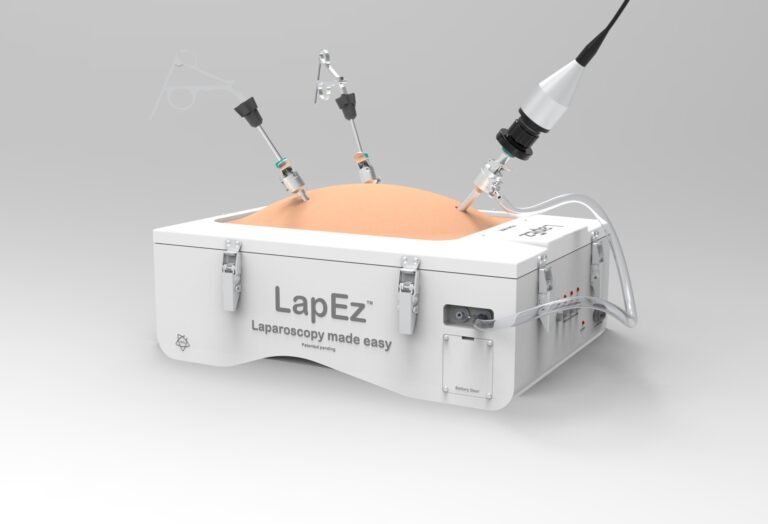
An endotrainer (also called a laparoscopic trainer or lap trainer) is a surgical simulation device that mimics the human abdominal cavity. It is designed to help surgeons practice and enhance their laparoscopic skills using real or simulated instruments. Whether it’s a physical box trainer or a virtual simulation system, the laparoscopic endotrainer provides a risk-free environment for repeated practice, error correction, and technique refinement.
The Importance of Skill Development in Laparoscopy
Laparoscopic surgery requires the surgeon to operate with instruments inserted through small incisions, often while viewing the surgical site on a 2D monitor. This indirect way of working adds complexity, making practice crucial. Without proper training, even the most experienced surgeon in open procedures can struggle in a laparoscopic setup.
Here’s what makes laparoscopic skill development unique:
- Lack of tactile feedback: Unlike open surgery, the “feel” of the tissue is minimal.
- Restricted movement: Instruments are longer and less intuitive to control.
- Monocular vision: Traditional laparoscopy offers a 2D view, demanding excellent spatial awareness.
Practicing on an endotrainer helps overcome these challenges systematically.
Why Every Surgeon Should Train with an Endotrainer
1. Safe and Controlled Learning Environment
Mistakes in live surgery can be costly and risky. Endotrainers allow surgeons to learn without the pressure of harming a patient. Surgeons can make errors, try new techniques, and experiment with instrument handling without any real-world consequences.
2. Hands-on Familiarity with Instruments
Modern laparoscopic surgeries involve a wide range of instruments—graspers, dissectors, scissors, specimen retrieval bags, trocars, and more. Endotrainers help familiarize users with these tools and the mechanics of how they move within a confined space. Consistent use builds muscle memory and confidence.
3. Improved Hand-Eye Coordination
One of the biggest challenges in laparoscopy is the separation between the surgeon’s hands and the visual field. An endotrainer allows the surgeon to adapt to this disconnect through repeated practice, enhancing their ability to perform complex tasks smoothly and accurately.
4. Skill Assessment and Progress Tracking
Advanced endotrainers—especially those with virtual simulation capabilities—can measure performance through metrics like time taken, precision of movement, error rate, and instrument path. This data helps in setting clear goals, assessing progress, and identifying areas for improvement.
5. Realistic Scenario Simulation
Some high-end trainers simulate near-real anatomical structures and surgical scenarios, helping the surgeon practice everything from basic suturing to full-length procedural steps. For instance, physical endotrainers with interchangeable modules can mimic gynecological, urological, or gastrointestinal surgeries.
Endotrainers for Different Experience Levels
Whether you’re a medical student, resident, or a practicing surgeon aiming to refine your skills, there is an endotrainer designed for you:
- Beginner-level trainers: Focus on basic hand movements, peg transfers, cutting shapes, and simple knot tying.
- Intermediate trainers: Allow simulation of tasks like tissue dissection, suturing, and clipping.
- Advanced trainers: Mimic real surgical procedures, complete with organ models and real-time feedback systems.
Choosing the Right Endotrainer
When investing in an endotrainer, consider the following:
- Realism: How closely does the trainer mimic real anatomy?
- Instrument compatibility: Does it allow use of standard laparoscopic instruments?
- Portability: Is it compact and easy to use in different locations?
- Training modules: Does it support a variety of skill levels and specializations?
- Cost and durability: Is it a long-term, value-for-money investment?
The Role of Medical Institutions and Hospitals
It’s equally important that hospitals and medical institutions encourage regular practice with endotrainers as part of continuing medical education (CME). Structured laparoscopic training programs that integrate endotrainer use can significantly improve surgical outcomes and patient safety.
The Road to Surgical Mastery
Incorporating an endotrainer into your daily or weekly routine can accelerate the journey toward laparoscopic excellence. With enough practice, complex tasks that once seemed daunting—like intracorporeal suturing or navigating around delicate tissues—become second nature.
As technology continues to reshape surgery, the endotrainer stands out as a bridge between learning and mastery. It transforms theoretical knowledge into practical skill, builds confidence, and ultimately leads to better surgical performance in the operating room.
Final Thoughts
Laparoscopy is the future of surgery, and like any high-precision skill, it requires focused practice. The endotrainer offers a practical, effective, and safe solution to sharpen the skills needed for minimally invasive procedures. Whether you’re just starting your surgical journey or looking to stay ahead in a competitive field, investing time in endotrainer-based practice is a step toward becoming a truly competent laparoscopic surgeon.
Remember: Mastery begins with practice, and practice begins with the right tools. Start with an endotrainer—because great surgeons aren’t born, they’re trained.