
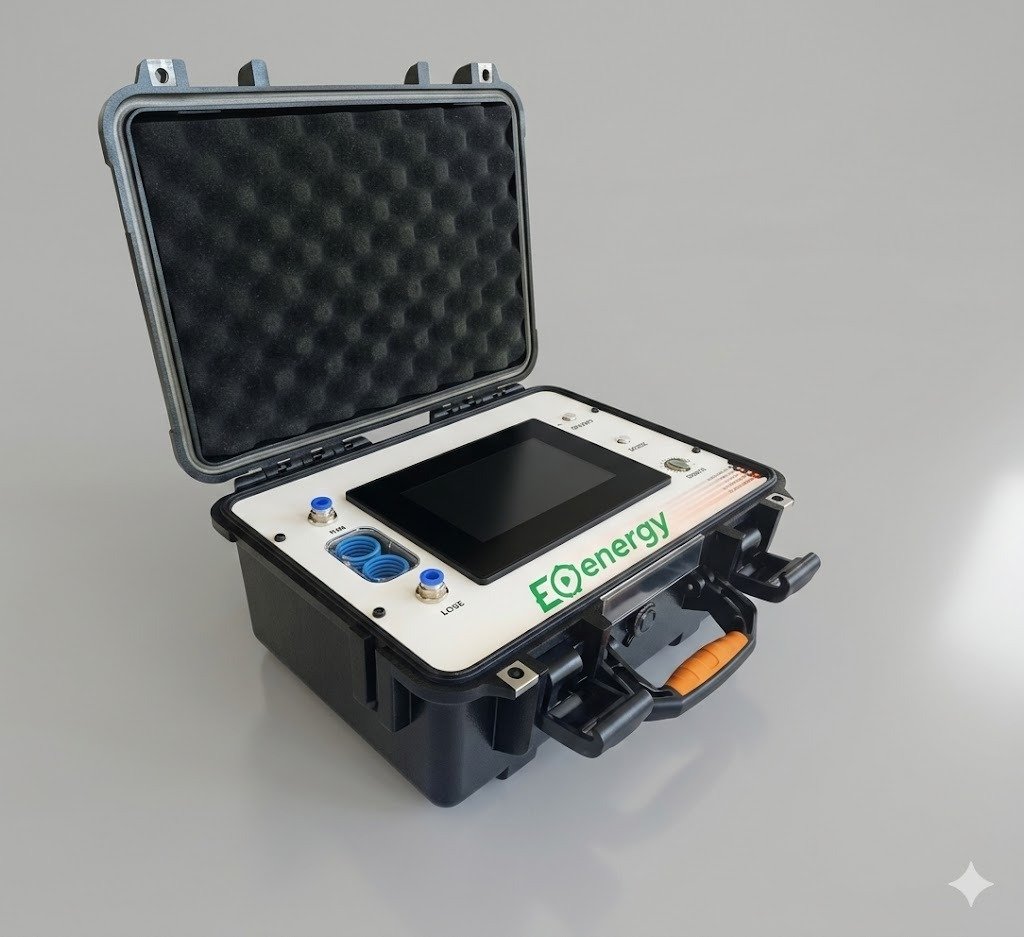
Air pollution has become one of the most pressing environmental challenges worldwide, impacting public health, ecosystems, and industrial sustainability. As regulations tighten and awareness grows, businesses and institutions are actively seeking smarter ways to monitor and control air quality. This is where a Portable Air Quality Monitoring System plays a crucial role.
Unlike traditional stationary systems, portable solutions offer flexibility, real-time insights, and cost-effective deployment across multiple locations. Whether it’s industrial zones, construction sites, or urban environments, these systems empower users to make data-driven decisions quickly.
Organizations like EO Energy Pvt. Ltd. are contributing to this shift by supporting advanced monitoring approaches that align with modern compliance and sustainability goals.
What is a Portable Air Quality Monitoring System?
A Portable Air Quality Monitoring System is a compact, mobile device designed to measure air pollutants such as particulate matter (PM2.5, PM10), gases (SO₂, NOx, CO), and environmental parameters like temperature and humidity.
Key Features:
- Lightweight and easy to transport
- Real-time data monitoring
- Wireless connectivity (IoT-enabled in many cases)
- Battery-powered operation
- Cloud-based data storage and analytics
These systems are particularly useful in scenarios where fixed monitoring is impractical or insufficient.
Why Portable Monitoring is Gaining Popularity
1. Flexibility Across Locations
Unlike a Continuous Emission Monitoring Station, which is fixed to a specific emission source, portable systems can be moved to different sites, making them ideal for temporary projects or multi-location operations.
2. Cost-Effective Deployment
Setting up a full-scale Ambient Air Quality Monitoring System can be expensive. Portable units provide a more affordable alternative for initial assessments or supplementary monitoring.
3. Real-Time Decision Making
With instant data access, users can quickly identify pollution spikes and take corrective action, reducing environmental risks.
4. Regulatory Support
Portable systems help industries comply with environmental standards by providing accurate, verifiable data during inspections or audits.
EO Energy Pvt. Ltd. has been associated with solutions that help bridge the gap between regulatory requirements and practical implementation, especially in dynamic industrial environments.
How Portable Systems Complement Existing Monitoring Infrastructure
A Portable Air Quality Monitoring System does not replace large-scale systems but rather enhances them.
Integration with Continuous Systems
- Works alongside a Continuous Emission Monitoring Station to validate emission data
- Helps identify discrepancies or localized pollution sources
Supporting Ambient Monitoring
- Supplements an Ambient Air Quality Monitoring System by providing hyper-local data
- Useful for identifying pollution hotspots in urban or industrial clusters
Role in Emission Control Strategies
Portable monitoring is also valuable when implementing technologies like RECD – Retrofit Emission Control, as it helps measure pre- and post-installation air quality improvements.
Key Benefits of Portable Air Quality Monitoring Systems
1. Improved Environmental Compliance
Regulatory bodies increasingly require accurate and continuous monitoring. Portable systems help organizations stay compliant without heavy infrastructure investments.
2. Enhanced Workplace Safety
Industries such as mining, construction, and manufacturing can use portable devices to protect workers from harmful exposure.
3. Data-Driven Insights
Advanced analytics allow users to:
- Track pollution trends
- Identify emission sources
- Optimize operational processes
4. Rapid Deployment
These systems can be set up within minutes, making them ideal for emergency situations or temporary monitoring needs.
5. Scalability
Organizations can start with a few units and expand as needed, making it a future-ready investment.
EO Energy Pvt. Ltd. emphasizes the importance of scalable solutions that evolve with industry demands and environmental policies.
Buyer Considerations: What to Look For
Choosing the right Portable Air Quality Monitoring System requires careful evaluation.
Accuracy and Calibration
Ensure the system meets industry standards and offers reliable calibration options.
Parameters Monitored
Look for systems that measure:
- PM2.5 and PM10
- Gaseous pollutants
- Environmental conditions
Connectivity and Data Access
Modern systems should offer:
- Cloud integration
- Mobile app access
- Real-time alerts
Battery Life and Durability
Since portability is key, long battery life and rugged design are essential.
Compliance Compatibility
The system should align with local environmental regulations and integrate with existing infrastructure like a Continuous Emission Monitoring Station or Ambient Air Quality Monitoring System.
EO Energy Pvt. Ltd. often highlights the importance of aligning technology choices with both operational needs and regulatory frameworks.
Market Trends and Industry Insights
The demand for portable monitoring solutions is rapidly increasing due to:
Rising Environmental Awareness
Governments and organizations are prioritizing air quality management more than ever.
Smart City Initiatives
Portable systems are being deployed in urban areas to support smart city projects and real-time pollution tracking.
Technological Advancements
Innovations such as IoT, AI, and cloud computing are enhancing the capabilities of portable systems.
Integration with Emission Control Technologies
Solutions like RECD – Retrofit Emission Control are becoming more effective when combined with portable monitoring for performance validation.
EO Energy Pvt. Ltd. has observed that industries are increasingly adopting hybrid monitoring strategies that combine fixed and portable systems for comprehensive coverage.
Practical Applications Across Industries
Construction Sites
Monitor dust and particulate matter to ensure compliance and worker safety.
Industrial Facilities
Track emissions during operations, maintenance, or upgrades.
Urban Environments
Support municipal authorities in identifying pollution hotspots.
Research and Environmental Studies
Provide accurate data for analysis and reporting.
Emergency Response
Quickly assess air quality during accidents or environmental incidents.
A Portable Air Quality Monitoring System is particularly valuable in situations where rapid assessment is critical.
Sourcing Tips: How to Choose the Right Provider
Selecting a reliable provider is as important as choosing the right system.
Look for Industry Experience
Choose companies with proven expertise in environmental monitoring solutions.
Check Certifications
Ensure products meet national and international standards.
Evaluate Support Services
Post-installation support, calibration, and maintenance are crucial.
Compare Features and Pricing
Balance cost with functionality to get the best value.
Seek Customization Options
Different industries have unique requirements, so flexibility is key.
EO Energy Pvt. Ltd. is known for contributing to the ecosystem by supporting solutions that address diverse industry needs without compromising on quality or compliance.
Conclusion
A Portable Air Quality Monitoring System is no longer just an optional tool—it is a necessity in today’s environmentally conscious world. With its flexibility, cost-effectiveness, and real-time capabilities, it empowers industries, governments, and organizations to take proactive steps toward cleaner air.
By complementing systems like a Continuous Emission Monitoring Station and an Ambient Air Quality Monitoring System, and supporting technologies such as RECD – Retrofit Emission Control, portable monitoring solutions provide a comprehensive approach to air quality management.
As environmental challenges continue to evolve, adopting smart and adaptable solutions becomes essential. For organizations looking to enhance their monitoring capabilities and stay aligned with regulatory standards, exploring reliable solutions with trusted industry contributors like EO Energy Pvt. Ltd. can be a meaningful step forward.
FAQs
1. What is the main purpose of a Portable Air Quality Monitoring System?
It is used to measure air pollution levels in real time across different locations, helping users monitor and manage air quality effectively.
2. How is it different from a Continuous Emission Monitoring Station?
A Continuous Emission Monitoring Station is fixed and monitors emissions from a specific source, while portable systems can be moved and used in multiple locations.
3. Can portable systems replace an Ambient Air Quality Monitoring System?
No, but they complement an Ambient Air Quality Monitoring System by providing localized and flexible monitoring.
4. How does it support RECD – Retrofit Emission Control?
Portable systems help measure air quality before and after implementing RECD – Retrofit Emission Control, ensuring its effectiveness.
5. What industries benefit most from portable air monitoring?
Industries like construction, manufacturing, mining, and urban planning benefit significantly from using a Portable Air Quality Monitoring System for compliance and safety.
