
India’s beer market crossed ₹60,000 crore in 2023, and strong beer accounts for nearly 80% of total beer volumes sold in the country. That number alone tells you something important: Indian drinkers are not moving away from high-ABV options they are demanding better versions of them. In this post, you will learn what defines the strong beer segment in India, why demand keeps rising, how the market is evolving, and what separates mass-market options from genuine premium offerings. If you follow India’s evolving strong beer options, this is the context that makes sense of the shift.
What Is Considered a Strong Beer in India?
A strong beer in India refers to any lager or ale with an alcohol by volume (ABV) of 5% or higher, though most popular Indian strong beers fall between 6.5% and 8% ABV. This differentiates them from mild or regular beer, which typically sits between 4% and 5% ABV. The classification also has regulatory significance, as excise duties and licensing categories vary by ABV threshold across Indian states.
ABV Thresholds That Define the Category
State excise departments in India treat beer above 5% ABV differently from standard variants. In several states, beer above 7.5% ABV falls under a stronger tax bracket, which directly affects retail pricing and distribution strategies. This regulatory layer has shaped the 6.5%–7.5% ABV sweet spot that most strong beer brands now target.
Strong Beer vs Regular Beer: What Actually Differs
The difference is not just alcohol content. Strong beers in India are typically brewed with a higher malt ratio and a longer fermentation window. This gives them a fuller body and a bitterness profile that regular lagers do not carry. For cost-conscious consumers who want a quicker effect with fewer units, strong beer delivers value that regular beer simply cannot match at the same price point.
Why Is Strong Beer So Popular in India?
Strong beer dominates India’s beer market because it offers more perceived value at a lower spend. A consumer buying a 650ml bottle of strong beer at ₹120–₹160 gets a higher ABV than they would from two bottles of regular lager at a similar price. In a price-sensitive market, that math drives category loyalty. The IWSR projects India’s overall beer market to grow at a CAGR of 7–8% through 2026 (Source: IWSR Drinks Market Analysis, 2023).
Price Sensitivity and the Value Equation
India’s median consumer spends carefully on alcohol. Strong beer commands only a small premium over regular beer but delivers significantly higher ABV. Retail price elasticity data consistently shows that strong beer volumes hold even when prices rise slightly, while mild beer volumes drop faster. This makes strong beer a stickier category for both retailers and brands.
Urbanisation and Changing Drinking Occasions
Urban India particularly Tier 1 and Tier 2 cities is seeing a shift in where and how people drink. Home consumption has grown sharply since 2020. Consumers in this setting prefer fewer, stronger drinks over multiple light ones. Strong beer fits this occasion perfectly. It also travels better at home: a 650ml strong beer at 8% ABV can serve a solo sitting comfortably, without the need for multiple trips to a store.
How Is the Premium Strong Beer Segment Growing in India?
The premium strong beer segment often called ‘mass premium’ is the fastest-growing sub-category within Indian beer. These are beers priced ₹50–₹80 above economy strong options but well below imported craft beer. They target consumers who want quality ingredients and better packaging without paying a premium price. According to IWSR, this sub-segment grew by over 15% by volume in 2022.
What Separates Mass Premium From Economy Strong Beer
Economy strong beers prioritise ABV delivery at minimum cost. Mass premium beers compete on taste, packaging, and occasion fit. Key differences include: higher-quality malt sourcing, cleaner fermentation profiles, distinctive can or bottle design, and stronger brand marketing. Consumers in this tier are typically between 25 and 40 years old, brand-aware, and willing to pay ₹20–₹50 more per unit for an experience rather than just alcohol.
Distribution and Retail Expansion
Modern trade — supermarkets, convenience chains, and specialist liquor retail is driving premium strong beer growth. States like Maharashtra, Karnataka, Telangana, and Delhi NCR have liberalised retail distribution enough to allow mass premium beers to reach consumers who previously only had access to economy brands. E-commerce for alcohol, now operating in limited metros under state permits, is also opening a new discovery channel for premium options.
What Are the Top Strong Beer Brands in India?
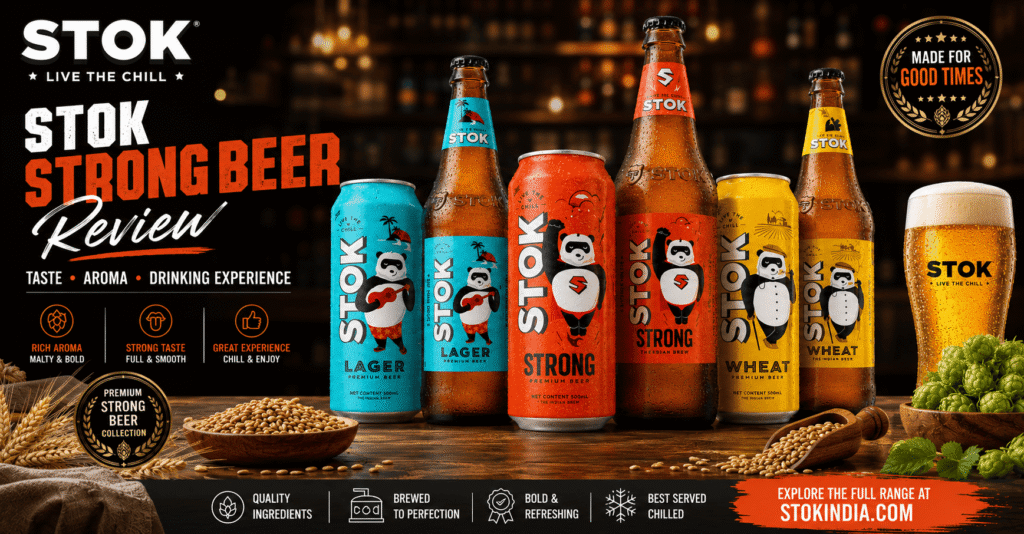
India’s strong beer market has a clear tiered structure. At the top by volume sit brands with deep distribution and decade-long consumer trust. Below them, a growing mid-tier of mass premium brands is taking share by targeting quality-aware millennial consumers. At the niche end, a small but growing craft segment is pushing ABV alongside premium ingredients. Each tier competes differently on price, occasion, taste, and brand story.
How New Entrants Are Competing
Newer strong beer brands entering India are not trying to outspend incumbents on distribution. Instead, they are building identity through tighter geography, social media reach, and on-trade visibility (bars and restaurants). A brand that becomes the ‘known option’ in a specific city or occasion cluster builds faster loyalty than a brand trying to be everywhere at once. This focused approach is proving effective across several regional markets.
The Role of Packaging and Brand Perception
Packaging matters more in this category than most. Strong beer consumers in India make repeat purchase decisions quickly often in under 30 seconds at a retail counter. Brands that invest in can design, label clarity, and shelf presence convert better. Studies on FMCG purchase behaviour in India show that packaging influences 64% of first-time purchase decisions in the alcohol beverage category.
Conclusion
India’s strong beer market is not a niche it is the backbone of the entire beer industry. The STOK strong beer India category is evolving rapidly, with mass premium options reshaping what consumers expect from a high-ABV lager. Urbanisation, price sensitivity, and shifting drinking occasions are driving sustained volume growth across both economy and premium tiers. The question for brands and observers is no longer whether premium strong beer will grow it is which segment within that tier will define the next decade of Indian drinking culture.
We strictly comply with all applicable Government of India regulations, state excise laws, industry standards, and responsible consumption guidelines.
