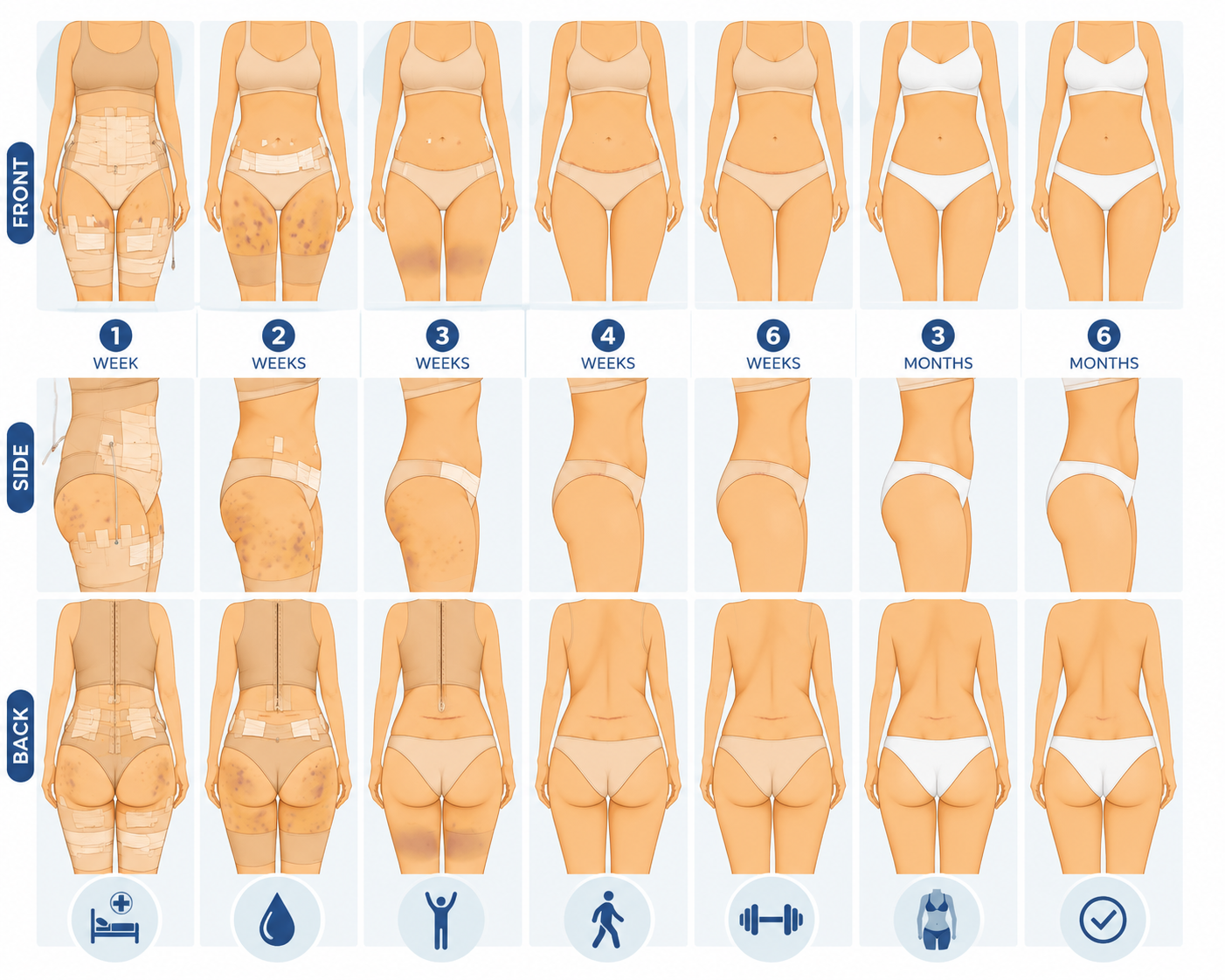
Recovering from body contouring surgery takes time, patience, and proper preparation. Knowing what to expect after surgery can make the experience feel far less overwhelming and help you approach recovery with greater confidence.
Many patients feel more comfortable once they understand how healing progresses from week to week. Planning ahead allows you to arrange support at home, prepare meals in advance, organise time away from work, and create a more comfortable recovery environment before surgery takes place.
Understanding a 360 Body Lift
A 360 body lift, sometimes referred to as a belt lipectomy or torsoplasty, is a surgical procedure designed to remove excess skin and fat from around the entire midsection. The treatment typically addresses the abdomen, hips, waist, buttocks, and upper thighs in one comprehensive operation.
Patients who have experienced major weight loss often choose this procedure when loose skin remains despite maintaining a healthy lifestyle. A 360 Lower Body Lift can significantly improve body contour and help clothing fit more comfortably by reshaping the lower torso as a whole rather than targeting a single area.
How Long Does Recovery Usually Take?
Most patients require around six to eight weeks for the main stages of recovery, although healing times vary from person to person. General health, age, activity levels, and how closely aftercare instructions are followed all influence the speed of recovery and the final outcome.
During this period, proper rest is essential. Recovery is not simply about waiting for discomfort to pass. Your body needs time and energy to repair tissue, reduce swelling, and support healthy wound healing. Having help available at home during the first few weeks can make the process much more manageable.
Preparing your home beforehand is also worthwhile. Keeping essentials within easy reach, arranging a comfortable sleeping position, and preparing meals ahead of time can make everyday tasks considerably easier after surgery.
Week-by-Week Recovery Timeline
Week One: Immediate Recovery and Rest
Patients commonly stay in hospital for at least two nights following surgery. Once home, the first week should focus almost entirely on rest and careful wound management. Drainage tubes are usually still in place, and movement will feel limited and uncomfortable.
Sleeping in a slightly elevated or reclined position is often advised to reduce swelling and avoid placing tension on incision sites. Walking short distances around the home is encouraged to support circulation, but activity should remain minimal overall.
Pain, tightness, bruising, and swelling are all expected during this stage. Medication prescribed by your surgical team should be taken exactly as instructed, and wound care guidance must be followed carefully to lower the risk of infection and support proper healing from the start.
Week Two: Gradually Becoming More Mobile
By the second week, many patients begin feeling more comfortable moving around the house. Light daily activities may become easier, although energy levels can still fluctuate throughout the day.
Some patients may be able to resume driving at this stage if they are no longer using strong pain relief medication and feel physically capable of reacting safely behind the wheel.
Compression garments remain an important part of recovery and should continue to be worn consistently. Bruising and swelling are still very common, even if discomfort begins to ease. Feeling better does not mean the body has fully healed, so it remains important not to overdo physical activity.
Weeks Three and Four: Visible Progress Begins
During weeks three and four, swelling often starts to reduce more noticeably, and mobility improves further. Most patients feel increasingly independent and comfortable carrying out gentle daily tasks.
Short walks are encouraged to maintain healthy circulation and reduce stiffness, but strenuous exercise and heavy lifting must still be avoided entirely. Internal healing continues long after the outer incisions begin to settle.
Because a 360 Lower Body Lift involves surgical work around the entire torso, the body requires ongoing protection during this stage. Attending all scheduled follow-up appointments allows your surgeon to monitor healing closely and identify any concerns early.
Weeks Five and Six: Returning to Daily Routine
By weeks five and six, many patients feel ready to return to desk-based work and resume more normal daily routines. Physical jobs, gym training, and demanding activity are still usually restricted, but energy levels tend to improve steadily.
At this point, body contours often become more visible as swelling continues to settle. Patients commonly begin noticing the shape and definition they were hoping to achieve before surgery.
Scar management may also begin during this stage. Silicone gel or scar treatments are sometimes recommended depending on how the incisions are healing. Maintaining a nutritious diet, staying hydrated, and avoiding smoking remain important for supporting tissue repair and long-term recovery.
Weeks Seven and Eight: Slowly Returning to Exercise
Light exercise is commonly reintroduced around weeks seven and eight, although this depends entirely on individual healing progress and your surgeon’s advice. Gentle walking is usually the safest place to begin before gradually increasing duration and intensity over time.
More demanding workouts, heavy lifting, and high-impact exercise should still be approached cautiously. Returning to activity too quickly can place unnecessary strain on healing tissue and may affect final results.
Listening to your body during this stage is extremely important. Mild fatigue or tightness can still occur, and recovery is rarely perfectly linear. Gradual progression is always safer than rushing back into full activity too soon.
Proper Planning Makes Recovery Easier
Recovery after a 360 Lower Body Lift can feel physically and emotionally demanding at times, but preparation makes a significant difference. Organising support at home, allowing enough time away from work, and following all post-operative instructions carefully can help create a smoother healing experience overall.
Understanding the recovery timeline beforehand also helps patients approach surgery with more realistic expectations. Knowing what each stage involves often reduces unnecessary stress and allows you to focus fully on healing safely and steadily.