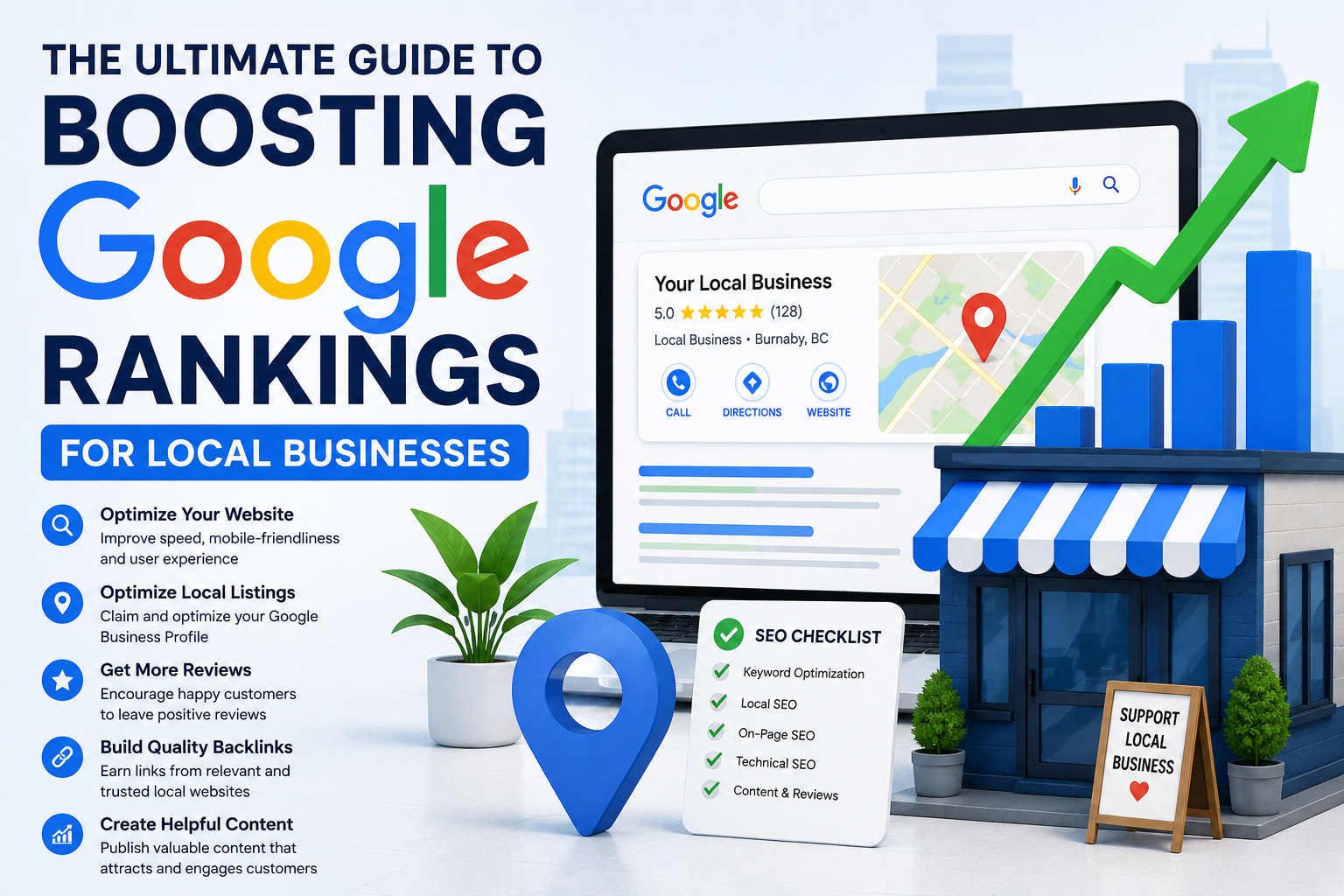
In today’s digital world, local businesses can no longer rely only on word-of-mouth marketing or traditional advertising. Customers now search online before visiting a store, booking a service, or making a purchase. Whether someone is looking for a nearby coffee shop, dentist, law firm, plumbing company, or clothing boutique, Google is usually the first place they turn to.
If your business does not appear in local search results, you are losing valuable traffic, leads, and sales to competitors. That is why improving your local Google rankings has become essential for long-term business success.
This comprehensive guide explains everything local businesses need to know about improving visibility in Google search results, attracting local customers, and building a stronger online presence.
Why Google Rankings Matter for Local Businesses
Google processes billions of searches every day, and a large percentage of those searches have local intent. People search for terms like:
- “best pizza near me”
- “local electrician”
- “hair salon in my area”
- “emergency plumber nearby”
When your business ranks high in search results, potential customers can easily discover your services. Higher rankings lead to:
- Increased website traffic
- More phone calls
- Better brand awareness
- Higher foot traffic
- More qualified leads
- Increased revenue
Businesses that appear on the first page of Google are often viewed as more trustworthy and reliable than those buried deeper in search results.
Understanding Local SEO
Local SEO stands for Local Search Engine Optimization. It is the process of optimizing your online presence to improve visibility in location-based searches.
Unlike traditional SEO, local SEO focuses on helping businesses appear in searches tied to specific geographic locations.
For example:
- A bakery in Burnaby wants to rank for “best bakery in Burnaby”
- A dentist in Toronto wants to rank for “Toronto family dentist”
- A law firm in Vancouver wants to rank for “Vancouver personal injury lawyer”
Google uses several factors to determine local rankings, including:
- Relevance
- Distance
- Prominence
- Website quality
- Online reviews
- Citations
- User engagement
Understanding these ranking factors is the foundation of a successful local SEO strategy.
Optimize Your Google Business Profile
One of the most important steps in boosting local rankings is optimizing your Google Business Profile.
Your profile appears in:
- Google Maps
- Local search results
- Knowledge panels
- Mobile searches
A complete and optimized profile increases your chances of appearing in the local map pack.
Essential Optimization Tips
Use Accurate Business Information
Make sure your:
- Business name
- Address
- Phone number
- Website URL
- Business hours
are accurate and consistent across all platforms.
Choose the Right Categories
Select primary and secondary categories that accurately describe your services.
Add High-Quality Photos
Businesses with professional images receive more clicks and customer engagement.
Include:
- Interior photos
- Exterior photos
- Team photos
- Product images
- Service images
Write a Compelling Business Description
Your description should explain:
- What your business offers
- What makes you unique
- Your service areas
- Your expertise
Encourage Customer Reviews
Positive reviews improve trust and rankings.
Ask satisfied customers to leave honest feedback on Google.
Build a Mobile-Friendly Website
Most local searches happen on mobile devices. If your website is slow or difficult to navigate on smartphones, visitors will leave quickly.
Google prioritizes mobile-friendly websites because they provide a better user experience.
Features of a Mobile-Friendly Website
Your website should have:
- Fast loading speed
- Responsive design
- Easy navigation
- Clickable phone numbers
- Clear calls-to-action
- Readable text
- Optimized images
A seamless mobile experience can significantly improve both rankings and conversions.
The Importance of Professional SEO Support
While some business owners manage SEO independently, many choose professional assistance to achieve faster and more sustainable results.
SEO requires:
- Technical expertise
- Ongoing optimization
- Content creation
- Link building
- Competitive analysis
- Algorithm monitoring
Working with experienced professionals can save time and improve outcomes.
Businesses seeking better rankings and increased customer engagement often collaborate with an experienced professional seo expert in Burnaby optimisation services to enhance local authority and drive long-term online success.
Conduct Local Keyword Research
Keyword research helps you understand what customers are searching for online.
Instead of targeting broad terms, local businesses should focus on location-specific keywords.
Examples include:
- “Burnaby roofing company”
- “best dentist in Vancouver”
- “local coffee shop in Calgary”
- “Toronto accounting services”
Use keywords naturally throughout your:
- Website pages
- Blog posts
- Meta descriptions
- Titles
- Headers
- Image alt text
Avoid keyword stuffing because it can negatively impact rankings.
Create High-Quality Local Content
Content marketing plays a major role in local SEO success.
Publishing helpful and informative content helps establish authority while improving search visibility.
Types of Local Content
Local Guides
Create articles about your city or community.
Example topics:
- Best restaurants in Burnaby
- Local events in Vancouver
- Home maintenance tips for Canadian winters
Industry Education
Answer common customer questions.
Examples:
- How often should you clean your gutters?
- What should you do after a car accident?
- How to choose the right HVAC contractor
Customer Success Stories
Case studies and testimonials help build trust and credibility.
Frequently Asked Questions
FAQ sections improve user experience and may help you appear in voice searches.
Optimize On-Page SEO Elements
On-page SEO helps search engines understand your website content.
Important On-Page Elements
Title Tags
Include your primary keyword and location.
Example:
“Affordable Plumbing Services in Burnaby”
Meta Descriptions
Write compelling descriptions that encourage clicks.
Header Tags
Use H1, H2, and H3 tags to organize content clearly.
Internal Linking
Link related pages together to improve navigation and SEO.
Image Optimization
Compress images and use descriptive file names and alt text.
Focus on Local Link Building
Backlinks remain one of Google’s strongest ranking signals.
When reputable websites link to your business, Google views your site as more trustworthy.
Ways to Earn Local Backlinks
Partner with Local Organizations
Sponsor community events, charities, or sports teams.
Submit to Local Directories
List your business in trusted directories.
Collaborate with Local Bloggers
Work with influencers and local publications.
Publish Valuable Content
Helpful content naturally attracts links over time.
A strong backlink profile can dramatically improve local rankings.
Maintain Consistent Business Citations
Citations are online mentions of your business name, address, and phone number.
Consistency is critical.
Even small inconsistencies can confuse search engines and reduce trust.
Where to Build Citations
- Yelp
- Yellow Pages
- Bing Places
- Industry directories
- Chamber of commerce websites
Ensure all information matches exactly across every platform.
Improve Website Speed
Page speed directly affects user experience and rankings.
Slow websites lead to higher bounce rates and lower conversions.
Ways to Improve Speed
- Compress images
- Use browser caching
- Minimize code
- Upgrade hosting
- Use a content delivery network
- Reduce unnecessary plugins
Fast websites create better experiences for visitors and improve search performance.
Use Schema Markup
Schema markup helps search engines better understand your website content.
Local business schema can provide important information like:
- Business type
- Address
- Hours
- Reviews
- Services
- Pricing
Schema may improve your visibility in rich search results.
Generate More Customer Reviews
Online reviews strongly influence local rankings and customer decisions.
Businesses with strong reviews often receive more clicks and conversions.
Best Practices for Reviews
Ask Customers Politely
Request reviews after successful transactions.
Respond to Reviews
Reply to both positive and negative feedback professionally.
Avoid Fake Reviews
Authentic reviews build long-term trust.
Make Reviewing Easy
Provide direct review links.
Customer feedback helps improve credibility and local visibility.
Leverage Social Media for Local Visibility
Social media may not directly impact rankings, but it supports local SEO efforts.
Strong social engagement increases:
- Brand awareness
- Website traffic
- Customer trust
- Community engagement
Effective Local Social Media Strategies
- Share local events
- Post customer stories
- Highlight promotions
- Upload behind-the-scenes content
- Engage with followers regularly
Consistency is key for long-term social growth.
Optimize for Voice Search
Voice search continues to grow as more users rely on mobile assistants.
People use conversational phrases like:
- “Where is the best pizza near me?”
- “Who is the top real estate agent in Burnaby?”
- “What plumber is open now?”
Voice Search Optimization Tips
- Use natural language
- Create FAQ pages
- Focus on long-tail keywords
- Improve mobile usability
- Optimize for local intent
Voice search optimization helps businesses capture emerging search trends.
Create Dedicated Location Pages
If your business serves multiple locations, create separate pages for each city or area.
Each page should include:
- Unique content
- Location-specific keywords
- Customer testimonials
- Service information
- Maps and directions
Avoid duplicating content across location pages.
Monitor Your SEO Performance
Tracking your results helps identify what is working and where improvements are needed.
Important Metrics to Track
- Organic traffic
- Keyword rankings
- Website conversions
- Bounce rate
- Click-through rates
- Phone calls
- Google Business Profile insights
Use data to refine your SEO strategy over time.
Avoid Common Local SEO Mistakes
Many businesses unintentionally hurt their rankings by making avoidable SEO mistakes.
Common Errors Include
Inconsistent Business Information
Different addresses or phone numbers confuse search engines.
Ignoring Reviews
Failing to respond to customer feedback damages trust.
Keyword Stuffing
Overusing keywords creates poor user experiences.
Duplicate Content
Copied content weakens SEO value.
Neglecting Mobile Optimization
Mobile usability is now essential.
Buying Low-Quality Backlinks
Spammy links can trigger penalties.
Avoiding these mistakes helps maintain long-term ranking stability.
Build Trust Through E-E-A-T
Google values websites that demonstrate:
- Experience
- Expertise
- Authoritativeness
- Trustworthiness
This concept is known as E-E-A-T.
Ways to Improve E-E-A-T
Showcase Expertise
Publish educational content and industry insights.
Highlight Credentials
Display certifications, awards, and memberships.
Add Real Testimonials
Authentic customer feedback increases trust.
Secure Your Website
Use HTTPS encryption.
Provide Transparent Contact Information
Clear contact details improve credibility.
Trust signals help improve both rankings and conversions.
The Role of User Experience in SEO
Google wants to deliver the best possible experience to users.
Websites with strong user experiences often rank higher.
Important UX Factors
- Fast load times
- Mobile responsiveness
- Easy navigation
- Clear layout
- Helpful content
- Minimal intrusive ads
Good user experience encourages visitors to stay longer and engage with your business.
Why Content Freshness Matters
Google favors websites that stay updated.
Regularly publishing new content signals that your business is active and relevant.
Ways to Keep Content Fresh
- Update outdated articles
- Add new service pages
- Publish blog posts regularly
- Refresh statistics and examples
- Add new testimonials
Fresh content supports ongoing SEO growth.
Local SEO and Google Maps
Google Maps visibility is essential for attracting nearby customers.
Appearing in the local map pack can dramatically increase:
- Calls
- Directions requests
- Website visits
- Walk-in traffic
How to Improve Maps Rankings
- Optimize your Google Business Profile
- Collect reviews consistently
- Build local citations
- Add quality photos
- Use local keywords
- Maintain accurate business details
Strong map visibility often leads to significant local business growth.
The Impact of Behavioral Signals
Google analyzes user behavior to evaluate content quality.
Positive engagement signals include:
- Longer website visits
- More page views
- Lower bounce rates
- Higher click-through rates
Creating engaging content and excellent user experiences can improve these signals over time.
Invest in Long-Term SEO Strategies
SEO is not an overnight process.
Businesses that consistently invest in optimization efforts usually achieve stronger and more stable rankings.
Long-Term SEO Benefits
- Sustainable traffic growth
- Reduced advertising costs
- Stronger brand authority
- Higher customer trust
- Increased lead generation
Patience and consistency are critical for long-term success.
How AI and Search Trends Are Changing Local SEO
Search engines continue evolving through artificial intelligence and machine learning.
Google now better understands:
- Search intent
- User behavior
- Content quality
- Contextual meaning
Businesses must focus on creating genuinely helpful content rather than manipulating rankings.
Future Local SEO Trends
- AI-driven search results
- Voice search growth
- Personalized search experiences
- Video content optimization
- Hyperlocal targeting
Staying informed about industry changes helps businesses remain competitive.
Build a Strong Brand Presence
Brand recognition influences search visibility.
Well-known businesses often receive:
- More branded searches
- More backlinks
- Higher engagement
- Better trust signals
Ways to Build Brand Awareness
- Consistent marketing
- Community involvement
- Valuable content
- Excellent customer service
- Social media engagement
A strong brand supports every aspect of local SEO.
Why Analytics Matter
Without analytics, businesses cannot accurately measure SEO success.
Data-driven decisions improve optimization efforts.
Important SEO Tools
- Google Analytics
- Google Search Console
- Keyword tracking tools
- Heatmap software
- Conversion tracking tools
Analytics reveal opportunities for growth and improvement.
Content Marketing and Local Authority
Helpful content positions your business as a trusted authority in your industry.
Educational articles attract:
- Organic traffic
- Social shares
- Backlinks
- Customer trust
Businesses that consistently educate their audience often outperform competitors in search rankings.
The Power of Community Engagement
Local businesses thrive when they actively participate in their communities.
Community involvement increases:
- Brand visibility
- Local mentions
- Social engagement
- Word-of-mouth marketing
Community Engagement Ideas
- Sponsor local events
- Support charities
- Host workshops
- Partner with schools
- Attend networking events
Community trust often translates into stronger online visibility.
Final Thoughts
Local SEO has become one of the most powerful marketing strategies for modern businesses. Customers rely heavily on Google to discover nearby products and services, making strong search visibility essential for growth.
The digital marketplace continues evolving, and businesses that adapt to changing SEO trends will maintain a competitive advantage.
Whether you run a small startup, family-owned company, or growing enterprise, improving your local Google rankings can create lasting opportunities for visibility and success.
By implementing the strategies outlined in this guide, your business can strengthen its online presence, attract more local customers, and build sustainable growth for years to come.