
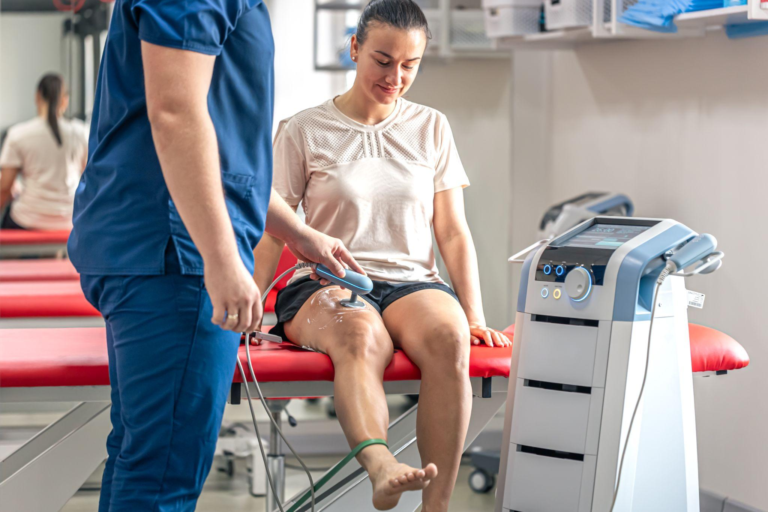
How SoftWave Therapy and Regenerative Medicine Are Changing Knee Arthritis Treatment?
For years, knee arthritis treatment has largely revolved around managing decline. Pain medication. Cortisone injections. Eventually, for many patients, the conversation turns toward surgery. But that framework is starting to shift.
Across regenerative medicine clinics, physicians are paying closer attention to what’s happening inside the joint long before replacement becomes the only option. Chronic inflammation, tissue restriction, cartilage breakdown, poor circulation, altered gait mechanics, all of it tends to feed the same cycle. Once the knee loses stability and movement becomes painful, the body adapts in ways that usually make things worse.
At The Vitality Medical and Longevity Center, clinicians are using a combination of SoftWave Therapy and regenerative medicine to address knee arthritis pain from a different angle: reducing inflammation, breaking down scar tissue, supporting cartilage repair, and improving overall function rather than simply suppressing symptoms.
St. Petersburg, FL –
Knee arthritis rarely arrives all at once. More often, it creeps in gradually. A little stiffness getting out of the car. Swelling after a long walk. That sharp pull climbing stairs that people ignore for months because it’s “probably just age.”
Then one day, the knee stops cooperating.
The frustrating part is that arthritis isn’t only about damaged cartilage. By the time many patients seek treatment, the joint has already developed layers of compensation around the problem. Muscles tighten. Movement patterns shift. Scar tissue builds up around areas that have been stressed for years. Even inflammation changes the way the joint behaves mechanically.
That’s why short-term pain relief often feels temporary. The underlying environment inside the knee hasn’t really changed.
Key Highlights:
● Chronic inflammation plays a major role in knee arthritis progression
● SoftWave Therapy may help reduce inflammation and break down scar tissue
● Regenerative medicine is being used to support cartilage repair and tissue recovery
● Combined therapies focus on restoring movement and improving joint performance
● More patients are seeking non-surgical options before considering knee replacement
Why Knee Arthritis Becomes So Difficult to Treat?
Most people think of arthritis as simple wear and tear. In reality, it’s messier than that.
Once inflammation settles into the joint, the knee begins operating under constant stress. Cartilage wears unevenly. Small restrictions in movement change how the weight is distributed through the leg. The surrounding muscles try to compensate, usually unsuccessfully. Over time, even ordinary movement starts producing irritation.
What makes knee arthritis difficult is that the body adapts to dysfunction surprisingly well, until it can’t anymore.
Patients often arrive after years of trying to “manage” the issue. Anti-inflammatory medication dulls the pain for a while. Injections calm flare-ups temporarily. Physical therapy helps, then plateaus. Eventually, many people feel like they’re cycling through treatments without ever improving the joint’s actual condition.
“By the time someone comes in with chronic knee pain, there’s usually more happening than cartilage loss alone,” says Dr. David Magnano at Vitality Medical and Longevity Center. “Inflammation, tissue restriction, compensation patterns, reduced circulation, they all start layering together. If you don’t address the environment around the joint, long-term improvement becomes difficult.”
A Combination Approach to Knee Arthritis Pain
That’s where combination therapy has begun to gain attention.
Rather than relying on a single intervention, clinics focused on regenerative medicine are increasingly pairing technologies designed to stimulate healing activity while improving tissue quality around the knee itself.
One of those therapies is SoftWave Therapy, which uses acoustic wave technology to stimulate circulation and cellular activity within damaged or inflamed tissue. Patients often describe the sensation as unusual but tolerable, somewhere between deep vibration and rapid pressure pulses.
The goal isn’t simply a temporary pain interruption.
Clinicians use SoftWave Therapy to help:
● Reduce inflammatory activity within the joint
● Break down dense scar tissue and tissue adhesions
● Improve circulation around damaged structures
● Stimulate the body’s natural healing response
When combined with regenerative medicine protocols, treatment shifts toward improving how the knee functions as a system rather than chasing isolated symptoms.
And honestly, that distinction matters more than most people realize.
The Role of Regenerative Medicine in Cartilage Support
Cartilage is notoriously difficult for the body to repair. It has a very limited blood supply, which means once degeneration begins, healing tends to slow dramatically.
That’s part of why knee arthritis can continue progressing even when pain is temporarily controlled.
Regenerative medicine aims to improve the biological environment surrounding the joint, creating conditions that may support tissue recovery and healthier cellular activity over time. The process is gradual. There’s nothing flashy about it. Patients looking for an overnight change are usually disappointed.
But function can improve when inflammation settles down, and the joint starts moving more normally again.
Treatment plans often focus on:
● Supporting cellular repair mechanisms
● Encouraging healthier tissue regeneration
● Improving joint mobility and stability
● Reducing ongoing inflammatory stress inside the knee
“There’s a noticeable difference between numbing pain and helping the joint recover function,” Dr. Magnano explains. “When inflammation decreases, and tissue quality improves, patients often move differently before they even realize the pain level has changed.”
That observation comes up often in regenerative care. Better movement tends to show up first. The pain reduction follows behind it.
Why Patients Are Looking Beyond Surgery?
Knee replacement surgery still has an important place in medicine. For some patients, it’s necessary. But many people aren’t ready for that step, especially those still trying to stay active, work comfortably, or avoid the recovery process that comes with major orthopedic surgery.
So patients start looking elsewhere.
Not for miracle cures. Most are simply searching for a way to walk normally again without planning life around knee pain.
That’s partly why regenerative medicine has gained traction over the last few years. People want treatment approaches that attempt to preserve function instead of waiting for the joint to deteriorate further.
Patients are increasingly interested in:
● Reducing dependence on pain medication
● Improving movement without invasive procedures
● Addressing chronic inflammation directly
● Maintaining mobility and independence longer
There’s also a growing frustration with the idea that joint degeneration should simply be tolerated until surgery becomes unavoidable. Many patients are no longer accepting that as the only path forward.
A Changing Perspective on Joint Health in 2026
The conversation around arthritis treatment looks different now than it did even five years ago.
Clinicians are paying closer attention to inflammation, tissue quality, circulation, and recovery potential rather than viewing arthritis strictly through an orthopedic lens. That broader perspective is changing how knee pain gets treated and, frankly, how patients think about aging in general.
People still expect honest medicine. They should. No legitimate physician is promising to “reverse aging” or magically regrow an entirely damaged knee overnight.
But there’s growing recognition that joint health exists on a spectrum. Function can often improve. Inflammation can calm down. Mobility can return, at least partially, in ways patients sometimes haven’t experienced in years.
In 2026, more patients are seeking treatment models built around restoring movement and improving tissue health before surgical intervention becomes the default answer.
The combination of SoftWave Therapy and regenerative medicine reflects that shift toward function-first care, where the focus isn’t just whether the knee hurts less, but whether it actually works better.
About The Vitality Medical and Longevity Center
The Vitality Medical and Longevity Center is a Florida-based clinic with locations in St. Petersburg, specializing in regenerative medicine, neurogenic recovery, chronic pain support, and longevity-focused care.
The clinic takes a root-cause approach to treatment, focusing on inflammation reduction, tissue repair, neurological support, and long-term functional recovery through personalized regenerative therapies.
Its programs integrate regenerative medicine, SoftWave Therapy, and holistic recovery strategies designed to help patients improve mobility, reduce chronic pain, and restore overall quality of life.
Media Contact:
The Vitality Medical and Longevity Center
Email: drmagnano@thevitalitymedical.com
Phone: +1 727-304-7090
Address: 2117 49th Street N, St. Petersburg, FL 33710, United StatesWebsite:https://thevitalitymedical.com/