
Why Contrast Therapy Has Become the UAE’s Most Talked-About Recovery Protocol
Across Dubai’s elite training facilities and Abu Dhabi’s premium wellness centers, one recovery approach has generated more consistent attention than any other over the past two years. Contrast therapy — the deliberate alternation between heat and cold exposure — is no longer a fringe practice discussed in biohacking circles. Contrast therapy combos has moved firmly into mainstream adoption among the UAE’s athletes, executives, and health-conscious residents who have experienced its effects firsthand and are unwilling to return to passive recovery methods.
At Recover, we work daily with UAE practitioners at every level of athletic and wellness commitment. The feedback on contrast therapy is among the most consistent we encounter: practitioners who establish a regular protocol report recovery outcomes, sleep quality improvements, and mental clarity gains that surprise even those who approached the practice with high expectations. Understanding why these outcomes occur — the physiology beneath the experience — is the foundation of using contrast therapy intelligently rather than instinctively.
The Physiological Foundation of Contrast Therapy
Vasoconstriction and Vasodilation: The Vascular Pump
The core mechanism of contrast therapy is the alternating cardiovascular response that heat and cold exposure produce in sequence. Heat exposure drives vasodilation — blood vessels expand, cardiac output increases, and peripheral circulation maximizes as the body attempts to dissipate excess core temperature through the skin surface. Cold exposure immediately reverses this process — vasoconstriction reduces peripheral blood flow sharply, redirecting circulation to the core and vital organs in a protective thermal response.
Each complete transition from heat to cold and back to heat creates what physiologists describe as a vascular pump — a rhythmic expansion and contraction of the circulatory system that drives metabolic waste clearance and nutrient delivery at rates passive recovery cannot generate. Lactic acid, inflammatory cytokines, and cellular debris accumulated during training are flushed from muscle tissue with each vasoconstriction cycle. Fresh oxygenated blood floods recovering tissue with each subsequent vasodilation. The mechanical simplicity of this process belies its physiological power.
Heart Rate Variability and Autonomic Nervous System Adaptation
Heart rate variability — the primary objective biomarker of recovery readiness used by serious athletes and coaches — responds measurably to contrast therapy combos in ways that neither cold immersion nor heat exposure alone reliably produces. A 2022 meta-analysis examining 23 controlled trials concluded that contrast water therapy produced significantly greater HRV improvement than passive recovery, cold water immersion alone, or heat exposure alone — with the combination effect exceeding the sum of individual modality contributions.
The mechanism involves the sequential activation of sympathetic and parasympathetic nervous system responses. Cold immersion triggers acute sympathetic activation — the stress response that drives norepinephrine release and cardiovascular arousal. The return to heat exposure allows parasympathetic recovery — the rest and repair state that HRV improvements reflect. Repeated cycling between these states trains the autonomic nervous system’s capacity to transition rapidly and completely, producing lasting improvements in nervous system flexibility that extend well beyond the recovery session itself.
Inflammatory Modulation
Intense training produces inflammatory responses that are biologically necessary — the cellular damage signaling that initiates repair — but counterproductive when excessive or prolonged. Contrast therapy combos modulates this inflammatory cascade through multiple simultaneous mechanisms. The cold phase reduces pro-inflammatory cytokine activity — specifically interleukin-6 and tumor necrosis factor-alpha — in recently worked muscle tissue. The heat phase activates heat shock protein production, which accelerates inflammatory resolution and protects cellular proteins from stress-induced damage.
The net effect is a compressed inflammatory cycle — the necessary repair signaling occurs, but the excessive or lingering inflammation that delays return to training is attenuated. Athletes using regular contrast therapy protocols consistently demonstrate faster normalization of creatine kinase — the primary blood marker of muscle damage — compared to passive recovery controls across multiple sports science studies.
Adding the Third Element: Hyperbaric Oxygen Therapy
Why HBOT Completes the Combination
Cold immersion and sauna contrast therapy addresses the circulatory and autonomic dimensions of recovery comprehensively. What it does not directly address is the oxygen availability at the tissue level — the biochemical substrate that cellular repair processes require to execute the work that contrast therapy’s vascular pump initiates.
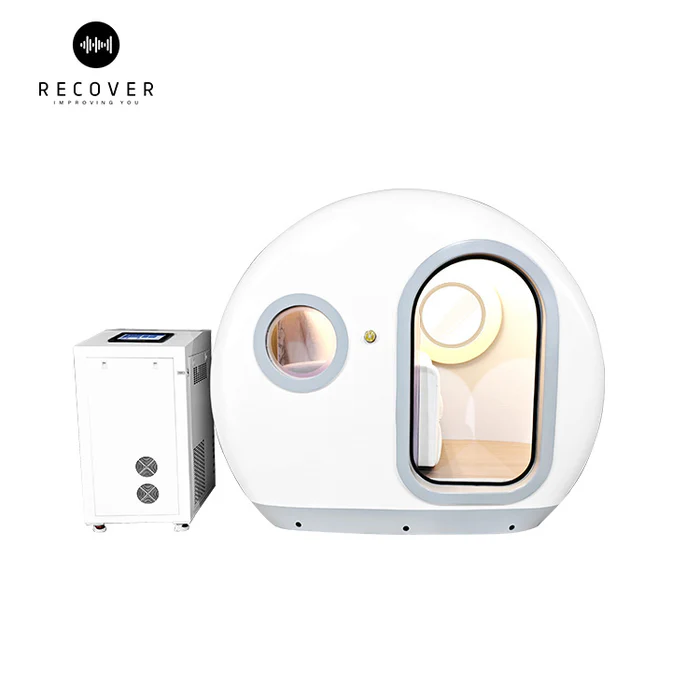
Hyperbaric oxygen therapy fills this gap precisely. At 1.3–1.5 atmospheres absolute, mild HBOT increases dissolved plasma oxygen concentration by 30–300% depending on pressure and supplemental oxygen use. This elevated tissue oxygen availability provides the biochemical fuel that accelerates the cellular repair processes that contrast therapy’s vascular optimization has primed for delivery.
The sequencing logic is straightforward. Contrast therapy first — optimizing circulatory delivery through the vascular pump effect, clearing metabolic waste, and establishing the HRV improvements that reflect genuine recovery readiness. HBOT second — flooding the now optimally circulating tissue with oxygen concentrations sufficient to drive accelerated cellular repair independent of local vascular limitations.
The Neurological Dimension
Both contrast therapy and mild HBOT produce neurological effects that compound meaningfully when combined. Contrast therapy’s norepinephrine release — documented at up to 300% above baseline during cold immersion — drives sustained mental clarity, motivation, and stress resilience for several hours post-session. HBOT’s cerebral oxygenation effect supports neurological restoration processes and produces the parasympathetic activation that consistent practitioners report as a qualitative sense of calm clarity distinct from stimulant-driven focus.
The combination produces a neurological state — alert, focused, calm, and resilient — that UAE practitioners across athletic and professional contexts describe as among the protocol’s most practically valuable outcomes. For Dubai’s executive population managing intense cognitive demands, this neurological return extends the value of contrast therapy well beyond athletic recovery into professional performance territory.
Optimal Protocols for UAE Practitioners
Standard Contrast Therapy Protocol
The evidence-supported protocol for athletic recovery involves three to four complete cycles of heat and cold alternation. Each cycle comprises 10–15 minutes of heat exposure in a traditional Finnish Recover sauna at 80–95°C or infrared sauna at 50–65°C, followed by 3–5 minutes of cold water immersion at 8–15°C. Total session time runs 45–75 minutes depending on cycle number and transition efficiency.
Beginning and ending with heat exposure is the approach most consistently supported by research for recovery applications — the final vasodilation phase maximizes the nutrient delivery effect that persists into the hours following the session. Practitioners prioritizing mental clarity and norepinephrine-driven cognitive performance may prefer ending on cold, which sustains the sympathetic activation and alertness that cold immersion produces.
Adding HBOT to the Protocol
For practitioners integrating all three modalities, the optimal sequencing positions contrast therapy first — within 60 minutes of training completion — and HBOT within two to four hours of the contrast therapy session. This timing captures the peak window of vascular optimization from contrast therapy while the HRV improvements are still accumulating, allowing the HBOT session to deliver elevated oxygen concentrations into a circulatory environment that contrast therapy has prepared for maximum delivery efficiency.
A standard mild hyperbaric session at 1.3–1.5 ATA for 60 minutes completes the triple protocol. Many UAE practitioners schedule this during afternoon rest periods following morning training and post-training contrast therapy — a timing that also supports the sleep quality improvements that consistent mild HBOT produces when sessions occur several hours before bedtime.
Where to Access Contrast Therapy in the UAE
Dubai Facilities
Dubai’s recovery facility landscape has developed significantly to meet the demand that the city’s athletic and wellness community generates. Premium recovery centers in Jumeirah, Dubai Hills, and DIFC offer purpose-built contrast therapy suites combining traditional Finnish saunas with cold plunge tanks maintained at precise temperatures by dedicated chiller systems.
Recover’s partner facilities in Dubai provide fully equipped contrast therapy environments with coaching support for practitioners establishing protocols for the first time — guidance on cycle duration, temperature targets, breathing techniques, and the progressive cold adaptation that makes the protocol sustainable rather than occasionally heroic.
Session pricing at Dubai contrast therapy facilities ranges from AED 150–400 per session depending on facility tier and included services. Monthly membership packages offering unlimited or high-frequency access are available from AED 900–2,800, making regular practice financially manageable for committed users.
Abu Dhabi Facilities
Abu Dhabi’s wellness infrastructure, concentrated around Saadiyat Island, Al Raha Beach, and the Corniche corridor, includes several premium facilities offering contrast therapy access to the capital’s athletic and professional population. The city’s significant concentration of professional athletes — particularly in combat sports, football, and endurance disciplines — has driven investment in recovery facility quality that now serves the broader Abu Dhabi wellness community.
Recover’s Abu Dhabi network includes vetted facilities whose contrast therapy infrastructure, maintenance standards, and coaching capability we have assessed directly. Access pricing in Abu Dhabi is broadly comparable to Dubai, with session rates of AED 150–350 and monthly memberships from AED 800–2,500.
Home Installation: The Frequency Solution
For UAE residents using contrast therapy three or more times weekly, home installation resolves the frequency and convenience limitations of facility access definitively. A complete home contrast therapy setup — two-person infrared sauna paired with a 300-litre cold plunge tub and a mid-range chiller maintaining precise water temperature year-round — is available from approximately AED 22,000 as a complete installed system.
Traditional Finnish sauna configurations with premium cold plunge and high-performance chiller range from AED 38,000–75,000 depending on sauna size and chiller specification. The financial break-even against regular facility membership occurs within 18–30 months for practitioners using the setup four or more times weekly — after which daily access at zero marginal cost compounds the investment return indefinitely.
At Recover, our home contrast therapy installations include full system specification, electrical assessment, installation by vetted UAE contractors, and ongoing support for protocol development — ensuring the investment translates into consistent daily practice rather than underutilized equipment.
The Recover Perspective
The science behind contrast therapy is robust, the access infrastructure in Dubai and Abu Dhabi is genuinely strong in 2026, and the combination with mild hyperbaric oxygen therapy represents the current frontier of accessible evidence-based recovery for UAE practitioners. The residents achieving the most significant outcomes are those who approach the protocol with consistency — not occasional sessions driven by novelty, but daily or near-daily practice integrated as non-negotiably into the routine as training itself.
The UAE’s demanding environment — extreme heat, intense professional and athletic schedules, disrupted sleep, and the physiological stress of high-performance living — creates exactly the recovery demand that this combination of modalities is designed to address. The tools are available. The science is clear. The only remaining variable is the commitment to use them consistently.