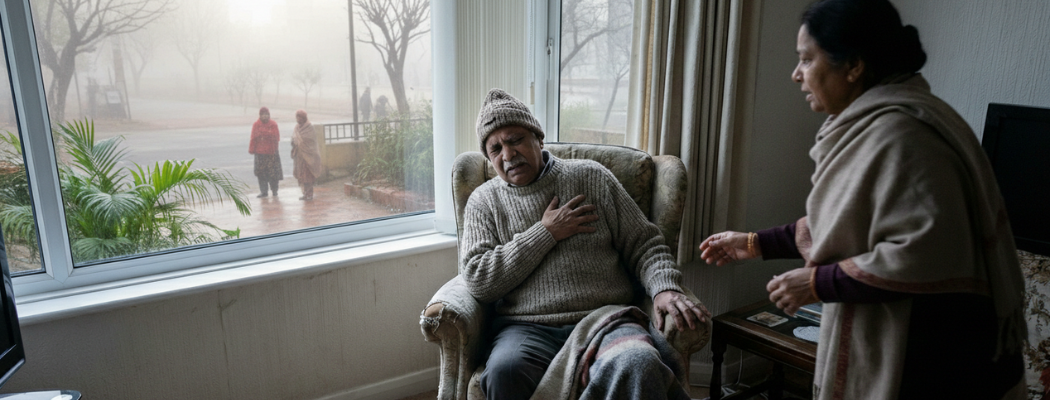
Winter changes more than the temperature. It changes how your blood vessels behave, how hard your heart has to work, and how likely you are to ignore early warning signs. That’s why heart diseases in winter and winter heart problems aren’t just “seasonal talk”—they reflect real, predictable biology.
The good news is equally practical: if you understand why cold weather increases cardiac risk, prevention becomes specific (not generic). And if symptoms do appear, fast diagnosis and modern cardiac care can dramatically improve outcomes.
Why cold weather raises heart risk
Think of your blood vessels like flexible pipes. In cold conditions, the body tries to conserve heat by tightening those pipes—this is called vasoconstriction. The immediate consequences are:
- Blood pressure rises
Narrower vessels mean the heart must pump against higher resistance.
- The heart needs more oxygen
Higher blood pressure and faster heart rate increase the heart’s workload.
- Blood can become “stickier”
Cold exposure is associated with changes that can promote clotting in susceptible people (especially those with plaque in arteries).
- Sudden exertion is more dangerous
Activities like brisk early-morning walks in the cold or lifting heavy loads (in some countries, snow shoveling) can trigger a mismatch between oxygen demand and supply.
- Winter infections can stress the heart
Flu and respiratory infections increase inflammation, heart rate, and dehydration—factors linked with heart attacks and worsening heart failure.
- Lifestyle shifts quietly add risk
Less movement, heavier meals, more alcohol, disrupted sleep, and higher air pollution exposure can all compound the problem.
This is the logic behind cardiac care in cold weather: control what you can control, and reduce sudden “stress tests” your body didn’t ask for.
Heart disease symptoms in winter: what to notice (and what people miss)
Some symptoms are obvious. Others are subtle enough that people blame them on “winter laziness” or acidity.
Classic symptoms
- Chest pain/pressure/tightness (often central, may radiate to left arm, jaw, back)
- Shortness of breath (at rest or with mild activity)
- Sweating, nausea, or a sense of impending doom
- Palpitations (fast, pounding, irregular heartbeat)
- Lightheadedness or fainting
Winter-specific “false reassurance”
Cold air can cause chest tightness even in healthy people, especially if they have asthma. The trap is assuming all chest discomfort is “just the cold.” Use this rule:
If chest discomfort is new, recurring, or triggered by exertion (walking fast, climbing stairs), treat it as cardiac until proven otherwise.
Atypical symptoms (common in women, older adults, and people with diabetes)
- Unusual fatigue (“I’m tired in a way I can’t explain”)
- Breathlessness without chest pain
- Upper back or jaw discomfort
- Indigestion-like burning with sweating or nausea
Example: A 52-year-old with diabetes wakes up on a cold morning, walks quickly to catch a bus, and feels intense fatigue and breathlessness—no chest pain. That can still be angina or a heart attack.
Diagnosis: how doctors confirm the cause quickly and safely
Symptoms guide suspicion. Diagnosis confirms reality.
1) Clinical assessment (the fastest filter)
A clinician checks:
- Blood pressure, oxygen saturation, temperature
- Heart and lung examination
- Risk profile (smoking, diabetes, hypertension, cholesterol, family history)
2) ECG (Electrocardiogram)
An ECG can show reduced blood supply to the heart (ischemia), rhythm problems, or signs of an ongoing heart attack. It’s quick and often repeated.
3) Blood tests (especially cardiac troponin)
Troponin rises when heart muscle is injured. Serial testing (repeat after a few hours) helps detect early heart attacks.
4) Echocardiography (2D Echo)
An ultrasound of the heart that shows:
- Pump function (ejection fraction)
- Valve problems
- Areas not contracting well (often due to reduced blood supply)
5) Stress testing (when appropriate)
If symptoms suggest angina but there’s no emergency:
- Treadmill stress test (for those who can exercise)
- Stress echo or nuclear stress test (when more detail is needed or exercise isn’t possible)
6) CT Coronary Angiography or Coronary Angiography
- CT coronary angiography: non-invasive mapping of coronary arteries in selected patients.
- Coronary angiography: the gold standard when blockage is strongly suspected or intervention is likely.
The goal is simple: separate “high-risk now” from “needs evaluation soon.” Winter doesn’t change the principles—it just increases the number of people who cross that line.
Prevention that matches the winter causes (not generic advice)
Here’s prevention built directly on the mechanisms winter triggers.
If cold tightens blood vessels → reduce cold shock
- Dress in layers; cover head/ears; use a scarf to warm inhaled air.
- Avoid stepping from a warm room into intense cold suddenly.
- Warm up indoors before outdoor exercise.
Example: Instead of starting your morning walk at full pace, walk slowly for 5–10 minutes indoors or in a sheltered area, then increase pace.
If blood pressure rises in winter → measure and adjust
- Check BP more frequently in winter (home monitor helps).
- Take medications consistently; don’t skip doses because you “feel fine.”
- Reduce excess salt in winter comfort foods (soups, pickles, packaged snacks).
If exertion becomes riskier → avoid sudden heavy effort
- Don’t do intense activity immediately after waking.
- Break heavy tasks into smaller chunks with rest.
- If you feel chest tightness or unusual breathlessness: stop, rest, and seek help.
If infections increase cardiac stress → prevent infections aggressively
- Get flu vaccination (and other vaccines as advised).
- Hand hygiene and mask use in crowded indoor spaces during outbreaks.
- Don’t “push through” fever with intense workouts—fever increases heart rate and dehydration.
If dehydration and thicker blood contribute → hydrate on purpose
Winter thirst is deceptive. Aim for steady fluids (water, soups, warm non-sugary drinks). Limit alcohol, which can dehydrate and disturb rhythm.
If pollution and indoor smoke worsen risk → reduce exposure
- Avoid outdoor exercise near traffic peaks.
- Improve indoor ventilation; avoid smoking and second-hand smoke.
This is practical cardiac care in cold weather: keep the heart’s workload stable, avoid sudden spikes, and reduce avoidable triggers.
Treatments: when prevention isn’t enough
If heart disease symptoms suggest an event—or if tests confirm disease—treatment depends on what’s found.
1) Medications (core for most cardiac conditions)
Common categories include:
- Antiplatelets (reduce clot formation)
- Statins (stabilize plaque and lower cholesterol)
- Beta-blockers / calcium channel blockers (reduce workload, control BP and angina)
- ACE inhibitors/ARBs (BP control, heart protection)
- Diuretics (for fluid overload in heart failure)
- Anti-arrhythmic strategies (for rhythm disorders)
2) Advanced cardiac treatments (when blockage or structural disease is significant)
- Angioplasty and stenting (PCI): opens blocked coronary arteries quickly, often lifesaving in heart attacks.
- Coronary artery bypass grafting (CABG): for multi-vessel or complex disease.
- Pacemakers and ICDs: for slow rhythms, heart block, or dangerous arrhythmias.
- Catheter ablation: for certain fast rhythm problems (like some SVTs or atrial fibrillation in selected cases).
- Valve interventions (including minimally invasive options): when valve disease is contributing to symptoms.
- Advanced heart failure therapy: tailored medication plans, device therapy when indicated, and structured rehabilitation.
The key point: treatment works best when started early—before a “small warning” becomes a major event.
When to seek emergency help
Call emergency services immediately if you have:
- Chest pressure/pain lasting >10 minutes, or recurring with exertion
- Severe breathlessness, fainting, or sudden sweating with nausea
- New confusion, bluish lips, or very low oxygen readings
- Sudden weakness or speech trouble (possible stroke)
Conclusion
Winter can turn hidden risk into visible disease because cold raises blood pressure, constricts vessels, increases infection stress, and invites sudden exertion. The most effective prevention is targeted: stay warm, avoid abrupt strain, monitor blood pressure, prevent infections, hydrate, and reduce smoke/pollution exposure. If symptoms still appear, timely ECGs, troponin testing, echo, and coronary imaging can clarify the cause—and advanced options like angioplasty, stenting, bypass surgery, rhythm procedures, and device therapies can restore stability.