Category

Blog

Category

Feeding saltwater fish properly is essential for maintaining a healthy aquarium environment. A well-planned feeding routine supports fish growth, coloration, and overall vitality. Many hobbyists rely on guidance from a Saltwater fish online store to select foods that meet nutritional requirements. Establishing a consistent schedule prevents overfeeding, reduces waste, and helps maintain water quality. This post examines effective feeding strategies, types of food suitable for different species, and practical routines designed to keep your saltwater aquarium thriving over time.

The Dietary Needs of Saltwater Fish

Saltwater fish have varying dietary requirements depending on their species. Carnivorous fish require protein-rich diets such as live or frozen shrimp, while herbivores need plant-based foods like algae or spirulina. Omnivorous species benefit from a combination of protein and vegetable matter. Identifying the type of fish in your aquarium helps determine both portion sizes and feeding frequency. Providing the correct nutrition strengthens immune systems, enhances natural coloration, and encourages healthy growth. Understanding these needs is the foundation for creating an effective feeding routine that supports long-term fish health.

Types of Food for Saltwater Aquariums

Saltwater fish benefit from a variety of food options to maintain balanced nutrition. Flake and pellet foods are convenient, nutritionally complete, and easy to store. Frozen foods such as brine shrimp, mysis shrimp, and krill provide high protein content for carnivorous species. Live foods encourage natural hunting behavior and improve vitality. Herbivorous fish thrive on vegetable matter, including seaweed sheets or spirulina. Using a mix of these foods ensures all species receive the nutrients they need. Rotating food types also prevents dietary deficiencies and keeps fish active and healthy in the aquarium.

How Often Should You Feed Your Fish?

Feeding frequency significantly impacts the health of a saltwater aquarium. Most fish do well with one to two feedings daily, ensuring they receive enough nutrients without overloading the water with waste. Juvenile or fast-growing fish may require smaller, more frequent feedings to support development. Observing fish during meals helps determine if adjustments are necessary. Overfeeding can result in excess waste, promoting algae growth and reducing water quality. Tailoring feeding frequency based on species, size, and age maintains a stable ecosystem and encourages active, healthy fish behavior.

Recommended Feeding Routines

Establishing a structured feeding routine ensures proper nutrition and minimizes the risk of overfeeding. Many aquarists recommend morning feedings using high-protein foods to energize carnivorous species. Evening feedings should include algae or vegetable-based foods, particularly for herbivores. Occasional treats, such as live or frozen food, simulate natural foraging behaviors and add variety to the diet. Skipping one feeding per week can prevent overnutrition and help maintain water balance. Consistency in routine reduces stress, supports healthy growth, and encourages a peaceful and active aquarium environment.

Portion Control Tips

Correct portion sizes are crucial for fish health and water quality. A general guideline is to feed only what fish can consume within two to three minutes. Uneaten food should be promptly removed to prevent contamination and nutrient spikes. Automatic feeders offer a convenient solution, particularly for busy hobbyists or those away from home. Monitoring portions and adjusting amounts according to fish behavior helps maintain a balanced environment. Proper portion control reduces the risk of obesity in fish, prevents aggressive competition during feeding, and ensures all species receive appropriate nutrition.

Observing Your Fish During Feeding

Monitoring fish during feeding provides insight into their health and well-being. Healthy fish are typically active and eagerly consume food without excessive competition. Lethargic behavior, aggressive food disputes, or refusal to eat may indicate an imbalance in diet, portion, or feeding frequency. Adjusting feeding routines based on observation ensures nutritional needs are met and prevents stress-related health issues. Tracking fish behavior over time allows aquarists to fine-tune routines for each species. Regular observation strengthens the relationship between routine management and the overall health of the aquarium ecosystem.

Special Considerations for Reef Tanks

Reef tanks require extra care due to the presence of corals and invertebrates. Overfeeding fish in such setups can increase nutrient levels, promoting harmful algae growth that affects coral health. Targeted feeding of corals ensures they receive adequate nutrition without overloading the tank. Monitoring water parameters, including nitrate and phosphate levels, is crucial for maintaining balance. Adjustments to feeding routines may be necessary to support both fish and coral. Following species-specific guidelines helps maintain a thriving reef environment where all inhabitants coexist in a healthy and visually appealing ecosystem.

Seasonal and Growth Adjustments

Feeding routines should adapt to changes in fish size, age, and environmental conditions. Juvenile fish require frequent, smaller meals to support rapid growth, while adults typically need less food. Seasonal changes, such as temperature fluctuations, can influence metabolism, affecting appetite and feeding efficiency. Observing fish behavior and growth rates allows aquarists to adjust feeding amounts and frequency appropriately. Maintaining flexibility in feeding routines ensures fish receive the right nutrition throughout different stages of life and environmental conditions. Seasonal adjustments support sustainable aquarium health and long-term success.

Conclusion

Maintaining a proper feeding routine is essential for a healthy and balanced saltwater aquarium. By understanding fish dietary needs, providing a variety of food types, controlling portions, and monitoring behavior, aquarists can foster vibrant and active fish populations. Adjusting routines for reef tanks, seasonal changes, and growth stages ensures long-term success. Consistency and careful observation turn a simple aquarium into a thriving aquatic ecosystem. Following these strategies keeps fish healthy, reduces stress, and creates a visually captivating and well-maintained saltwater environment.


Lip products play an important role in shaping the final appearance of a makeup look. Makeup artists regularly recommend gloss because it adds brightness, softness, and a smooth finish that works across many styles. A glossy texture reflects light, which makes lips appear fuller and more hydrated. Products such as Metallic lip gloss also create a modern visual effect that stands out in both photography and everyday makeup. Gloss adapts easily to natural beauty looks, dramatic evening makeup, and simple daily routines. Many professionals include lip gloss in their kits because it delivers visible results with minimal effort.

Lip Gloss Adds Instant Shine and Dimension

Lip gloss creates an immediate shine that changes how lips appear in a makeup look. Makeup artists rely on this reflective quality to bring attention to the lips without heavy color products. The glossy surface catches light and produces a dimensional effect that matte formulas sometimes lack. A small amount applied to the center of the lips can shift the entire balance of a makeup style. This shine also gives lips a softer appearance that looks natural and fresh. The reflective finish makes lips stand out while still maintaining a clean and polished makeup result.

Light Reflection Improves Lip Definition

Professional makeup techniques often focus on controlling how light interacts with facial features. Lip gloss helps with this technique by reflecting light across the lip surface. A glossy layer improves the natural outline of the lips and draws attention to their shape. Makeup artists appreciate products that define features without complicated contouring. Gloss naturally brightens the lips and gives them a smooth visual structure. This effect works especially well in photography and stage lighting. The shine also balances other makeup elements such as bold eyes or strong cheek color.

A Simple Way to Make Lips Look Fuller

Many beauty clients request fuller-looking lips during makeup sessions. Lip gloss offers a quick and natural approach to achieve that effect. Makeup artists apply gloss in areas where light naturally touches the lips, which creates the illusion of volume. The smooth texture reduces the visibility of small lip lines and dryness. This technique produces a plump appearance without complicated contouring methods. Gloss also avoids the heavy appearance that some matte products can create. A balanced shine provides fullness while keeping the lips looking natural and comfortable.

Smooth Texture Improves Lip Appearance

Gloss formulas usually contain moisturizing ingredients that help lips appear smoother. A hydrated lip surface reflects light more evenly, which contributes to a healthy visual effect. Makeup artists often recommend gloss for clients with dry lips or fine lip lines. The smooth texture fills small imperfections and gives the lips a soft finish. This quality makes gloss useful for both professional makeup sessions and everyday beauty routines. Consistent hydration and shine support a polished appearance that complements many makeup styles.

Easy to Apply and Perfect for Quick Touch-Ups

Convenience remains a major reason professionals recommend lip gloss. The product glides across the lips smoothly and does not require detailed lining or shaping. Many gloss formulas come with applicators that allow fast and precise application. This feature makes gloss suitable for beginners as well as experienced makeup users. Quick touch-ups are also possible throughout the day because the product spreads easily. Makeup artists working backstage or during events prefer products that maintain a polished look without complicated reapplication steps.

Works Well With Many Makeup Styles

Versatility makes lip gloss a valuable product in professional beauty kits. Gloss complements subtle makeup styles and dramatic looks equally well. A clear gloss creates a soft natural finish, while tinted formulas add color and personality. Makeup artists often pair gloss with strong eye makeup to balance the overall appearance. Gloss also works beautifully with minimal makeup by adding brightness to the face. This flexibility allows professionals to adapt quickly during makeup sessions. One product can support multiple styles without requiring major changes.

Common Reasons Makeup Artists Recommend Lip Gloss

  • Creates a luminous finish that reflects light beautifully
  • Helps lips appear smoother and hydrated
  • Provides a simple method for fuller-looking lips
  • Works well with both natural and bold makeup styles
  • Requires minimal technique for smooth application
  • Allows quick touch-ups during long events
  • Layers easily over lipstick for extra shine
  • Suitable for different skin tones and beauty preferences

Lip gloss remains a dependable product because it combines visual impact with simple use. Makeup artists value tools that improve a makeup look without increasing preparation time. Gloss adds brightness, softness, and dimension in a single step. Professional kits usually include several gloss options for different makeup styles. Reliable results and versatility make gloss a regular recommendation in beauty routines.

Adds a Fresh and Youthful Appearance

A glossy lip finish often creates a lively and refreshed beauty style. Makeup artists recommend gloss for clients seeking a youthful makeup look. The reflective surface gives the lips a soft glow that supports a healthy appearance. Matte lip products sometimes produce a heavier result, while gloss keeps the makeup light and balanced. This reason explains why gloss appears frequently in bridal makeup, fashion shoots, and editorial beauty work. A natural shine complements facial features and gives the entire makeup look a vibrant character.

Popular in Photography and Fashion Makeup

Photography and fashion makeup depend heavily on light reflection and facial balance. Lip gloss performs well in these situations because its shine interacts beautifully with lighting. Makeup artists apply gloss to ensure lips remain noticeable in photographs. Studio lighting can sometimes reduce the visibility of lip color, but gloss maintains brightness and depth. Fashion editors and photographers often prefer glossy lips for modern beauty looks. The reflective finish adds elegance without overpowering other makeup elements.

Available in Many Shades and Finishes

Lip gloss exists in a wide range of shades, textures, and finishes. Beauty brands offer transparent glosses, tinted formulas, shimmer styles, and high-pigment options. Makeup artists appreciate products that allow creative flexibility during makeup sessions. Tinted gloss enhances natural lip color, while pigmented versions produce a stronger statement look. Shimmer and metallic finishes create dramatic visual effects for special occasions. This wide selection allows artists to choose gloss based on the client’s style, outfit, and makeup preferences.

Fits Easily Into Daily Beauty Routines

Lip gloss remains popular because it fits easily into everyday beauty habits. Many people prefer products that deliver visible results without complex application steps. Gloss provides shine, softness, and color in a single layer. A small amount applied during the day keeps lips looking polished and fresh. Busy schedules often require beauty products that are quick and practical. Lip gloss meets that need by offering style and convenience together.

Conclusion

Lip gloss continues to receive strong recommendations from makeup artists because it combines shine, versatility, and simplicity. The reflective finish adds brightness and depth that improve the appearance of the lips. Gloss also helps create a fuller and smoother look without complicated makeup techniques. Easy application and quick touch-ups make the product useful for both professionals and everyday beauty users. A wide variety of shades and finishes allows gloss to match many makeup styles. Reliable performance and visual impact explain why lip gloss remains a consistent choice in professional makeup kits.

FAQs

Why do makeup artists recommend lip gloss so often?
Makeup artists recommend lip gloss because it adds shine, smoothness, and dimension while remaining easy to apply and adjust.

Does lip gloss make lips look bigger?
The reflective surface of gloss catches light, which creates the illusion of fuller and more defined lips.

Can lip gloss be used with lipstick?
Many professionals apply gloss over lipstick to add shine, depth, and a smoother lip finish.

Is lip gloss suitable for daily makeup routines?
Gloss works well for daily use because it provides shine and hydration without requiring complicated application.

What type of lip gloss do makeup artists prefer?
Professionals usually choose hydrating gloss formulas that provide shine while keeping the lips comfortable and smooth.

Delhi, the capital city of India, is not only known for its rich history and diverse culture but also for its dynamic and evolving lifestyle landscape. One of the more intriguing facets of Delhi’s contemporary social fabric is the presence of independent call girls. These individuals represent a growing segment of the escort industry, offering a range of companionship services that cater to the varied needs of clients. In this article, we will explore the realm of independent call girls in Delhi, delving into their appeal, the services they provide, and what clients can expect from their experiences.

Understanding Independent Call Girls in Delhi

What Makes Them Independent?

Independent call girls are individuals who operate without the oversight of an agency. This autonomy allows them to have full control over their work, setting their own rates, choosing their clients, and determining their schedules. Many independent escorts prefer this model because it offers greater flexibility and the opportunity to cultivate a deeper, more personalized connection with their clients.

Why Choose Independent Call Girls?

There are several reasons why clients may prefer independent call girls over those associated with agencies:

  1. Personalized Experience: Independent call girls often strive to create a more tailored experience for their clients. They may take time to communicate beforehand, learning about client preferences to ensure a satisfying encounter.
  2. Direct Contact: Clients can communicate directly with independent escorts, allowing for clear discussions about boundaries, expectations, and services. This direct relationship can enhance comfort and trust.
  3. Diverse Offerings: Many independent call girls possess unique skills and experiences, ranging from various cultural backgrounds to specialized services, providing clients with options that suit their desires.
  4. Flexibility: Being independent often allows these escorts greater flexibility in their arrangements, making it easier to accommodate last-minute bookings or schedule changes.

The Appeal of Independent Call Girls in Delhi

1. Exotic Beauty and Charm

Independent call girls often bring a unique allure to their work. Many are stunningly beautiful, showcasing a variety of physical features that appeal to a broad spectrum of clients. Their charm and charisma add to the overall experience, making encounters a pleasure to remember.

2. Cultural Sophistication

Delhi is a melting pot of cultures, and many independent call girls reflect this diversity. They may come from different regions of India or even from abroad, bringing unique cultural perspectives that enrich their interactions with clients. This cultural sophistication can lead to engaging conversations and a more immersive experience.

3. Professionalism and Discretion

Independent call girls understand the importance of professionalism and confidentiality in their line of work. They are typically well aware of the need to create a safe and discreet environment for their clients, allowing for enjoyable experiences free from external judgment or interference.

The Services Offered by Independent Call Girls

Independent call girls in Delhi provide a variety of services that cater to different needs and preferences. Here are some common offerings:

1. Companionship for Social Events

Many clients hire independent call girls to accompany them to social events such as dinners, parties, or corporate functions. Having a charming companion can significantly enhance one’s enjoyment and comfort during these occasions.

2. Private Meetings

For those seeking more intimate encounters, independent call girls offer the option of private meetings. These encounters can range from casual companionship to more intimate experiences, depending on the preferences of the client and the escort.

3. Adventurous Experiences

Some independent escorts are open to adventurous experiences, taking clients to places like clubs or unique local spots. This can create memorable outings filled with excitement and spontaneity.

4. Therapeutic Touch

An increasing number of independent call girls offer services that focus on relaxation and well-being. These may include sensual massages and other therapeutic techniques aimed at relieving stress and promoting relaxation.

How to Find Independent Call Girls in Delhi

1. Online Platforms

In today’s digital age, many independent call girls utilize online platforms to promote their services. Websites and social media can provide a wealth of information about potential companions, complete with profiles, photographs, and services offered. However, it’s crucial to approach these platforms with caution and ensure the accuracy of the information presented.

2. Word of Mouth

Personal recommendations can be invaluable when searching for independent call girls. Friends or acquaintances who have had positive experiences may provide insights and suggestions about reliable escorts.

3. Networking

Engaging in social networks or communities that discuss lifestyle choices can lead to connections with independent call girls. These interactions allow for more informal settings where one can learn about various companions.

4. Discretion and Respect

When seeking out independent call girls, it’s vital to approach the process with discretion and respect. Being polite and informative in initial communications can set the tone for a positive encounter.

What to Expect from an Encounter

Meeting with an independent call girl in Delhi can be a rewarding experience if approached with the right expectations and mindset. Here’s what clients can generally anticipate:

1. Initial Communication

Clients should expect to communicate with the escort ahead of the meeting. This may include discussing preferences, expectations, and boundaries to ensure a comfortable and enjoyable experience for both parties.

2. Comfort and Relaxation

Independent call girls aim to create a welcoming and relaxed environment. Whether in a public setting or a private meeting space, expect an atmosphere that encourages connection and intimacy.

3. Engaging Conversations

Many independent call girls are enthusiastic conversationalists, prepared to discuss various topics and share personal stories. This interaction can transform a simple encounter into a profound and enjoyable experience.

4. Intimate Moments

For clients seeking intimate experiences, independent call girls are usually proficient in providing affection and companionship, adapting to the desires of their clients while maintaining mutual respect and consent.

Safety Considerations

Engaging with independent call girls does come with certain considerations, especially when it comes to safety. Here are a few tips to ensure a secure experience:

1. Meet in Public First

For first encounters, it’s advisable to meet in a public place. This can help establish trust and comfort before transitioning to a more private setting.

2. Respect Boundaries

Mutual respect is crucial in any escort encounter. Both clients and escorts should be clear about their boundaries and adhere to them throughout the experience.

3. Discretion

Protecting privacy is essential, both for the client and the escort. Avoid sharing personal information that could compromise either party’s safety or experience.

4. Trust Your Instincts

If something feels off during the interaction, trust your instincts. It’s important to prioritize safety and well-being above all else.

The Evolving Landscape of Independent Call Girls

As societal attitudes continue to shift, the perspective on independent call girls in Delhi is changing. While many still grapple with preconceived notions about the industry, increasing acceptance allows for more open discussions about companionship services.

1. Empowerment and Choice

Many independent call girls view their work as an expression of empowerment. They embrace the freedom that comes with being independent, taking control of their careers and choices.

2. Cultural Acceptance

Urban centers like Delhi are experiencing gradual changes in how escort services are perceived. Increased dialogue surrounding personal choice and lifestyle diversity encourages a more accepting environment for independent call girls.

3. Online Visibility

The rise of technology has brought independent call girls into the limelight. Social media and online platforms enable them to market their services effectively, reaching a wider audience and allowing for connections that would have otherwise been difficult to establish.

Conclusion

The world of independent call girls in Delhi offers a rich tapestry of experiences, characterized by choice, flexibility, and personal connection. As clients seek companionship for various reasons—ranging from the need for social interaction to deeper intimate experiences—independent escorts provide a unique and appealing option.

With the right approach, clients can find not just a beautiful companion but also a partner for meaningful interactions. Understanding the dynamics of this evolving industry can enhance the experience for all involved, allowing for fulfilling encounters that transcend mere physical connection.

As societal attitudes continue to evolve, the potential for greater acceptance of independent call girls in Delhi will pave the way for a more open and respectful dialogue surrounding companionship services. Embracing this change allows individuals to explore their desires with confidence and joy, supported by the myriad of options available in this vibrant city.

Travelers looking for a refreshing break from modern city life often search for destinations that combine nature, adventure, and cultural charm. One destination that offers all of these experiences in a single journey is the mountain region of Hatta. Surrounded by rugged landscapes and dramatic rocky hills, this area has become a popular getaway for visitors seeking something different from the typical urban attractions.

A Hatta mountain tour package offers an excellent opportunity to explore this scenic region in a structured and comfortable way. The mountains, lakes, heritage sites, and adventure activities make the trip exciting for nature lovers and explorers alike. Whether someone wants to enjoy breathtaking views, learn about traditional culture, or participate in outdoor adventures, a Hatta mountain tour package can deliver a memorable experience.

This mountainous destination presents a completely different side of the region, making it ideal for travelers who appreciate peaceful environments and natural beauty.

A Scenic Journey into the Mountains

One of the most enjoyable parts of traveling to Hatta is the journey itself. The road gradually transforms from busy city highways to scenic desert routes that lead into the rocky mountains. Travelers quickly notice the shift in landscape as towering hills begin to appear on the horizon.

A Hatta mountain tour package typically includes a carefully planned route that allows visitors to witness these natural transitions. The mountains grow more dramatic as the trip continues, revealing valleys, rocky slopes, and open desert views.

The scenic drive is often considered a highlight because it introduces visitors to the beauty of the Hajar Mountains. With wide open skies and peaceful surroundings, the experience feels refreshing and far removed from city life.

Many travelers appreciate this transition because it creates anticipation for the natural wonders waiting in Hatta.

Discovering the Natural Beauty of Hatta

Nature is the main attraction in this mountainous destination. Visitors who choose a Hatta mountain tour package often find themselves surrounded by landscapes that appear untouched and dramatic.

Rocky mountain formations dominate the region, creating impressive scenery that changes colors depending on the sunlight. The terrain includes valleys, hills, and natural viewpoints that offer panoramic views of the surrounding environment.

A Hatta mountain tour package allows travelers to explore these natural features while enjoying the calm atmosphere of the mountains. The fresh air and peaceful setting make the experience relaxing and rejuvenating.

The region’s famous dam and lake add another layer of beauty to the landscape. The water reflects the mountains and sky, creating a striking visual contrast that attracts photographers and nature lovers.

Cultural Heritage and Historical Insights

Beyond the natural scenery, Hatta also holds historical significance. The region preserves elements of traditional life that date back many generations. Stone houses, watchtowers, and old structures represent the architectural style used by earlier communities.

During a Hatta mountain tour package, visitors may explore heritage areas that display how people once lived in the mountains. These locations provide insights into the challenges faced by earlier settlements and the innovative ways communities adapted to the environment.

Walking through these historical areas allows travelers to connect with the past. The architecture, building materials, and layout of the settlements reveal the cultural identity of the region.

For many visitors, this cultural aspect adds depth to the journey and transforms the trip into more than just a sightseeing experience.

Outdoor Adventures in the Mountain Landscape

Adventure seekers often find that a Hatta mountain tour package provides numerous opportunities to explore the outdoors. The mountains and surrounding terrain are ideal for activities that combine excitement with natural exploration.

Hiking trails allow travelers to walk through rocky landscapes while enjoying stunning mountain views. These trails range from simple walks to more challenging routes for experienced hikers.

A Hatta mountain tour package may also include water-based activities at the lake area. Kayaking has become one of the most popular experiences because it allows visitors to paddle across calm waters surrounded by dramatic mountain scenery.

Cycling is another exciting activity available in the region. Specially designed mountain biking routes provide thrilling paths that wind through hills and desert landscapes.

These outdoor activities make the journey dynamic and engaging, giving travelers multiple ways to interact with the environment.

Peaceful Atmosphere Away from City Life

One of the biggest attractions of the mountains is the calm environment. A Hatta mountain tour package provides a refreshing contrast to the fast pace of urban life.

The quiet surroundings, open landscapes, and natural beauty create a relaxing atmosphere where visitors can slow down and enjoy the moment. Many travelers simply take time to walk through scenic areas, breathe the fresh mountain air, and observe the tranquil environment.

The peaceful setting makes Hatta an ideal place for reflection and relaxation. For individuals who spend most of their time in busy cities, this escape into nature can feel incredibly rewarding.

A Hatta mountain tour package offers a balance between exploration and relaxation, making it suitable for different types of travelers.

Photography and Scenic Viewpoints

Photography enthusiasts often consider this mountain destination a paradise for capturing dramatic landscapes. The combination of rocky mountains, blue skies, and clear water creates visually striking scenes.

During a Hatta mountain tour package, travelers frequently stop at scenic viewpoints that overlook valleys and lakes. These locations provide perfect opportunities to capture panoramic photographs.

Sunrise and sunset are particularly impressive in the mountains. The changing light creates beautiful shadows and highlights across the rocky terrain.

Even visitors who are not professional photographers often find themselves taking numerous pictures during the journey because the scenery feels unique and inspiring.

A Memorable Experience for Different Travelers

The appeal of a Hatta mountain tour package extends to many types of travelers. Nature lovers enjoy the landscapes, adventure enthusiasts appreciate the outdoor activities, and cultural explorers find value in the heritage sites.

Families, solo travelers, and groups can all find something interesting in the mountains. The variety of attractions ensures that everyone can enjoy a meaningful experience.

The ability to combine sightseeing, cultural discovery, and outdoor adventure within a single trip makes this destination especially attractive.

Planning a Comfortable Mountain Adventure

Planning ahead can make a mountain trip more enjoyable. A Hatta mountain tour package often includes a schedule that balances travel time with exploration opportunities.

Visitors usually begin the journey early in the day to make the most of the mountain environment. Comfortable clothing, water, and suitable footwear are important for exploring outdoor areas.

Preparing for weather conditions and planning activities in advance helps travelers fully enjoy the experience. With thoughtful preparation, a Hatta mountain tour package can become a smooth and memorable adventure.

Conclusion

Escaping to the mountains offers a refreshing alternative to busy city environments. Hatta stands out as a destination where natural beauty, cultural heritage, and outdoor adventure come together in a unique way.

A Hatta mountain tour package allows travelers to explore dramatic landscapes, discover historical sites, and participate in exciting activities such as hiking, kayaking, and cycling. The scenic drive, peaceful atmosphere, and breathtaking views make the journey truly rewarding.

For those seeking a short yet meaningful escape into nature, the mountains of Hatta provide an unforgettable experience. Through a well-planned Hatta mountain tour package, visitors can witness the remarkable beauty of the region while enjoying a relaxing and adventurous getaway.

In today’s fast-moving and highly competitive business environment, intuition alone is no longer enough to stay ahead. Industries are being disrupted at record speed, customer expectations are constantly evolving, and competitors are quicker to adapt than ever before. In this reality, Market Research services have become a critical strategic investment rather than an optional support function.

Organizations that rely on accurate, data-driven insights gain the ability to anticipate market shifts, understand customers deeply, and make decisions with confidence. Market research removes uncertainty from strategic planning and replaces assumptions with evidence—allowing businesses to grow sustainably while minimizing risk.


What Are Market Research Services?

Market Research services involve the structured collection, analysis, and interpretation of market-related data to support informed business decisions. These services examine customer behavior, competitive dynamics, industry trends, regulatory conditions, and economic factors to deliver actionable insights.

Instead of guessing what customers want or reacting too late to market changes, companies use market research to align their offerings with real demand. Whether the goal is launching a new product, entering a new market, or refining brand positioning, research ensures that every strategic move is backed by reliable intelligence.

At its core, market research transforms raw data into clarity—helping leaders make smarter, faster, and more confident decisions.


Why Businesses Invest in Market Research Services

Organizations across industries increasingly depend on market research because it directly supports growth, innovation, and long-term competitiveness.

1. Deep Customer and Competitor Understanding

Market research uncovers what customers value most, how they make purchasing decisions, and where their unmet needs lie. At the same time, it provides visibility into competitor strategies, pricing models, product differentiation, and market positioning. This dual perspective enables businesses to refine offerings while standing out in crowded markets.

2. Identification of High-Growth Opportunities

Through demand analysis and trend evaluation, research reveals new customer segments, emerging markets, and untapped opportunities. Businesses can prioritize investments with higher confidence and avoid areas with limited potential.

3. Risk Reduction and Smarter Decisions

Every strategic initiative carries risk, but market research significantly reduces uncertainty. From testing product concepts to evaluating regulatory impact, data-backed insights help companies make informed, calculated decisions instead of costly guesses.


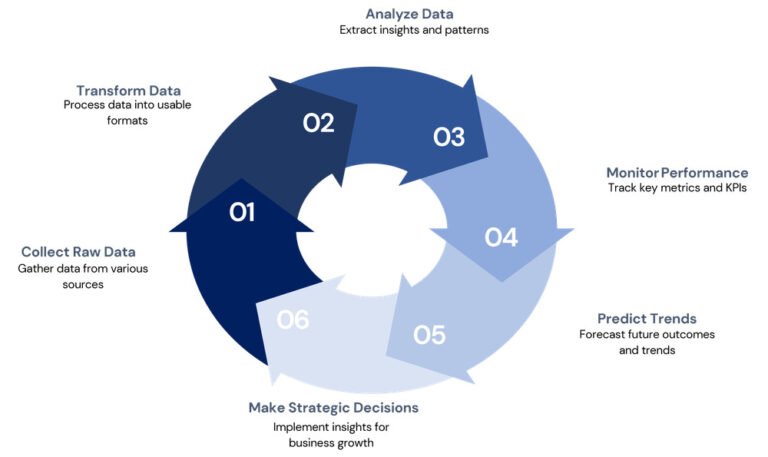
The Market Research Process

A successful research engagement follows a disciplined and transparent process to ensure accuracy and relevance:

  • Defining Objectives – Clarifying the business challenge or opportunity
  • Research Design – Selecting the right methodologies and data sources
  • Data Collection – Gathering qualitative and quantitative insights
  • Analysis and Interpretation – Converting data into meaningful findings
  • Reporting and Recommendations – Delivering insights that support action

This structured approach ensures research outputs directly align with business goals and decision-making needs.


Types of Market Research Services

Primary Market Research Services

Primary research involves collecting first-hand data directly from target audiences through surveys, interviews, focus groups, and observational studies. This method delivers highly specific insights tailored to unique business questions.

Primary research is especially valuable for product development, customer experience improvement, pricing strategies, and brand positioning—where direct customer feedback is essential.

Secondary Market Research Services

Secondary research analyzes existing data from industry reports, trade publications, company filings, government databases, and credible online sources. It provides a broader market perspective, including market size, growth trends, competitive landscapes, and regulatory frameworks.

When combined with primary research, secondary research creates a comprehensive understanding of the market environment.


Qualitative and Quantitative Research Services

Effective Market Research services integrate both qualitative and quantitative approaches to deliver balanced insights.

Qualitative Research Services

Qualitative research services explore the motivations, attitudes, and perceptions that drive customer behavior. Through in-depth interviews and focus group discussions, businesses gain clarity on the “why” behind decisions. These insights are invaluable for understanding brand perception, customer emotions, and unmet needs.

Quantitative Research Services

Quantitative research services focus on measurable data collected through structured surveys and statistical analysis. They help quantify demand, validate assumptions, assess market potential, and support forecasting. Quantitative insights are critical for strategic planning and performance evaluation.

Together, qualitative and quantitative research provide a complete, decision-ready view of the market.


AI-Driven Analytics and Automation

Artificial intelligence has transformed how research data is processed and analyzed. Advanced tools can identify patterns, correlations, and sentiment across massive datasets with speed and precision—improving insight accuracy while reducing turnaround time.

Real-Time Market Intelligence

Real-time analytics allows businesses to monitor customer behavior, brand sentiment, and market dynamics as they happen. This enables proactive decision-making, faster campaign optimization, and better risk management.

Companies that adopt these innovations gain a significant competitive edge through agility and responsiveness.


The Strategic Value of Market Research Services

Strong business strategies are built on evidence—not assumptions. Market research provides clarity on market demand, competitive intensity, and growth potential before resources are committed.

By validating ideas early and identifying market gaps, organizations can avoid costly missteps and focus investments where they matter most. Research-driven strategies support scalability, resilience, and long-term success in an unpredictable business landscape.


Why Partner with UnivDatos for Market Research Services?

At UnivDatos, we deliver comprehensive Market Research services designed to turn complex data into clear strategic direction. Our experienced analysts combine primary and secondary research methodologies with advanced analytics to provide actionable, decision-ready insights.

We support businesses across industries by analyzing customer behavior, competitive dynamics, regulatory developments, and emerging technologies. Our approach focuses on reducing risk, uncovering opportunities, and enabling confident decision-making.

With UnivDatos as your research partner, data becomes a powerful growth asset—not just information.

Related Blogs:-

How Qualitative and Quantitative Research Can Work Together

Desk Research: The Secret Superpower for Better Decisions

Whitespace Research: Reading the Parts of the Market No One Underlines

Geospatial Analysis: Making Maps Useful for Business

Frequently Asked Questions (FAQs)

1. What industries benefit most from Market Research services?

Market research is valuable across all industries, including healthcare, technology, BFSI, manufacturing, retail, and energy. Any organization making strategic decisions can benefit from data-driven insights.

2. How do qualitative and quantitative research services differ?

Qualitative research explains customer motivations and perceptions, while quantitative research measures trends and market potential using numerical data. Both are complementary and often used together.

3. When should a company invest in market research?

Market research is essential before launching products, entering new markets, changing pricing strategies, or making long-term investment decisions.

4. How long does a market research project take?

Timelines vary based on scope, methodology, and data availability, but projects can range from a few weeks to several months.

5. Can market research reduce business risk?

Yes. By validating assumptions and providing evidence-based insights, market research significantly lowers the risk associated with strategic decisions.

Connect with us today and turn your data into a powerful driver of growth and success.

In today’s digital economy, data is no longer just a byproduct of operations—it is a strategic asset. Every interaction, transaction, and process generates information that can reveal opportunities, risks, and performance gaps. However, without the right systems in place, this data remains fragmented and difficult to interpret. This is where Business Intelligence Services become essential.

Business Intelligence Services help organizations transform raw, complex data into meaningful insights that drive smarter decisions, improve performance, and support long-term growth. For companies looking to compete in fast-moving markets, investing in the right BI solution is no longer optional—it’s a business necessity.

What Are Business Intelligence Services?

Business Intelligence Services encompass a combination of technologies, tools, and processes designed to collect, integrate, analyze, and present business data in a clear and actionable format. The goal is simple: enable decision-makers to understand what is happening in the business and why.

Instead of relying on disconnected spreadsheets or manual reporting, BI solutions centralize data from multiple sources into dashboards, reports, and analytical models. This provides leaders with a single source of truth, improving confidence in decisions across departments.

Organizations use Business Intelligence Services to answer critical questions such as:

  • How is the business performing today?
  • What trends are shaping results over time?
  • Where should attention and investment be focused?

How Business Intelligence Services Work

An effective BI framework follows a structured process that ensures accuracy, consistency, and usability.

Data Integration and Preparation

Data is collected from various internal and external sources, including ERP systems, CRM platforms, financial applications, and operational tools. This data is cleaned, standardized, and stored in a unified environment, eliminating silos and inconsistencies.

Data Visualization and Dashboards

Visual dashboards convert complex datasets into easy-to-understand charts, graphs, and KPIs. Decision-makers can instantly assess performance, identify anomalies, and explore trends without needing technical expertise.

Reporting and Performance Monitoring

Automated reports track key metrics consistently and reduce manual effort. Teams can schedule reports, monitor performance in real time, and ensure that stakeholders always have access to up-to-date information.

Advanced and Predictive Analytics

Modern BI goes beyond historical reporting. Predictive models and advanced analytics identify patterns, forecast outcomes, and support scenario planning—helping organizations prepare for what’s next.

Business Intelligence & Analytics Services: Going Beyond Reporting

While traditional BI focuses on historical and descriptive analysis, business intelligence & analytics services expand these capabilities by incorporating advanced data science techniques. This combination enables organizations to uncover deeper insights and act more proactively.

With business intelligence & analytics services, organizations can:

  • Identify root causes behind performance changes
  • Anticipate risks and future opportunities
  • Optimize processes through data-driven modeling
  • Support strategic planning with predictive insights

This integrated approach allows businesses to shift from reactive decision-making to forward-looking strategies.

Self-Service Business Intelligence for Faster Insights

Self-service BI has become a critical component of modern Business Intelligence Services. It empowers non-technical users to explore data independently using intuitive, drag-and-drop tools.

Key advantages include:

  • Faster access to insights without IT dependency
  • Improved collaboration across departments
  • Increased data literacy within the organization
  • Custom dashboards tailored to individual roles

By democratizing data access, self-service BI ensures that insights reach the people who need them most—when they need them.

Business Intelligence Financial Services: Precision and Control

In finance-driven environments, accuracy and compliance are critical. Business intelligence financial services help organizations manage budgets, track revenue, monitor costs, and analyze profitability with confidence.

Finance teams use BI to:

  • Gain real-time visibility into financial performance
  • Identify trends affecting cash flow and margins
  • Improve forecasting and budgeting accuracy
  • Ensure compliance through consistent reporting

With reliable financial insights, leaders can make informed decisions that protect profitability and support sustainable growth.

Key Business Functions Supported by BI

Business Intelligence Services deliver value across the organization:

  • Sales and Marketing: Track performance, analyze customer behavior, and optimize campaigns
  • Operations: Identify inefficiencies, improve workflows, and enhance resource utilization
  • Supply Chain: Support demand forecasting, inventory optimization, and supplier analysis
  • Customer Experience: Measure satisfaction, identify pain points, and improve service quality

Data Quality and Governance: The Foundation of BI Success

Even the most advanced BI tools cannot deliver value without high-quality data. Strong data governance ensures that insights are accurate, secure, and trustworthy.

Effective governance frameworks provide:

  • Data accuracy and consistency
  • Clear ownership and accountability
  • Secure access controls
  • Regulatory and compliance alignment

Organizations that prioritize governance gain greater confidence in their Business Intelligence Services and stronger adoption across teams.

Why Partner With Business Intelligence Services Companies?

Implementing BI successfully requires both technical expertise and business understanding. Experienced business intelligence services companies help organizations design, deploy, and optimize BI solutions aligned with strategic goals.

Typical services include:

  • BI strategy and roadmap development
  • Data architecture and integration
  • Dashboard and reporting implementation
  • Ongoing optimization and support

By partnering with experts, organizations reduce risk, accelerate implementation, and maximize ROI from their BI investment.

Conclusion

Business Intelligence Services empower organizations to transform data into clarity, insight, and action. By combining integration, visualization, analytics, and governance, BI enables smarter decisions and stronger performance across every function.

As data volumes continue to grow, businesses that invest in robust business intelligence & analytics services and specialized business intelligence financial services will be better positioned to adapt, compete, and thrive.

If your organization is ready to unlock the true value of its data, now is the time to invest in a BI solution that supports growth, efficiency, and confident decision-making.

Related Blogs:-

How market intelligence services can help you grow

Frequently Asked Questions (FAQs)

1. What are Business Intelligence Services used for?

Business Intelligence Services are used to analyze business data, generate reports and dashboards, and support informed decision-making across departments.

2. How do business intelligence & analytics services differ from traditional BI?

Traditional BI focuses on historical reporting, while business intelligence & analytics services include predictive modeling, trend analysis, and advanced analytics for future planning.

3. Are Business Intelligence Services suitable for small and mid-sized businesses?

Yes. Modern BI solutions are scalable and can be tailored to organizations of any size, providing value regardless of data volume.

4. How long does it take to implement Business Intelligence Services?

Implementation timelines vary based on data complexity and scope but typically range from a few weeks to several months.

5. Why are business intelligence financial services important?

They provide accurate financial visibility, improve forecasting, ensure compliance, and support better financial decision-making.

Connect with us today and turn your data into a powerful driver of growth and success.

Expanding into international markets is one of the most transformative growth decisions a company can make. Entering new geographies opens doors to broader customer bases, diversified revenue streams, and stronger competitive positioning. However, global expansion also carries significant uncertainty. Companies that move forward without reliable data often misjudge demand, underestimate competition, or allocate resources inefficiently.

This is where Market Sizing & Forecasting becomes critical. Rather than relying on assumptions or fragmented information, businesses that invest in structured market sizing research gain a clear understanding of market opportunity, demand patterns, and long-term growth potential.

Through systematic analysis and predictive modelling, organizations can validate expansion opportunities, forecast revenue with greater confidence, and develop strategies grounded in real market intelligence. In today’s competitive business environment, forecasting market size is no longer just a research exercise—it is a strategic necessity for companies seeking sustainable international growth.


Why Market Sizing & Forecasting Matters for Business Growth

Every international market is different. Consumer preferences, regulatory requirements, purchasing power, infrastructure, and competitive landscapes vary significantly from one region to another. Without a comprehensive evaluation of these variables, companies risk making costly strategic mistakes.

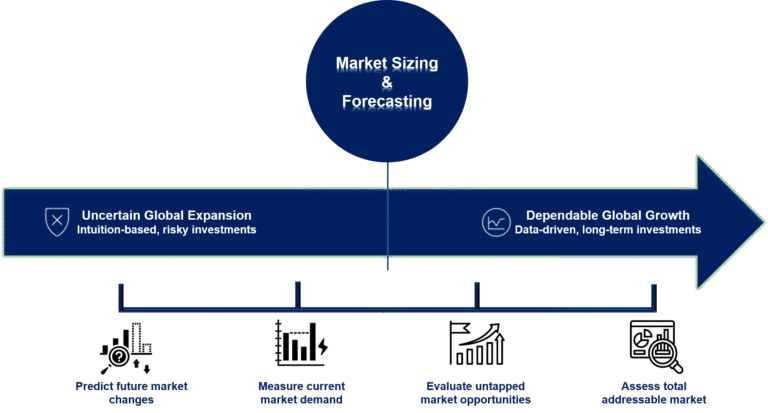
Market Sizing & Forecasting enables organizations to:

  • Quantify the real market opportunity in a target region
  • Identify high-growth customer segments
  • Evaluate market competition and saturation levels
  • Forecast revenue potential over specific time horizons
  • Support informed investment decisions
  • Strengthen stakeholder and investor confidence through data-driven insights

By combining quantitative analysis with qualitative insights, companies transform uncertainty into a structured expansion strategy.


Core Elements of Effective Market Sizing Research

To build a reliable international expansion strategy, businesses must incorporate several analytical components within their market sizing research framework.

1. Market Size Estimation

Market size estimation determines the total value or volume of a specific industry or segment. It answers the fundamental question: How large is the opportunity today? Accurate estimation provides the foundation for strategic planning and market entry decisions.

2. Total Addressable Market (TAM)

TAM represents the maximum revenue opportunity available if a company captured 100% of its potential customer base. While achieving full market capture is unrealistic, TAM offers a macro-level understanding of industry potential before narrowing down to serviceable segments.

3. Market Demand Analysis

Demand analysis focuses on understanding consumer purchasing behavior, motivations, and buying patterns. This helps companies evaluate factors such as purchase frequency, price sensitivity, and product preferences that influence market demand.

4. Forecasting Market Size

Forecasting projects how the market is expected to evolve over time. Businesses analyze historical trends, economic indicators, technological innovation, and regulatory changes to anticipate future growth and demand patterns.

5. Market Potential Assessment

Market potential goes beyond current size and explores future growth opportunities. It considers demographic shifts, technological adoption, evolving consumer expectations, and emerging industry trends.

6. Market Volume Analysis

This analysis focuses on the quantity of products or services consumed within a market. In industries where margins are thin and scale is essential, volume analysis becomes a crucial decision-making metric.

7. Demand Forecasting Models

Demand forecasting uses statistical techniques and predictive modelling to estimate future customer demand. This supports production planning, inventory management, and supply chain optimization.

8. Competitive Benchmarking

Understanding the competitive landscape is essential for realistic market entry planning. Competitive benchmarking evaluates market share, pricing strategies, distribution models, and product positioning among existing competitors.

Together, these elements create a comprehensive Market Sizing & Forecasting framework that supports strategic international growth.


Key Methods Used in Market Sizing & Forecasting

Organizations rely on several proven methodologies to improve the accuracy of their forecasting market size analysis.

Top-Down Market Analysis

Top-down modelling starts with macroeconomic or industry-level data and gradually narrows it down to specific segments or geographies. This method is useful for identifying overall industry trends and broad market opportunities.

Bottom-Up Modelling

Bottom-up analysis uses granular data such as customer counts, pricing structures, and product usage patterns to build market estimates. When reliable micro-level data is available, this approach often provides highly accurate results.

TAM-SAM-SOM Framework

Breaking down the Total Addressable Market into:

  • Serviceable Available Market (SAM)
  • Serviceable Obtainable Market (SOM)

helps businesses determine realistic market share expectations and achievable revenue targets.

Primary Market Research

Customer surveys, focus groups, and interviews provide valuable insights into customer preferences, purchasing motivations, and unmet needs. These insights often reveal opportunities not visible in secondary data sources.

Industry Expert Interviews

Conversations with industry specialists, distributors, and market stakeholders provide contextual insights that strengthen quantitative research.

Predictive Analytics and Time-Series Models

Advanced statistical models analyze historical data to identify patterns and predict future market behavior.

Data Triangulation

Combining multiple reliable data sources increases research accuracy and reduces estimation bias.

When these methodologies are applied together, Market Sizing & Forecasting becomes a powerful tool for guiding business expansion decisions.


How Market Sizing & Forecasting Reduces Expansion Risk

Global expansion requires significant investment in infrastructure, marketing, partnerships, and operations. Entering a new market without understanding demand or competition can lead to operational inefficiencies and financial losses.

A structured approach to forecasting market size helps organizations:

  • Avoid overproduction or supply shortages
  • Establish realistic revenue projections
  • Plan phased market entry strategies
  • Optimize pricing and distribution models
  • Secure investor and stakeholder confidence
  • Identify potential risks early

Rather than reacting to unexpected challenges, companies can proactively manage expansion with a data-driven strategy.


Turning Market Insights into Business Strategy

Collecting data alone is not enough. The real value of market sizing research lies in translating insights into actionable business strategies.

For example:

  • Marketing teams can target the most promising customer segments.
  • Sales teams can prioritize regions with the highest conversion potential.
  • Operations teams can design efficient supply chain networks.
  • Finance teams can allocate capital more effectively across markets.

When predictive insights align with operational execution, organizations create long-term competitive advantages.


The Long-Term Value of Forecast-Driven Strategy

Markets evolve constantly due to technological innovations, economic shifts, and changing consumer expectations. Companies that continuously invest in Market Sizing & Forecasting remain better prepared to adapt.

A forward-looking strategy enables businesses to:

  • Detect early growth opportunities
  • Respond to emerging market trends
  • Identify new product development opportunities
  • Prepare for demand fluctuations
  • Maintain resilience during economic uncertainty

Ultimately, forecasting market size is not just about predicting numbers—it is about shaping confident, data-driven business strategies.

Market Research: Powering Strategy through Insight

From Curiosity to Clarity: Understanding Market Research Reports in Depth

A story of strategic discovery: How market intelligence services can help you grow


Frequently Asked Questions (FAQs)

1. What is Market Sizing & Forecasting?

Market Sizing & Forecasting is a research process used to estimate the current size of a market and predict its future growth potential. It combines statistical analysis, industry data, and market insights to support strategic business decisions.

2. Why is market sizing research important before entering a new market?

Market sizing research helps businesses understand the true scale of opportunity, evaluate demand, assess competition, and determine whether expansion into a new region is financially viable.

3. What is the difference between market sizing and forecasting market size?

Market sizing measures the current size or value of a market, while forecasting market size predicts how that market will grow or change over time based on trends, data models, and economic indicators.

4. Which industries benefit the most from Market Sizing & Forecasting?

Industries such as technology, healthcare, manufacturing, consumer goods, and financial services benefit significantly from Market Sizing & Forecasting because accurate demand projections support investment planning and growth strategies.

5. How often should businesses update their market forecasts?

Market forecasts should typically be updated annually or semi-annually. However, updates may also be necessary when major economic, technological, or regulatory changes affect market conditions.


Conclusion

Global expansion requires more than ambition—it requires clarity, data, and strategic insight. Market Sizing & Forecasting equips businesses with the analytical framework needed to evaluate opportunities, reduce uncertainty, and design successful international growth strategies.

By investing in comprehensive market sizing research and accurate forecasting market size, organizations gain the confidence to enter new markets strategically, allocate resources effectively, and build sustainable competitive momentum.

Let’s talk and explore how we can support your strategy. Contact UnivDatos today to learn how our Market Intelligence services can support your brand goals. Call us at +1 978 733 0253, email contact@univdatos.com, or fill out our contact form to schedule a consultation.

In today’s rapidly evolving business landscape, organizations face constant pressure to innovate, differentiate, and outperform competitors. New technologies are emerging, customer expectations are shifting quickly, and global competition is intensifying across nearly every industry. In such an environment, relying solely on intuition or internal assumptions is no longer sufficient.

Businesses that consistently grow and maintain market leadership rely on data-driven insights. This is where a competitive benchmarking service combined with SWOT competitor analysis becomes a powerful foundation for strategic decision-making. These approaches help organizations understand where they stand in the market, how competitors are performing, and where untapped opportunities exist.

Instead of reacting to market changes, companies can anticipate them, design better strategies, and build sustainable growth. When used effectively, competitive benchmarking analysis and strategic evaluation tools help businesses transform raw data into actionable intelligence that drives measurable results.


Why Market Intelligence Matters for Modern Businesses

Market research today goes far beyond collecting statistics or analyzing industry reports. Its true value lies in interpreting competitive data to guide business strategy. Organizations need clear answers to questions such as:

  • How does our performance compare to competitors?
  • Which competitors are gaining market share and why?
  • What weaknesses exist in competitor offerings?
  • Where can we create differentiation and capture new customers?

A professional competitive benchmarking service helps answer these questions by evaluating market performance indicators, operational capabilities, and strategic positioning.

Meanwhile, SWOT competitor analysis complements benchmarking by examining the strategic factors that influence competitor success or failure.

Together, these approaches provide a 360-degree understanding of the competitive environment.


Understanding Competitive Benchmarking Service

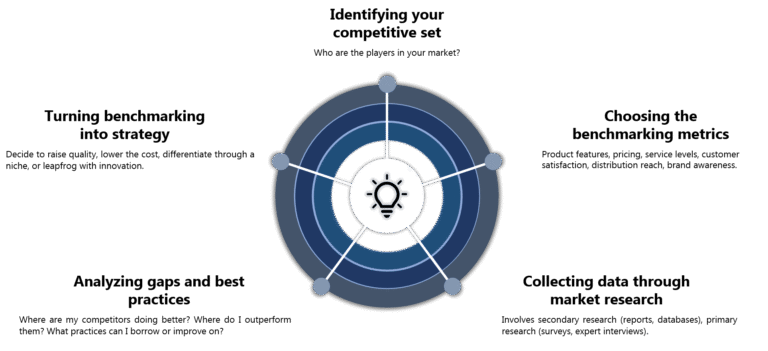
A competitive benchmarking service involves systematically comparing your business performance against key competitors and industry leaders. The goal is to identify gaps, uncover best practices, and improve operational efficiency.

Unlike simple comparisons, benchmarking focuses on deeper insights that influence long-term performance.

Key Areas Evaluated in Competitive Benchmarking Analysis

1. Business Performance Metrics

Benchmarking compares measurable indicators such as revenue growth, profit margins, pricing strategies, and market share. These metrics help businesses determine whether their performance aligns with industry standards or requires improvement.

2. Operational Efficiency

Competitors may have advantages in production efficiency, logistics, or service delivery. Competitive benchmarking analysis highlights where competitors operate faster, leaner, or more effectively.

3. Customer Experience and Engagement

Understanding how competitors attract and retain customers provides valuable insights. Benchmarking evaluates customer satisfaction, loyalty programs, service quality, and digital engagement strategies.

4. Product Innovation

Innovation speed and product development cycles play a crucial role in competitive positioning. Benchmarking reveals how often competitors launch new solutions and how these offerings resonate with the market.

The ultimate purpose of benchmarking is not imitation—it is strategic improvement. Organizations can identify proven practices to adopt while discovering areas where they can outperform competitors.


The Role of SWOT Competitor Analysis in Strategic Planning

While benchmarking highlights performance differences, SWOT competitor analysis explains the strategic factors behind those differences.

SWOT stands for Strengths, Weaknesses, Opportunities, and Threats, and it provides a structured framework to analyze competitors and market conditions.

Strengths

Competitor strengths represent the capabilities that give them an advantage in the marketplace. These may include:

  • Strong brand recognition
  • Advanced technology
  • Efficient supply chains
  • Established distribution networks
  • Financial resources

Recognizing these strengths helps businesses determine where differentiation is necessary rather than direct competition.

Weaknesses

Every organization has limitations. Competitor weaknesses may involve:

  • Poor customer support
  • Limited geographic reach
  • Slow innovation cycles
  • High product costs
  • Negative brand perception

Identifying these weaknesses allows companies to position their own offerings more effectively and attract dissatisfied customers.

Opportunities

Market opportunities arise from industry shifts, technological developments, regulatory changes, or evolving consumer needs. Through SWOT competitor analysis, businesses can identify segments that competitors have overlooked or underserved.

These insights often lead to product innovation, new market entry strategies, or improved customer value propositions.

Threats

Threats represent external risks that could affect competitors and the overall industry. These may include:

  • New market entrants
  • Substitute products
  • Regulatory changes
  • Economic instability
  • Rapid technological disruption

Understanding these threats helps businesses prepare proactive responses and minimize potential risks.


Combining Competitive Benchmarking and SWOT for Maximum Insight

Individually, both tools provide valuable insights. However, the real strategic advantage comes from integrating competitive benchmarking analysis with SWOT competitor analysis.

Benchmarking answers “How well are competitors performing?”

SWOT answers “Why are they performing that way?” and “What does it mean for our strategy?”

For example, benchmarking might reveal that a competitor has significantly higher customer retention rates. A deeper SWOT analysis may show that this advantage is driven by personalized marketing, loyalty rewards, and superior after-sales support.

Armed with this knowledge, businesses can implement targeted improvements rather than broad, unfocused strategies.

This combined approach ultimately helps organizations build a strong swot analysis competitive advantage that is both strategic and sustainable.


Identifying Market Gaps and Growth Opportunities

One of the most valuable outcomes of using a competitive benchmarking service is the ability to identify untapped market opportunities.

These gaps may appear in areas such as:

  • Pricing structures
  • Customer service quality
  • Product features
  • Geographic coverage
  • Digital capabilities

For example, if benchmarking shows that competitors mainly target premium customers, mid-tier consumers may represent an underserved segment. A well-designed strategy can capture this market efficiently.

Similarly, SWOT competitor analysis may reveal weaknesses in competitor technology infrastructure or digital marketing capabilities. Businesses that invest early in these areas can gain a decisive advantage.


From Reactive Decision-Making to Proactive Strategy

Companies that lack competitive insights often operate reactively. They respond to competitor moves after the fact rather than anticipating them.

By using competitive benchmarking analysis, organizations can monitor trends in pricing, product launches, partnerships, and marketing campaigns. These signals reveal patterns in competitor strategy.

When combined with SWOT competitor analysis, businesses gain the ability to anticipate market changes and respond proactively.

This proactive approach strengthens internal planning, aligns leadership teams, and ensures that business decisions are supported by reliable market intelligence.


Building a Sustainable SWOT Analysis Competitive Advantage

The ultimate goal of any competitive research initiative is to build a long-term strategic advantage.

A strong swot analysis competitive advantage occurs when companies align their unique strengths with emerging market opportunities while exploiting competitor weaknesses.

For example:

  • Leveraging superior technology where competitors rely on outdated systems
  • Offering better customer support in markets with poor service standards
  • Delivering faster innovation cycles where competitors move slowly

Regular use of a competitive benchmarking service ensures that businesses remain informed as markets evolve. Since industries change rapidly, ongoing benchmarking and competitor evaluation are essential for sustained growth.

A story of strategic discovery: How market intelligence services can help you grow

Achieving Growth Through Business Market Intelligence: How UnivDatos Will Help You Grow


Frequently Asked Questions (FAQs)

1. What is a competitive benchmarking service?

A competitive benchmarking service compares a company’s performance with competitors and industry leaders to identify improvement areas, operational gaps, and growth opportunities.

2. What does SWOT competitor analysis involve?

SWOT competitor analysis evaluates the strengths, weaknesses, opportunities, and threats associated with key competitors to understand their strategy and market positioning.

3. How does competitive benchmarking analysis help businesses grow?

Competitive benchmarking analysis reveals performance gaps, identifies industry best practices, and highlights areas where businesses can improve efficiency and customer experience.

4. Why should companies combine benchmarking with SWOT analysis?

Combining benchmarking with SWOT provides both quantitative performance insights and strategic context, allowing businesses to make smarter and more informed decisions.

5. How can SWOT analysis create a competitive advantage?

SWOT analysis helps businesses leverage their strengths, address weaknesses, capitalize on market opportunities, and mitigate threats, leading to a stronger and more sustainable competitive position.


Conclusion

In a market defined by innovation and competition, businesses must rely on strategic intelligence to succeed. A professional competitive benchmarking service combined with SWOT competitor analysis provides the insights needed to understand market positioning, identify growth opportunities, and develop winning strategies.

Through structured competitive benchmarking analysis, organizations gain measurable insights into competitor performance. By applying SWOT competitor analysis, they uncover the strategic factors driving those results.

Let’s talk and explore how we can support your strategy. Contact UnivDatos today to learn how our Market Intelligence services can support your brand goals. Call us at +1 978 733 0253, email contact@univdatos.com, or fill out our contact form to schedule a consultation.

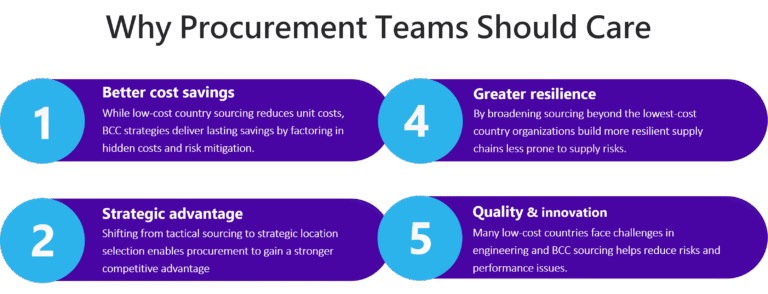
In today’s rapidly evolving global economy, companies can no longer rely solely on chasing the lowest production costs. For many years, organizations pursued low cost country sourcing as the primary procurement strategy—moving manufacturing and supplier contracts to countries offering the cheapest labor and materials. While this method often delivered short-term savings, it also introduced significant risks and hidden costs.

Long lead times, supply disruptions, quality issues, logistics complexities, and geopolitical uncertainty have revealed the limitations of focusing only on the lowest unit price. As global supply chains become more complex and volatile, businesses are shifting toward a more balanced and strategic approach known as Best Cost Country Sourcing.

This approach prioritizes long-term value, resilience, and operational efficiency rather than simply selecting the cheapest sourcing location.


What is Best Cost Country Sourcing?

Best Cost Country Sourcing is a procurement strategy that identifies the sourcing location offering the optimal combination of cost, supplier capability, quality standards, operational reliability, and risk management.

Instead of asking, “Which country offers the lowest price?”, procurement leaders ask a more strategic question: “Which location provides the best overall value for this category of goods or services?”

This model focuses heavily on Total Cost of Ownership (TCO), ensuring that all direct and indirect costs associated with sourcing are considered before making decisions. By taking a broader view of cost and risk, organizations can avoid expensive surprises that often arise when relying purely on low cost country sourcing.


Why Organizations Are Moving Beyond Low Cost Country Sourcing

The traditional low-cost sourcing model was built on the assumption that labor cost differences alone determined competitiveness. However, modern supply chains have exposed the weaknesses of that approach.

Several factors are pushing procurement teams toward Best Cost Country Sourcing, including:

  • Rising labor costs in historically low-cost manufacturing hubs
  • Global logistics disruptions and increasing freight costs
  • Geopolitical tensions affecting international trade
  • Stricter compliance and sustainability requirements
  • Growing expectations for supply chain resilience

In many cases, the cheapest production location can actually become more expensive when logistics delays, quality failures, and inventory carrying costs are included.

This shift has also increased the demand for low cost country sourcing consultants who help organizations evaluate sourcing options using data-driven models and global market intelligence.


Core Pillars of a Best Cost Country Sourcing Strategy

A successful Best Cost Country Sourcing framework evaluates sourcing destinations across several critical dimensions.

1. Total Cost of Ownership (TCO)

Total Cost of Ownership is the foundation of a best cost sourcing strategy. It captures every cost involved in procuring and delivering a product.

Key cost components include:

  • Labor and raw material expenses
  • Energy and operational overhead
  • Freight and transportation costs
  • Import duties and tariffs
  • Inventory storage and carrying costs
  • Quality issues such as scrap, rework, or warranty claims
  • After-sales service and support

For example, sourcing from a country with lower wages may initially appear cheaper. However, if longer transit times require higher inventory levels or if quality issues increase rework costs, the total cost may exceed that of sourcing from a more advanced manufacturing region.


2. Supplier Capability and Performance

Supplier reliability plays a major role in determining the best sourcing location. Procurement teams must evaluate suppliers based on performance metrics such as:

  • Consistency of product quality
  • Technical expertise and engineering support
  • Production scalability and capacity
  • Flexibility during demand fluctuations
  • Lead time stability
  • On-time delivery performance

In many cases, a supplier offering slightly higher pricing but superior technical capability and process control may provide far greater long-term value.


3. Country Risk and Economic Stability

Macroeconomic and geopolitical risks can significantly disrupt global supply chains. A well-structured Best Cost Country Sourcing strategy evaluates each location’s risk environment.

Key factors include:

  • Political and regulatory stability
  • Currency fluctuations
  • Trade policies and tariff exposure
  • Infrastructure quality (ports, roads, logistics systems)
  • Ease of doing business
  • Cultural compatibility and communication capability

The disruptions caused by the COVID-19 pandemic highlighted the danger of relying too heavily on a single region. As a result, many companies are diversifying their supplier base across multiple countries.


4. Strategic Business Alignment

Sourcing decisions must support broader business objectives. Procurement leaders should assess whether a sourcing location aligns with long-term company goals such as:

  • Faster speed to market
  • Innovation and product development collaboration
  • Proximity to key customer markets
  • Environmental, Social, and Governance (ESG) commitments
  • Long-term expansion opportunities

Best Cost Country Sourcing is therefore not just a procurement exercise—it is a strategic decision that affects competitiveness and operational resilience.


Steps to Implement Best Cost Country Sourcing

Organizations can successfully implement this approach by following a structured process.

1. Define Category Requirements

Every procurement category has unique requirements. Companies must clearly define:

  • Target cost objectives
  • Quality standards and certifications
  • Lead time expectations
  • Innovation or engineering requirements
  • Geographic limitations
  • Sustainability criteria

Different product categories may require different sourcing geographies.


2. Evaluate Countries Using a Data-Driven Framework

A structured evaluation model allows procurement teams to compare sourcing destinations objectively. Important factors include:

  • Labor and production costs
  • Logistics and transportation expenses
  • Trade agreements and tariffs
  • Currency risk exposure
  • Infrastructure quality
  • Supply chain reliability

Working with low cost country sourcing consultants can help organizations analyze these variables using global market data and procurement analytics.


3. Identify and Assess Suppliers

Once promising locations are shortlisted, the next step is mapping the supplier ecosystem.

Procurement teams should evaluate:

  • Supplier certifications and compliance levels
  • Manufacturing capacity
  • Financial stability
  • Industry cluster maturity
  • Backup supplier availability

Factory audits, product trials, and digital risk assessment tools help validate supplier capabilities.


4. Plan Transition and Governance

Transitioning sourcing locations requires careful planning to avoid operational disruptions.

Key activities include:

  • Phased supplier onboarding
  • Inventory buffer planning
  • Logistics network adjustments
  • Stakeholder communication
  • Performance tracking and governance

Strong governance ensures the projected savings and operational benefits are achieved.


Importance of Best Cost Country Sourcing for Indian Procurement Teams

For procurement professionals in India, Best Cost Country Sourcing presents both opportunities and strategic considerations.

India is increasingly recognized as a competitive sourcing destination due to:

  • A skilled and technically capable workforce
  • Competitive manufacturing costs
  • Rapidly improving infrastructure
  • Strong English-language communication capability

At the same time, global buyers are also exploring other sourcing hubs such as Vietnam, Malaysia, and Eastern Europe to diversify supply chain risk. Many multinational organizations now adopt a “China + 1” strategy to balance cost efficiency with supply chain resilience.

Indian companies serving global markets must therefore continuously evaluate whether India remains the best cost sourcing location for each product category.

A story of strategic discovery: How market intelligence services can help you grow

Market Intelligence Services: Your Compass in a Foggy Marketplace

Spend Data Classification: From a Messy Spreadsheet to a Strategic Goldmine

FAQs

1. What is Best Cost Country Sourcing?

Best Cost Country Sourcing is a procurement strategy that selects sourcing locations based on total value, including cost, supplier capability, quality, logistics, and risk factors rather than focusing solely on the lowest price.

2. How is Best Cost Country Sourcing different from low cost country sourcing?

Low cost country sourcing primarily focuses on the lowest labor or production cost, whereas Best Cost Country Sourcing considers the Total Cost of Ownership (TCO), including logistics, quality, risk, and long-term operational efficiency.

3. Why is Total Cost of Ownership important in sourcing decisions?

Total Cost of Ownership includes hidden expenses such as transportation, tariffs, inventory holding, quality issues, and compliance costs, giving organizations a more accurate understanding of the true sourcing cost.

4. How can low cost country sourcing consultants help businesses?

Low cost country sourcing consultants provide market intelligence, supplier identification, cost modeling, and risk analysis to help companies select the most efficient and strategic sourcing locations.

5. What industries benefit most from Best Cost Country Sourcing?

Industries such as manufacturing, automotive, electronics, consumer goods, and industrial equipment benefit significantly because they rely heavily on global supplier networks and complex supply chains.

Conclusion

The era of relying solely on low cost country sourcing is gradually coming to an end. Modern supply chains demand a more comprehensive and strategic sourcing model.

Best Cost Country Sourcing enables organizations to evaluate sourcing decisions based on total value, balancing cost efficiency with supplier capability, risk mitigation, and long-term business strategy.

By adopting a structured, data-driven sourcing framework and leveraging the expertise of low cost country sourcing consultants, procurement teams can build more resilient supply chains while maintaining sustainable cost advantages in an increasingly uncertain global market.

Contact our analytics experts to schedule a consultation and uncover how we can accelerate your journey of becoming a data-driven organization.

Professional window cleaning on tall buildings requires precise tools and methods to achieve spotless, streak-free glass. Many property owners search for Window Cleaning Near Me to find specialists with expertise in high-rise maintenance. Professionals rely on squeegees, scrubbers, water-fed poles, and purified water systems to remove dirt, mineral deposits, and pollution residues without leaving streaks. Safety equipment such as harnesses, ropes, and suspension platforms ensures stability during cleaning at extreme heights. Proper selection and maintenance of these tools save time, improve results, and protect both workers and the building’s exterior. Consistent techniques and high-quality equipment allow buildings to maintain aesthetic appeal and clarity in all weather conditions.


Challenges of Cleaning Windows on Tall Buildings

Tall buildings present unique obstacles that affect cleaning efficiency and quality. Environmental conditions like wind, rain, and airborne dust create residue buildup that is difficult to remove. Architectural design and large glass panels complicate access, requiring adjustable poles and rope systems. High-rise surfaces exposed to direct sunlight can dry too quickly, leaving streaks if not cleaned systematically. Professionals plan each project carefully, choosing equipment and methods that suit the building’s height, shape, and material. Safety regulations dictate the use of certified harnesses, secure anchors, and training programs for rope access. These factors combine to make tall building cleaning more complex than typical window maintenance.


Essential Hand Tools Used by Professional Window Cleaners

Hand tools remain critical for achieving streak-free results even with advanced technology. Professionals use a combination of precise instruments to control water, cleaning solution, and pressure.

  • Professional Squeegees – Smooth rubber blades remove water evenly, preventing streaks.
  • Microfiber Scrubbers – Gentle on glass while lifting dirt and grime effectively.
  • Extension Poles – Telescopic poles reach higher areas safely and reduce repositioning.
  • Detailing Cloths – Lint-free cloths wipe corners and edges for a clean finish.
  • Glass Scrapers – Remove stubborn mineral deposits or paint residues without scratching.

These tools are easy to transport and maintain while allowing technicians to work efficiently on varying surfaces.


Water-Fed Pole Systems for High-Rise Cleaning

Water-fed pole systems allow technicians to clean windows from the ground or lower platforms, reaching multiple stories without ladders. Telescopic poles extend several stories and deliver purified water directly to glass surfaces. Soft brush heads scrub dirt while filtered water rinses debris away, drying without streaks. Lightweight carbon-fiber poles reduce fatigue and improve maneuverability. Controlled water flow and steady brushing ensure even cleaning, particularly on large flat panels. These systems combine efficiency and precision, reducing the need for repeated wiping and minimizing potential damage from harsh chemicals.


Suspension and Rope Access Equipment

Tall buildings require specialized access systems to clean exterior glass safely. Rope access and suspended platforms provide secure positioning for technicians on high-rise structures. Workers use harnesses, ropes, and anchors to maintain stability while moving vertically along the façade. Suspended platforms allow continuous cleaning across multiple floors, while rope access is ideal for buildings with complex shapes or limited entry points. Skilled operators combine these systems with hand tools and water-fed poles to reach narrow spaces and hard-to-access angles. Proper use of suspension equipment ensures safety while maintaining consistent streak-free results.


Purified Water Filtration Technology

Water quality directly impacts the streak-free finish of tall building windows. Professionals rely on purification systems that remove minerals and impurities through deionization or reverse osmosis. Purified water dries naturally, leaving no water spots or streaks. Filtration systems prevent residue that can form when hard water is used. Portable units allow on-site purification, providing continuous flow for large surfaces. Clean water also improves the efficiency of brushes and scrubbers. Regular monitoring and replacement of filters ensure consistent quality. Purified water systems are particularly important in coastal areas or regions with hard water.


Safety Equipment That Supports Effective Cleaning

Safety equipment protects technicians while they work at extreme heights and ensures consistent performance.

  • Safety Harnesses – Secure attachment for rope access and suspension systems.
  • Helmet and Protective Gear – Shield against falling debris and accidental impacts.
  • Rope Descent Devices – Control movement along the building exterior.
  • Anchoring Systems – Provide stability for ropes and suspension lines.
  • Fall Arrest Systems – Prevent injuries during accidental slips or equipment failure.

Using proper safety gear allows workers to focus on precision, achieving a streak-free finish on all windows while maintaining compliance with safety regulations.


Techniques That Prevent Streaking on Large Glass Surfaces

Streak-free results rely on structured cleaning methods combined with professional tools. Controlled squeegee strokes remove water evenly across the glass while consistent overlap prevents visible lines. Cleaners monitor environmental conditions such as sunlight, wind, and temperature to prevent uneven drying. Regular rinsing removes any remaining cleaning solution. Technicians adjust pressure and brush movement depending on the glass size and orientation. Maintaining consistent motion patterns across large panels produces a uniform shine. Detail work with microfiber cloths or small squeegees ensures corners and edges are spotless.


Maintenance and Care for Window Cleaning Equipment

Maintaining tools extends lifespan and preserves streak-free performance. Rubber squeegee blades must remain flexible and smooth. Brushes and scrubbers need frequent rinsing to prevent buildup. Filtration systems require filter and resin replacement to keep water pure. Extension poles and suspension equipment must be inspected regularly for wear or damage. Proper storage and routine maintenance improve efficiency and reliability for every cleaning project. Professional companies adhere to strict maintenance schedules to prevent tool failure during critical tasks.


Choosing the Right Window Cleaning Service for High-Rise Buildings

Selecting a professional window cleaning service ensures safe and effective maintenance of tall buildings. Experienced companies evaluate building height, design, and access before choosing methods and equipment. Trained technicians operate rope access systems, water-fed poles, and suspension platforms efficiently. Companies provide insurance coverage and adhere to safety standards, protecting both workers and property. Clear communication ensures cleaning schedules align with building use. Professional services deliver consistent streak-free results while preserving the building’s exterior integrity.


Conclusion

Achieving streak-free windows on tall buildings requires specialized tools, techniques, and safety measures. Squeegees, microfiber scrubbers, water-fed poles, purified water systems, and suspension platforms allow technicians to reach extreme heights efficiently. Proper safety gear protects workers, enabling precise movement and stable positioning. Structured cleaning techniques prevent streaks on large glass surfaces. Routine maintenance of equipment ensures long-lasting performance. Partnering with professional cleaning services guarantees consistent results, improved building aesthetics, and reduced maintenance challenges. High-rise window cleaning combines expertise, technology, and methodical execution to achieve a polished, streak-free finish.


FAQs

What is the most effective tool for streak-free windows on tall buildings?
Water-fed pole systems with purified water and professional squeegees provide the most reliable streak-free results for high-rise buildings.

How often should high-rise windows be cleaned?
Cleaning frequency depends on environmental conditions, but typically every 4–12 weeks ensures clear glass and reduces buildup.

Is purified water necessary for streak-free cleaning?
Yes, purified water removes minerals that cause streaks, especially in areas with hard water or coastal environments.

What safety measures are required for high-rise window cleaning?
Technicians must use harnesses, rope systems, fall arrest devices, helmets, and anchored platforms to maintain safety during operations.