
Modern businesses rely on customer data to drive marketing decisions. Marketing teams need accurate information about customer behavior, preferences, and purchase history.
Industry research highlights the importance of integrated marketing systems. According to Salesforce’s State of Marketing Report, 78% of marketers say customer data integration improves campaign performance.
Another report shows that companies using integrated marketing and CRM platforms increase lead conversion rates by up to 32%.
Additionally, 67% of marketing leaders consider unified customer data essential for personalized marketing campaigns. These numbers explain why organizations adopt solutions such as Salesforce Marketing Cloud and integrate it with CRM systems.
Understanding Salesforce Marketing Cloud
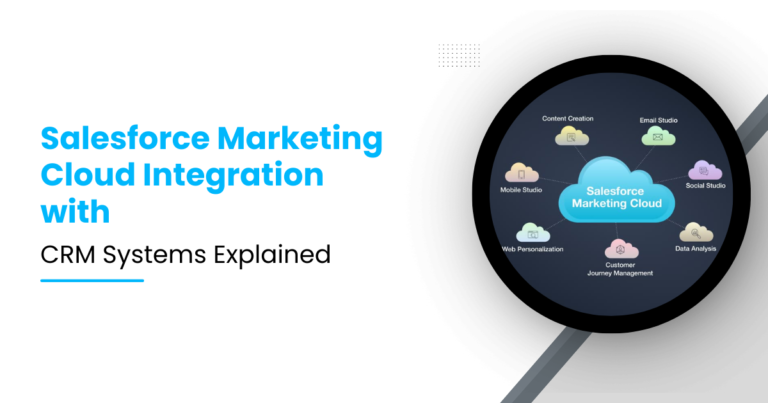
Salesforce Marketing Cloud is a digital marketing platform that helps organizations manage customer communication across multiple channels. It supports email marketing, mobile messaging, social media campaigns, and advertising management.
Salesforce designed Marketing Cloud to work closely with CRM platforms. CRM systems store detailed customer records. When marketing platforms connect to CRM data, campaigns become more relevant and effective.
Why CRM Integration Matters in Marketing
Customer relationship management systems store valuable information about leads, customers, and business interactions. This data includes purchase history, service interactions, and contact details.
First, marketing teams gain access to updated customer profiles. Second, sales teams receive insights about marketing interactions. Third, organizations maintain a consistent view of each customer.
Core Components of Salesforce Marketing Cloud
Understanding the platform components helps explain how integration works. Salesforce Marketing Cloud includes several tools that support digital marketing operations.
Email Studio
Email Studio supports email campaign creation and delivery. Marketing teams design personalized emails using templates and dynamic content. The system also tracks open rates, click rates, and engagement metrics.
Journey Builder
Journey Builder helps organizations design customer journeys. A journey defines the sequence of interactions between a brand and a customer.
These journeys can include email messages, SMS alerts, and advertising campaigns.
Contact Builder
Contact Builder manages customer profiles inside Salesforce Marketing Cloud. It organizes customer data into structured contact records. Integration with CRM platforms updates these records automatically.
Mobile Studio
Mobile Studio supports mobile messaging channels. Organizations can send SMS notifications and push messages through this module.
Advertising Studio
Advertising Studio connects marketing campaigns with digital advertising networks. Marketing teams can target audiences based on CRM data. These components become more powerful when integrated with CRM platforms.
Also Read: Oracle ERP and Salesforce Integration: Key Use Cases and Benefits
CRM Systems Commonly Integrated with Marketing Cloud
Organizations use several CRM systems across different industries. Salesforce Marketing Cloud integrates with multiple CRM platforms.
When Salesforce Marketing Cloud connects with these platforms, marketing teams gain a complete view of the customer journey. Other CRM platforms can also integrate through APIs and middleware solutions.
Integration Architecture of Salesforce Marketing Cloud
Integration architecture defines how systems exchange data. Salesforce Marketing Cloud supports multiple integration methods.
Organizations select the integration method based on system architecture and data requirements.
Marketing Cloud Connect
Marketing Cloud Connect provides direct integration between Salesforce Marketing Cloud and Salesforce CRM platforms.
The integration enables the following features:
• Synchronization of CRM contacts and leads
• Access to CRM data inside marketing campaigns
• Triggered messaging based on CRM events
Marketing Cloud Connect works well for organizations using Salesforce as their primary CRM system.
API-Based Integration
Many organizations use APIs to connect marketing platforms with CRM systems.
For example, a CRM system may send customer updates to Salesforce Marketing Cloud through API calls. Marketing Cloud can also send campaign engagement data back to the CRM platform.
Middleware Integration
Middleware tools connect systems that cannot communicate directly. Platforms such as integration middleware solutions act as intermediaries between CRM and marketing platforms.
These tools manage data transformation, message routing, and system synchronization. Middleware integration works well for organizations with complex IT environments.
Data Synchronization in Marketing Cloud Integration
Data synchronization ensures that customer records remain consistent across systems.
When Salesforce Marketing Cloud integrates with CRM systems, contact information flows between platforms.
Data synchronization may include:
• Customer contact details
• Purchase history
• Lead status updates
• Campaign engagement data
For example, when a customer updates their email address in a CRM system, the change also appears in Salesforce Marketing Cloud.
Customer Journey Integration with CRM Data
Customer journeys define how organizations interact with customers over time. Salesforce Marketing Cloud uses CRM data to trigger these journeys.
For example, a company may design a welcome journey for new customers.
The process may follow these steps:
• A lead converts into a customer in the CRM system
• The CRM platform sends the customer record to Marketing Cloud
• Journey Builder triggers a welcome email sequence
• The system tracks customer engagement
This automated journey helps companies maintain consistent communication with new customers.
Personalization Through CRM Integration
- Personalization has become essential in modern marketing strategies.
- Customers expect brands to deliver relevant messages and offers.
- Salesforce Marketing Cloud uses CRM data to personalize marketing content.
- Customer attributes such as location, purchase history, and preferences influence campaign messages.
For example, a retail company may send different promotions to customers based on their purchase history.
Customers who purchase electronics may receive electronics promotions. Customers interested in clothing may receive fashion offers.
Example Scenario: Retail Marketing Integration
Consider a retail company operating an online store and several physical locations. The company uses a CRM platform to track customer purchases and service interactions. The marketing team uses Salesforce Marketing Cloud for digital campaigns.
Customers who recently purchased a smartphone may receive accessories promotions. Customers who abandoned shopping carts may receive reminder emails.
Data Security in Marketing Cloud Integration
Data security remains a major concern in customer data management. Integration systems must protect sensitive information such as contact details and purchase history.
Organizations can apply authentication protocols to control API access. Encryption protects data during transmission between systems.
Companies implementing integration should also follow regulatory standards such as GDPR or other data protection laws.
Monitoring and Analytics
Integrated systems generate large amounts of marketing data. Organizations need tools that analyze this data and provide insights.
Salesforce Marketing Cloud includes analytics dashboards that measure campaign performance.
Marketing teams track metrics such as:
• Email open rates
• Click-through rates
• Conversion rates
• Customer engagement levels
CRM integration improves these analytics. The system connects marketing interactions with sales results.
For example, marketing teams can see which campaigns generate actual sales revenue.
Benefits of Integrating Marketing Cloud with CRM Systems
Organizations gain several advantages when integrating Salesforce Marketing Cloud with CRM platforms.
- First, integration improves data accuracy. Marketing teams rely on updated customer records.
- Second, integration enhances collaboration between marketing and sales teams.
- Sales representatives can see marketing interactions that occur before customer contact.
- Third, integration supports advanced customer segmentation.
Marketing teams divide audiences based on CRM attributes and campaign engagement.
Finally, integration improves customer experience. Customers receive relevant communication across multiple channels. These benefits contribute to higher marketing performance and stronger customer relationships.
Challenges in Marketing Cloud Integration
Despite its advantages, integration projects can face challenges.
Legacy systems may store data in incompatible formats. Integration teams must design data mapping rules to resolve these differences.
Technical complexity also increases when multiple systems participate in integration. Integration architects must design reliable data synchronization processes.
Future of Marketing and CRM Integration
Digital marketing continues to evolve rapidly. Customers interact with brands across websites, mobile apps, and social media channels.
Salesforce Marketing Cloud will continue to integrate these capabilities to support data-driven marketing strategies.
Conclusion
Modern marketing strategies depend on accurate customer data and coordinated communication. However, many organizations struggle with disconnected systems and fragmented customer information.
Integrating Salesforce Marketing Cloud with CRM systems solves this challenge. Integration allows marketing teams to access real-time customer data and create targeted campaigns.