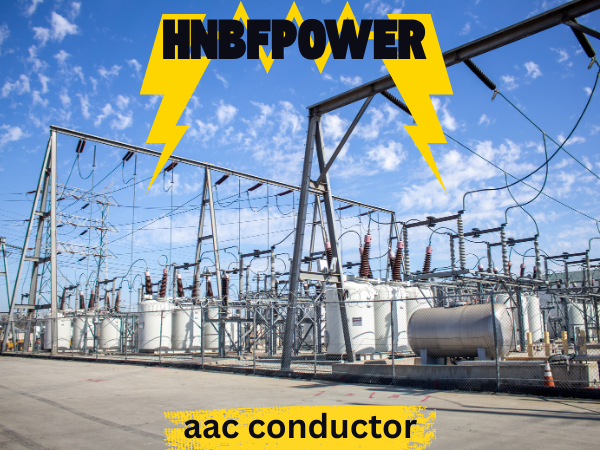
In today’s rapidly expanding power infrastructure landscape, utilities and EPC contractors face a critical challenge: selecting a conductor that balances cost, conductivity, and reliability. Among the available options, the AAC conductor (All Aluminum Conductor) stands out as a practical and efficient solution for specific transmission and distribution applications.
This guide explores the technical characteristics, advantages, applications, and selection criteria of AAC conductors helping engineers, procurement professionals, and project planners make informed decisions aligned with modern grid requirements.
What is an AAC Conductor?
An AAC (All Aluminum Conductor) is a stranded conductor made entirely of high-purity aluminum wires. Unlike ACSR (Aluminum Conductor Steel Reinforced), AAC contains no steel core, making it lighter and highly conductive.
Key Construction Features
- Composed of EC-grade aluminum (Electrical Conductivity grade)
- Typically stranded in concentric layers
- Available in various sizes and stranding configurations
- Designed for overhead transmission and distribution lines
This simple yet effective design makes AAC a preferred option in short-span and urban power distribution systems.
Why Choose AAC Conductors?
1. Superior Electrical Conductivity
AAC conductors offer excellent conductivity due to their pure aluminum composition. This results in:
- Lower electrical resistance
- Reduced line losses
- Improved energy efficiency
For utilities aiming to minimize transmission losses in densely populated areas, AAC becomes a strong contender.
2. Lightweight and Easy Installation
Without a steel core, AAC conductors are significantly lighter than alternatives like ACSR.
Benefits include:
- Easier handling and installation
- Reduced mechanical stress on poles and towers
- Lower transportation costs
This is particularly valuable in urban or difficult-to-access installations.
3. Excellent Corrosion Resistance
AAC conductors perform exceptionally well in corrosive environments, such as:
- Coastal regions
- Industrial zones
- Humid climates
The absence of steel eliminates the risk of core corrosion, enhancing long-term reliability.
4. Cost-Effective for Short Spans
While AAC may not be suitable for long-span transmission due to lower tensile strength, it is highly cost-effective for:
- Short-distance distribution lines
- Urban grid networks
- Low and medium voltage applications
This makes it a strategic choice for budget-conscious projects without compromising performance.
Limitations of AAC Conductors
No conductor is universally ideal, and AAC is no exception.
Lower Mechanical Strength
- Lacks steel reinforcement
- Limited tensile strength
- Not suitable for long spans or high-tension applications
Higher Sag
- More prone to sag under high temperatures
- Requires careful design consideration
For long-distance transmission or heavy-load applications, alternatives like ACSR or AAAC may be more appropriate.
Common Applications of AAC Conductors
AAC conductors are widely used in applications where conductivity and corrosion resistance are prioritized over mechanical strength.
Urban Power Distribution
- Ideal for city grids with short pole spacing
- Efficient for low-voltage and medium-voltage networks
Coastal and Industrial Areas
- Resistant to salt-laden air and chemical exposure
- Reliable in harsh environmental conditions
Substation Connections
- Used for busbars and short interconnections
- Ensures efficient current flow within substations
Rural Electrification (Short Spans)
- Suitable for low-cost electrification projects
- Easy deployment in compact areas
AAC vs Other Conductors
Understanding how AAC compares with other conductors helps in selecting the right product.
AAC vs ACSR
| Feature | AAC | ACSR |
|---|---|---|
| Material | 100% Aluminum | Aluminum + Steel Core |
| Conductivity | Higher | Moderate |
| Strength | Lower | Higher |
| Weight | Lighter | Heavier |
| Corrosion Resistance | Excellent | Moderate |
Conclusion: AAC is better for short spans and corrosive environments, while ACSR is suited for long-distance transmission.
AAC vs AAAC
| Feature | AAC | AAAC |
|---|---|---|
| Alloy Type | Pure Aluminum | Aluminum Alloy |
| Strength | Lower | Higher |
| Conductivity | Higher | Slightly Lower |
| Corrosion Resistance | Excellent | Excellent |
Conclusion: AAAC offers a balance between strength and corrosion resistance, but AAC remains superior in conductivity.
Key Technical Specifications
When selecting an AAC conductor, engineers and procurement teams should evaluate:
Electrical Parameters
- Conductivity (% IACS)
- Resistance (Ohm/km)
- Current carrying capacity
Mechanical Parameters
- Tensile strength
- Weight per kilometer
- Diameter and stranding
Standards Compliance
AAC conductors are manufactured according to international standards such as:
- IEC 61089
- ASTM B231
- BS EN standards
Choosing a manufacturer that adheres to these standards ensures quality and reliability.
How to Select the Right AAC Conductor
Selecting the correct AAC conductor requires a careful assessment of project requirements.
Consider These Factors:
- Span Length
Short spans are ideal for AAC usage. - Load Requirements
Evaluate current-carrying capacity based on demand. - Environmental Conditions
AAC performs best in corrosive environments. - Budget Constraints
Offers cost advantages for specific applications. - Installation Conditions
Lightweight design simplifies installation in urban setups.
Why Choose HNBF Power for AAC Conductors?
HNBF Power is a trusted global manufacturer specializing in overhead conductors and power cables, delivering high-performance solutions for utilities and EPC contractors worldwide.
Key Advantages:
- Strict adherence to international standards
- Advanced manufacturing processes
- Customizable conductor sizes and specifications
- Consistent quality and performance
- Reliable supply for large-scale infrastructure projects
By choosing HNBF Power, buyers gain access to technically optimized solutions tailored to project-specific requirements.
Future Market Demand for AAC Conductors
With increasing urbanization and grid expansion, AAC conductors continue to see strong demand in:
- Smart city infrastructure
- Urban distribution upgrades
- Renewable energy integration (short connections)
- Cost-sensitive electrification projects
As utilities focus on efficiency and cost control, AAC remains a relevant and practical solution in modern power systems.
Frequently Asked Questions (FAQs)
1. What is the main advantage of AAC conductors?
AAC conductors offer high electrical conductivity and excellent corrosion resistance, making them ideal for short-distance power distribution.
2. Where are AAC conductors commonly used?
They are widely used in urban distribution networks, coastal regions, and substations where mechanical strength requirements are lower.
3. How does AAC compare to ACSR?
AAC has better conductivity and corrosion resistance, while ACSR provides higher mechanical strength for long spans.
4. Is AAC suitable for high-voltage transmission?
AAC is generally not recommended for long-span high-voltage transmission due to its lower tensile strength.
5. Can AAC conductors be customized?
Yes, manufacturers like HNBF Power offer customized AAC conductor specifications based on project requirements.
Conclusion
AAC conductors provide a cost-effective, highly conductive, and corrosion-resistant solution for modern power distribution systems. While they may not replace reinforced conductors in heavy-duty applications, their advantages make them indispensable in urban grids and specialized environments.
Get Customized AAC Conductor Solutions
If you are planning a power distribution project and need reliable, high-performance AAC conductors, HNBF Power can deliver tailored solutions to meet your technical and commercial requirements.
Contact HNBF Power today to discuss your project needs and get expert guidance on selecting the right conductor for your application.